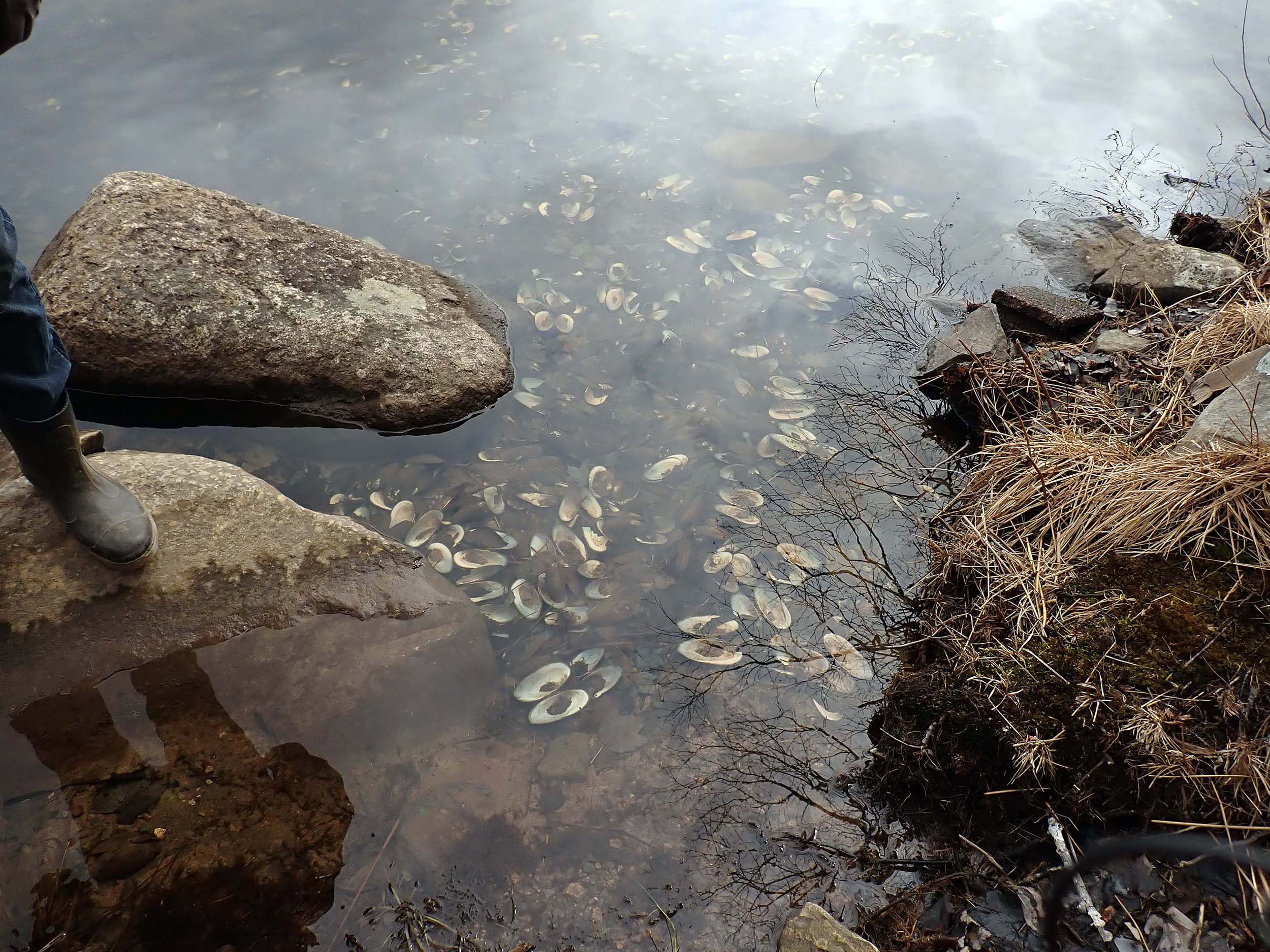
A mass of mussel shells by the shore
Click on images for larger versions
I wasn’t looking forward to conducting the spring limnological observations today on Sandy Lake; rain, cool temps and winds were forecast.
However, it turned out to be a near ideal day. There was no wind – that really helps when we’re trying to stay in one place; and no rain. Even the sun came out for a short period.
Where we – the “Sandy Lake Volunteers” – set our boat into the west side of Sandy Lake, there was a mass of mussel shells in the shallows; they’re likely the work of otters which are often seen on the lake.
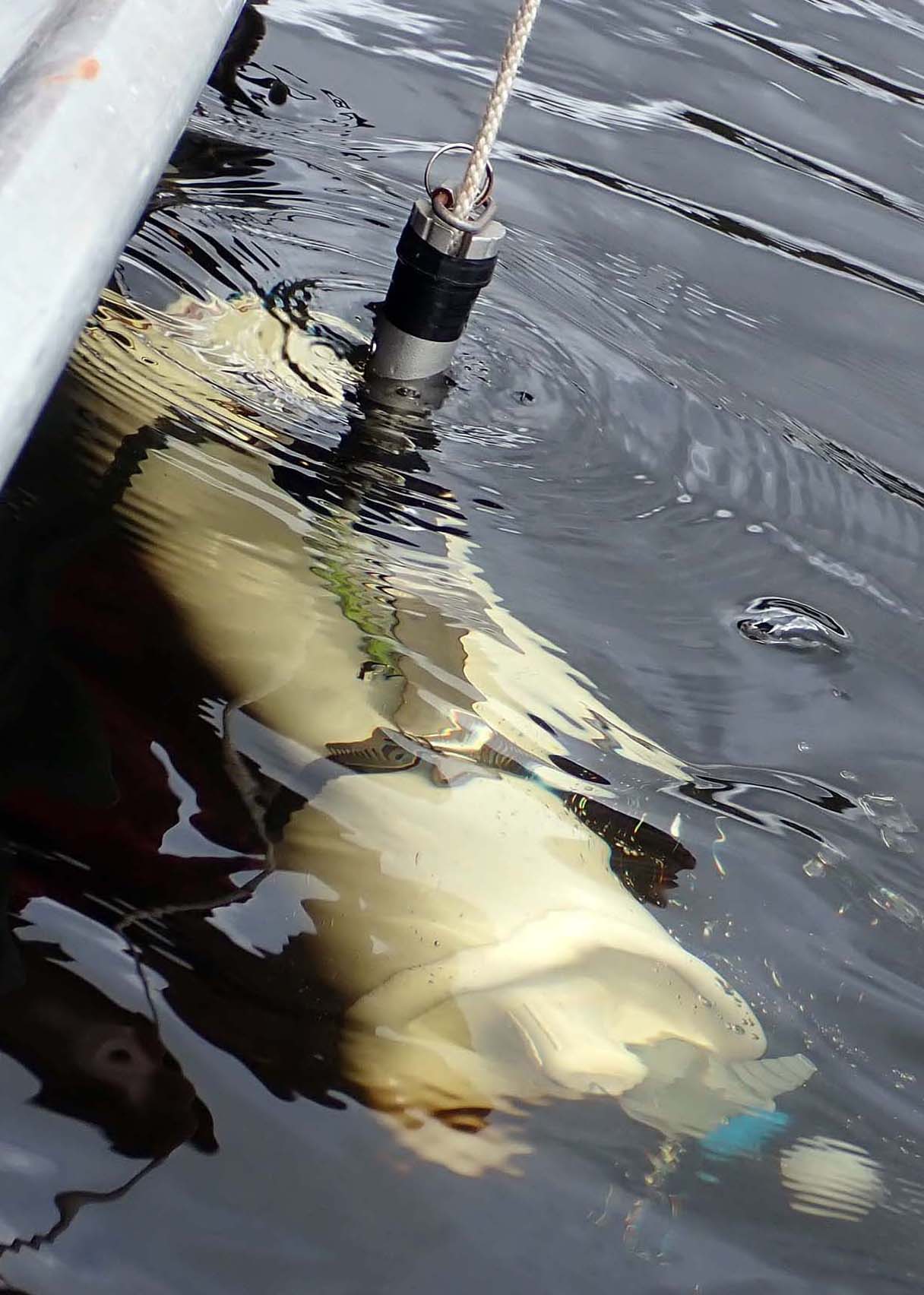
Van Dorn Bottle just coming into the boat with a sample of water from near the bottom
Ed G. took us to the deepest spot – he’s ‘the guy’ to do that as he mapped the lake bathymmetry back in 2006. The measured depth where we stopped was 20.3 meters. (The maximum depth is circa 21 m)
The surface temperature was 7.6 deg C, the temperature at 20 meters depth was 5.4 deg C. So temperature stratification is just developing. View Data
We began conducting observations on Sandy Lake in 2017. Since 2022, the sampling equipment has been provided by and we report the data to the Halifax LakeWatchers program. A total of 72 lakes in HRM are currently being sampled under this program which began in 2022, more than half of them by volunteers.
Just as we began our observations, a pair of loons landed near the shore where we had launched the boat. I got a pic of one of them after they moved to the east of us, but closer.
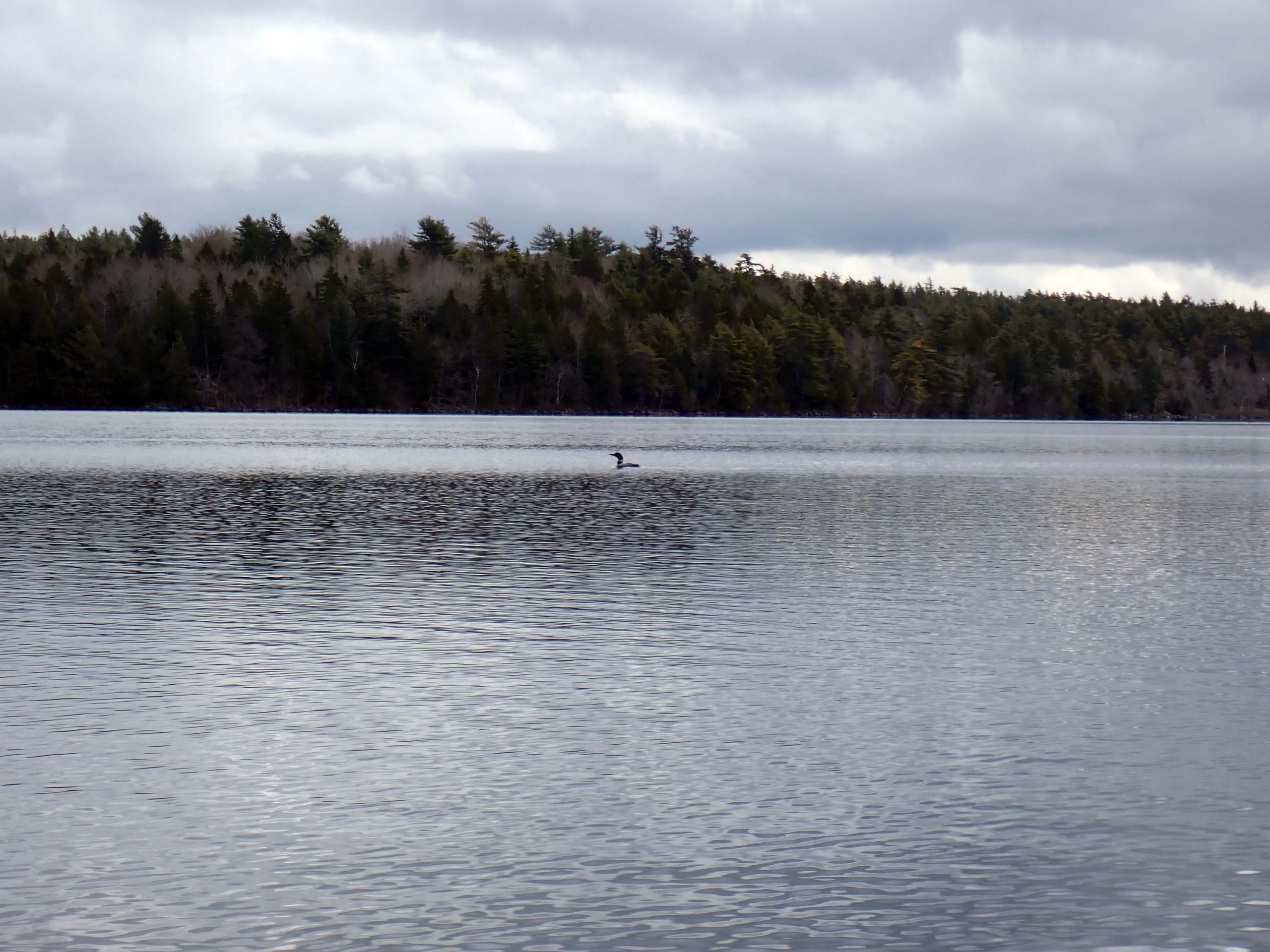
Loon on Sandy Lake on April 23, 2026. Click on image for larger version
Derek S told me that two years ago there was a pair of loons whose chick (s?) disappeared, while last year there was only one loon, probably a male based on it size; it disappeared around August and the lake was “loonless” after that.
He said that “when there are no loons, I really miss them, and their calling, and the lake seems deserted.”
So we were very happy to see that pair today, some good news for a change.
Let’s hope there is more good news to follow – some loon chicks, and a healthy lake to support them!
Post-Script
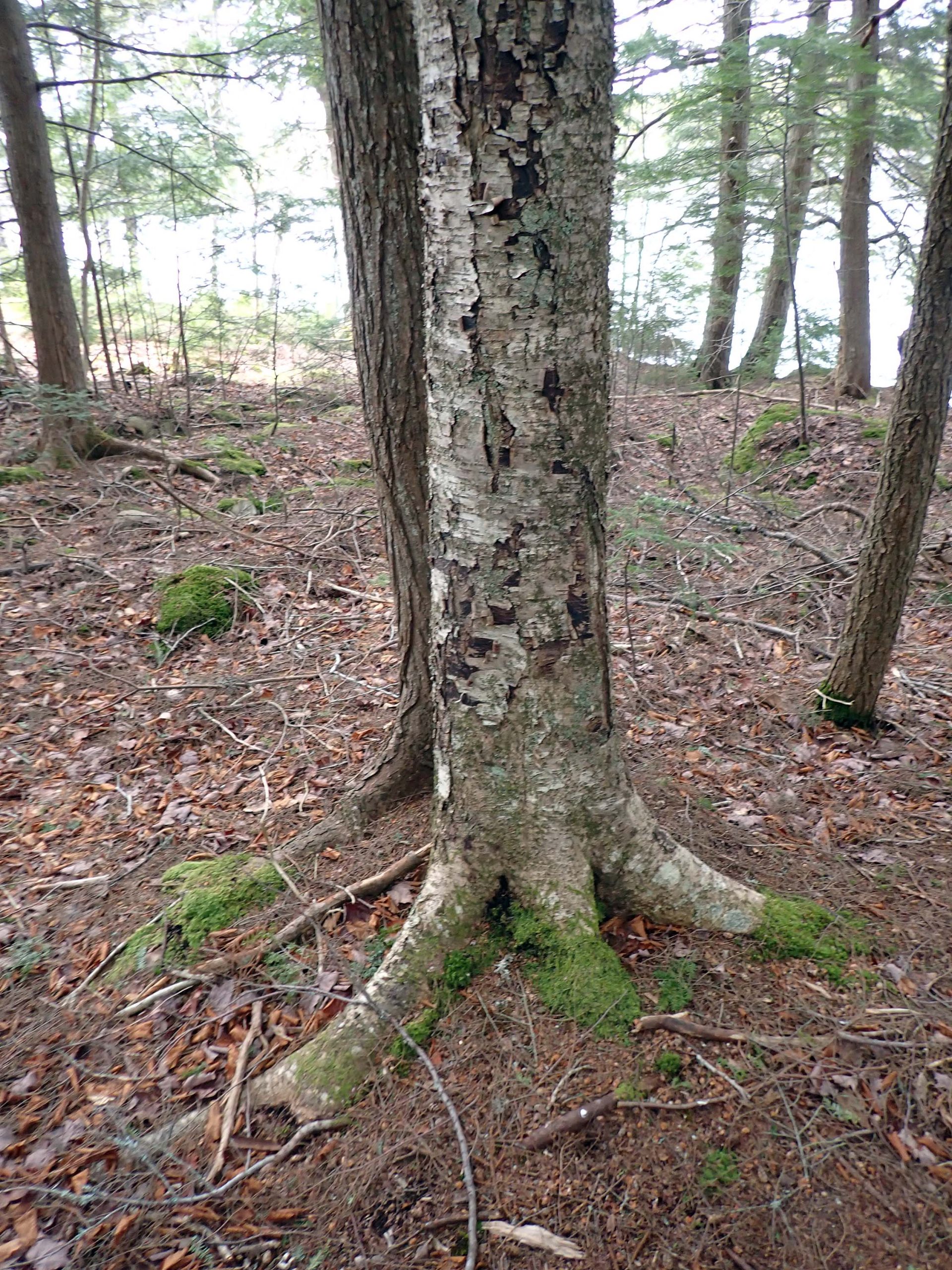
Intimate association of Yellow Birch and Eastern Hemlock
On shore I viewed a patch of Old Growth hemlock-yellow birch forest, including some instances of the Wabanaki Forest Love Affair.
And some well eaten Varnish Fungus which grows on decaying hemlock.
I looked for signs of Hemlock Wooly Adelgid, reported on the other side of the lake last year, but none here.
So more good news. If only it can keep up.
As matter stand, the province remains determined to accommodate circa 16000 residents in a new development in an area of concentration of wetlands and headwaters for Sandy Lake.
Lots about it on this website – and the refusal of the province to recognize our limnological observations as legitimate including those obtained from 2022 onward under the LakeWatcher’s program*
*Volunteers are trained by the LakeWatchers and thus in principle at least “the data are fully equivalent to those obtained by consultants.” But not those for Sandy Lake apparently.
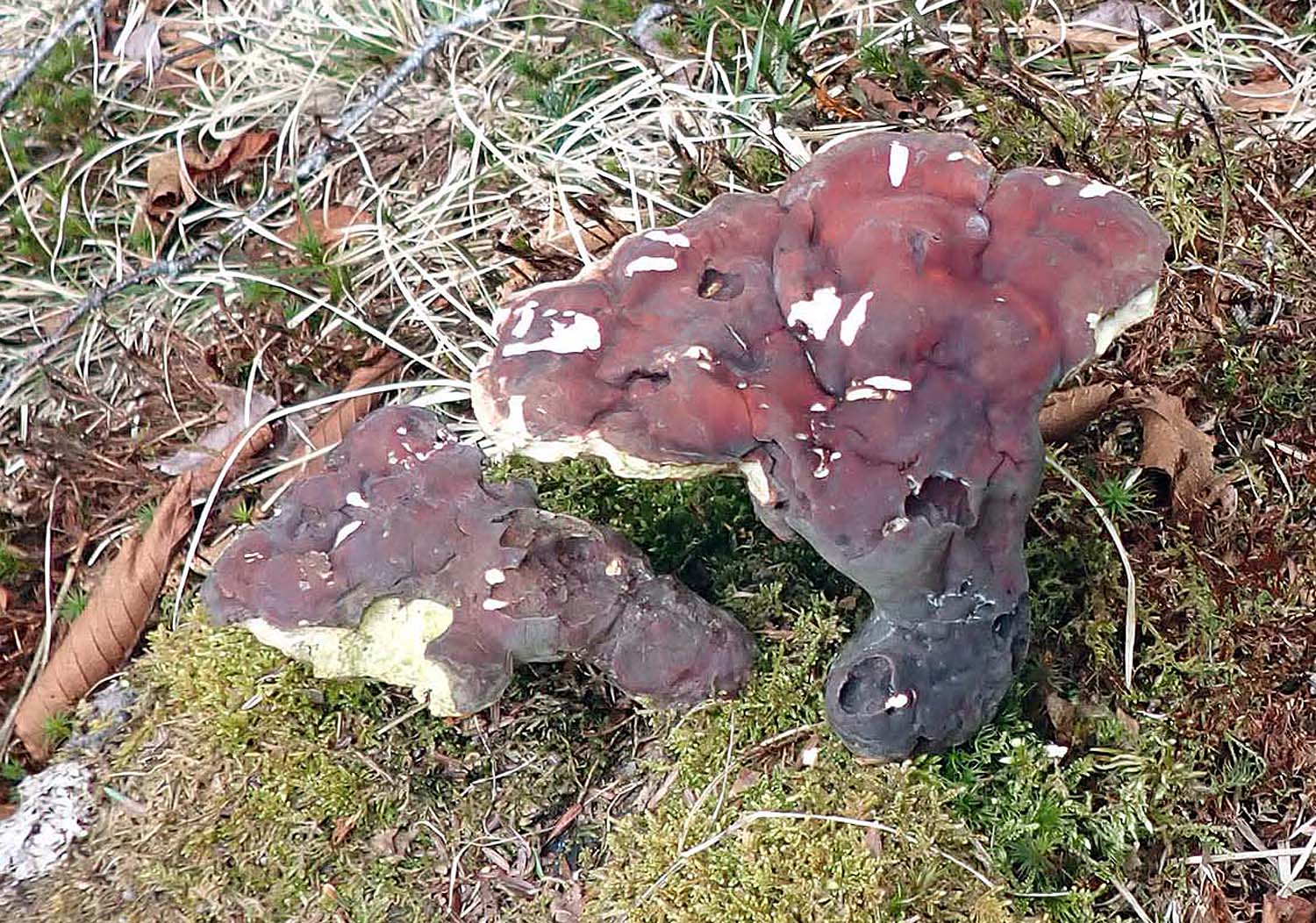
Hemlock Varnish Fungus