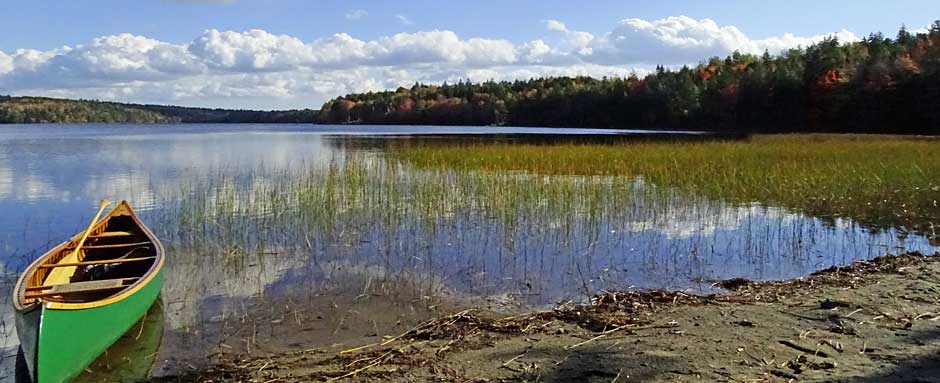
 Surely pertinent to Sandy Lake!
See Advocates and residents say stronger regulations are needed to protect N.S. lakeshores
by Moira Donovan · CBC News Dec 30, 2025
The article describes the efforts of two lakeside residents on Molega Lake in SW Nova Scotia to do what they thought was the right thing to protect the lakeshore, bringing in fill and planting it with tall grasses. They followed all of the rules… but it didn’t work, and they called on Transcoastal Adaptations, a research group called based at Saint Mary’s University, to help them correct it all.
The article goes on to describe the growing concerns about impacts of shoreside developments in watersheds of the South Shore.
It feels like a free-for-all,” he [Brad Toms, with the Mersey Tobeatic Research Institute] said. “All the development that is happening — the allowance of subdivisions … the letting of building permits and development permits — are happening blind to the needs of the lake, and that’s a problem that’s happening provincewide.
It’s noted that the issues are not unique to the South Shore and the article cites the recent rejection by the province of HRM’s plan to increase setbacks from 20 to 30 metres. Evidently the province is concerned that stricter environmental rules would stifle housing construction; HRM Deputy Mayor Mancini argues that developers could and should work with a 30-metre buffer.
Mancini said the municipality wants development, but not at the expense of healthy lakes. He said developers should be able to figure out how to work with a 30-metre buffer.
In December, HRM staff submitted a portion of the regional plan, which doesn’t include the setback requirements, to the province. Mancini said the section containing the setbacks will be submitted in the new year, giving residents time to advocate for setbacks if they want them.
COMMENT (David P) It’s likely that even 30 m buffers are at best a minimum to protect surface waters in Nova Scotia:
– Stoffyn-Egli & Duinker, 2013. “An Ecological Approach to Riparian-Buffer Definition, and Implications for Timber Harvests in Nova Scotia, Canada” in Journal of Sustainable
Development A comprehensive review, and some field studies in Nova Scotia,”…In summary, the unique physical and biotic characteristics of riparian areas suggest that their width is commonly on the order of 50 m, at least in North America. This width spans (1) the estimated riparian width necessary to ensure the aquatic health of the watercourse, (2) a large part of the biophysical gradients (e.g. microclimate, vegetation) characteristic of the riparian area, and (3) the home range necessary to sustain the majority of riparian obligate species. Therefore, we propose that in order to preserve the multiple ecological functions of riparian areas, the riparian buffer should be at least 50 m on each side of the watercourse…The proposed 50-m buffer width is measured uphill from the land-water boundary, and is a horizontal distance (i.e. map projection), not a slope length…The holistic approach of implementing a buffer that encompasses the majority of the riparian area supports the concept of a single-width buffer because it recognises the multiplicity of functions (Luke et al., 2007) of any portion of the riparian area and thus the multi-purpose (Buttle, 2002) nature of the buffer. ..The advantage of the proposed riparian buffer delineation is that its implementation does not require advanced training or site-specific surveys and thus can be applied with little investment of time and money by everyone, from the forestry professional and the natural resources manager to the local resident or woodlot owner.
– Robert L. France et al., 2019. “Modeling Reforestation’s Role in Climate-Proofing Watersheds from Flooding and Soil Erosion“. In American Journal of Climate Change.
Abstract: The mitigation potential of reforestation for offsetting the deleterious effects of increased flooding and soil erosion projected to occur in Atlantic Canada through future climate change was investigated. Modelling determined a strong but non-linear relationship between extent of vegetative cover and runoff volume and discharge rate for a Nova Scotian watershed, suggesting that reforestation will reduce, but not completely prevent, flooding. Predicted erosion rates were found to be progressively reduced in relation to the extent of upland reforestation. Of three scenarios examined in which 60%, 65%, and 85% of the entire watershed are randomly reforested, only the latter would reduce the elevated erosion expected to occur through climate change back to present-day existing levels. Additional modelling revealed that comparable mitigation of soil erosion can ensue through implementation of 70 m streamside buffer strips, which would only take up 19% of the total surface area. Prioritizing riparian zones for reforestation will therefore subsume less of the overall productive land area and therefore enact a less severe socio-economic impact on agriculture and
forestry.
– B.R. Collison and A.G. Gromac. 2022. Importance of riparian zone management for freshwaterfish and fish habitat protection: analysis and recommendations in Nova Scotia, Canada.
Canadian Technical Report of Fisheries and Aquatic Sciences 3475.
“The following riparian management recommendations were developed based on a comprehensive review of relevant riparian management scientific and grey literature, and current or anticipated future riparian buffer regulatory/best management practice regimes in Nova Scotia and other jurisdictions that have been outlined above. Additional considerations include land cover, use and ownership, sensitive areas, future threats of climate change, and cumulative effects. In addition, recommendations were informed by advice and feedback provided by DFO staff from various regions/programs and staff from the Province of Nova Scotia…7.1. Crown Land The following recommendations are provided for the management of riparian areas on Crown land:Broad-scale (watershed) application: A cumulative buffer width of 60 m (Figure 12) is recommended.
– McCallum Environmental Ltd. 2022. Sandy Lake Ecological Features Assessment. 72 page document prepared for HRM. From the HRM staff summary: “Water Quality In considering water quality preservation, the report identifies that the aquatic and riparian features in the study area generally scored highest in the overall analysis of the various environmental features. Figure 6 of Attachment B shows all identified wetlands with a 50 metre buffer for riparian areas, and all identified watercourses with a 100 metre buffer for riparian areas. The Assessment identifies the importance of Sandy Lake, Marsh Lake, Jack Lake and the Sackville River and their associated tributaries and riparian areas in protecting water quality.”