
NAVIGATION
This page is a sub-page of About, a top-level page on
the website Barbados Fringing Reefs and Seagrass Beds
Natural History Perspectives of a Visiter
Go to About for a list of other subpages in this section of the website.
Three types of reefs are described as occurring in Barbados, or four of we consider a shallow section of the Bank Reef as a separate reef type:
|
BARBADOS CORAL REEFS From: Barbados 2020 Status of Coral Reefs: Coral Reef Report Card by the Barbados Coastal Zone Management Unit and CERMES, 22 page PDF. 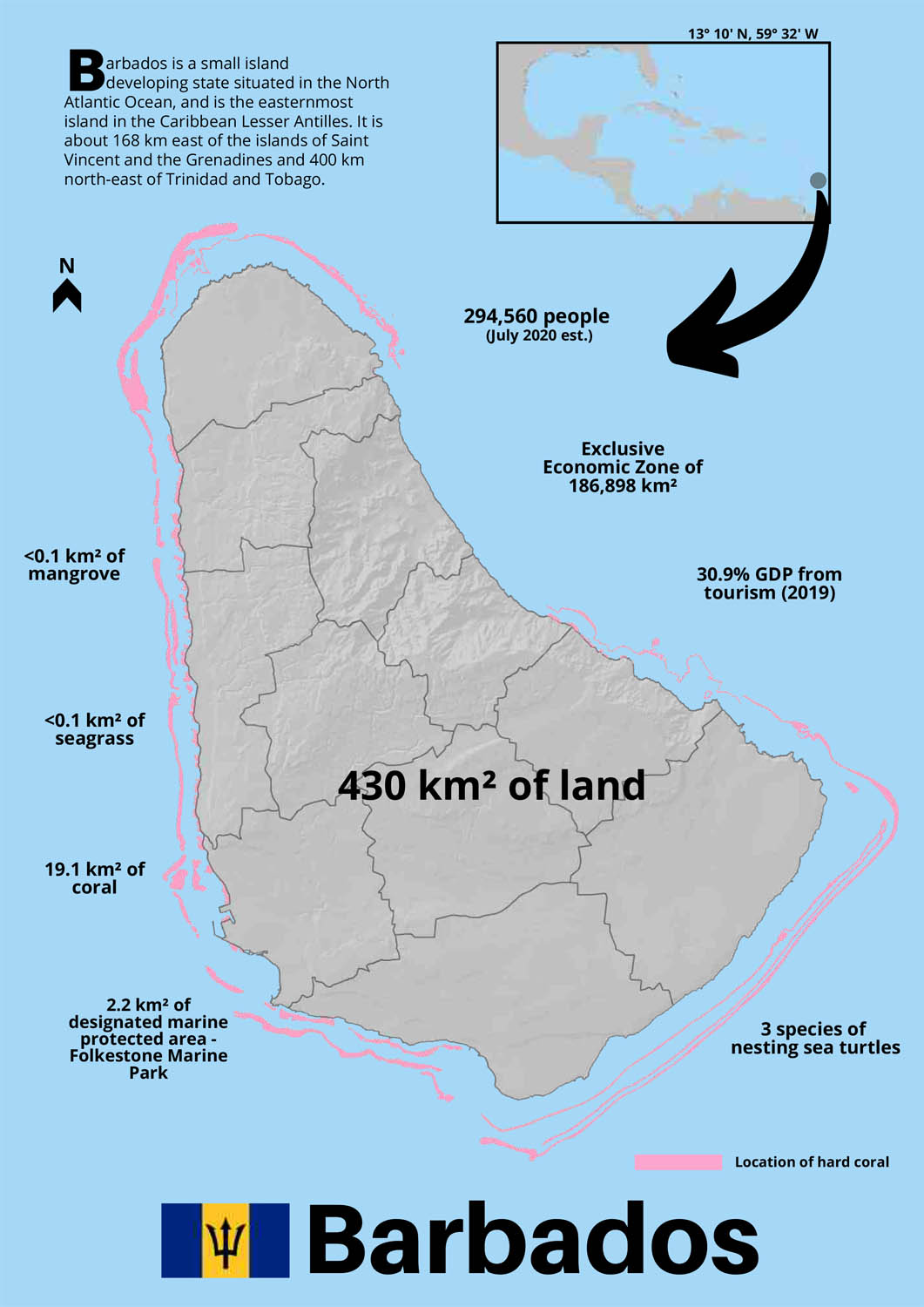 Map from the CZMY/Cermes Coral Reef Report Card showing occurrence of living reefs around Barbados, and some basic stats – The West Coast Fringing Reefs – Bank Reefs & Bank-Barrier Reef – South Coast Patch Reefs |
Consult that same Report Card, pages 6 & 7 for a description of the Common Benthic Components of Barbados’ Reefs and how those vary between the different reef types.
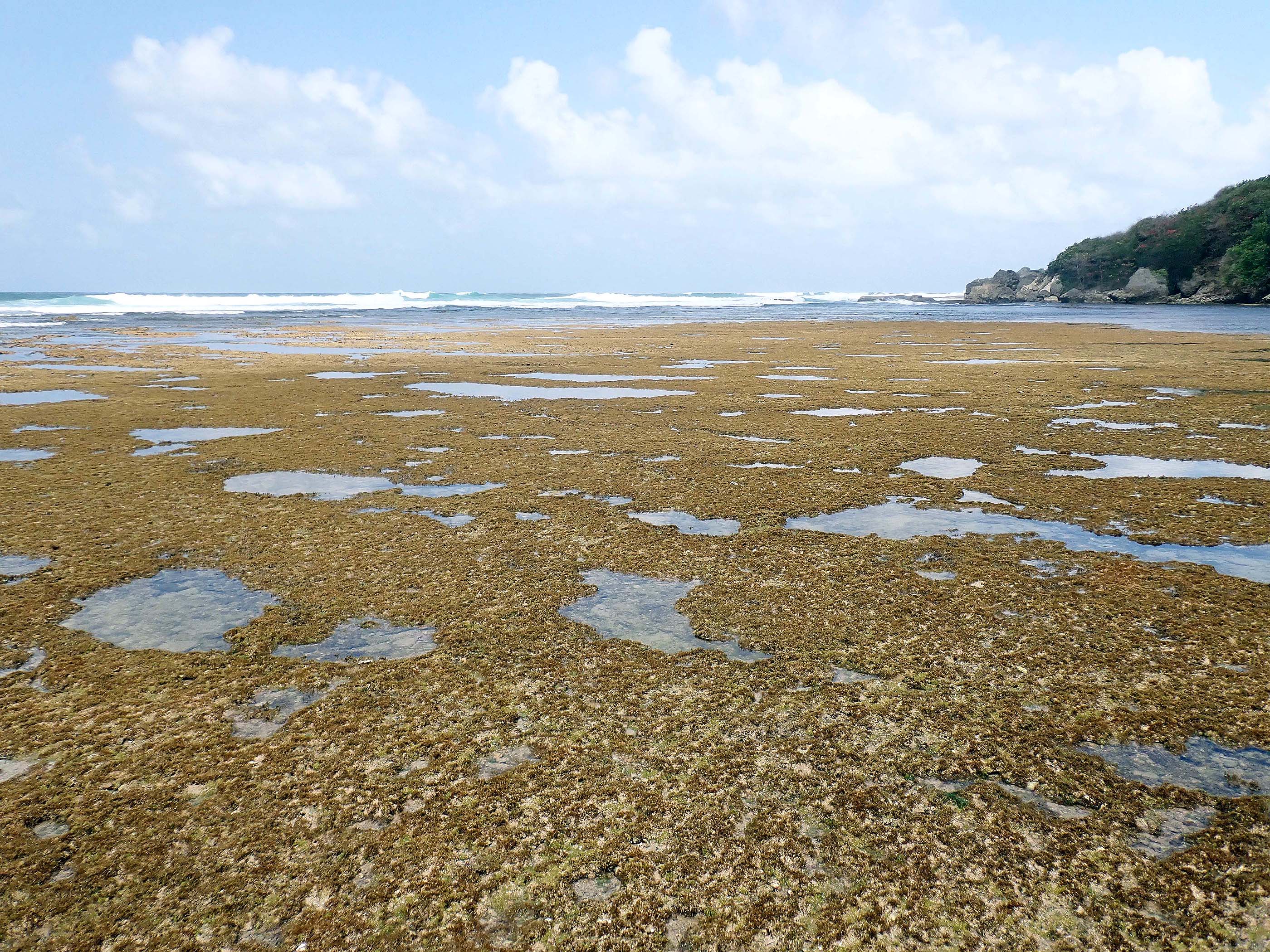
Coral Rubble Flats at Martin’s Bay, Mar 1, 2025
Coral Rubble Flats
They are also described as “Intertidal Reef Flats”, “Extensive Reef Flats”, and Intertidal Reefs. Coral Rubble Flats are not generally cited as a type of fringing reef, but they share some of the same characteristics and functions so perhaps they should be; otherwise they tend to be overlooked as significant habitats and contributing to coastal portection. Substantive Coral Rubble Flats occur on the east coast of Barbados. View Post: The “Coral Rubble Flats” of the east coast of Barbados 4Mar2026; and related page: Coral Rubble Flats, Algal & Gorgonian Pavements
More about the Fringing Reefs
| From: Barbados’ west coast fringing reefs: a broad-scale assessment of their ecological condition and impacting environment (2009-2012) by S. Connell, R. Mahon & H.A. Oxenford, 2026. CERMES Technical Report No 112. {Paragraphing and some punctuation inserted]
Barbados has numerous fringing reefs along the west coast that are typically attached to the shoreline with no lagoons present and separated from one another by sand habitat. They generally lack association with sea grass beds and mangroves, except for remnant mangrove pockets in some of the gully outfalls. The typical fringing reef characteristics have been described in detail by Lewis and Oxenford (1996) and Brathwaite et al. (2008). In brief, the fringing reefs generally have three zones: |
*“Rugosity is a term used by coral reef biologists to measure the surface roughness of a coral reef. It is also an indicator of coral biodiversity and the disturbances they endure. Research studies have shown that reefs with a high level of rugosity have a better abundance of marine life and species. Importantly, areas with high rugosity have more surface area for corals to attach and grow.” – wiseoceans.com,
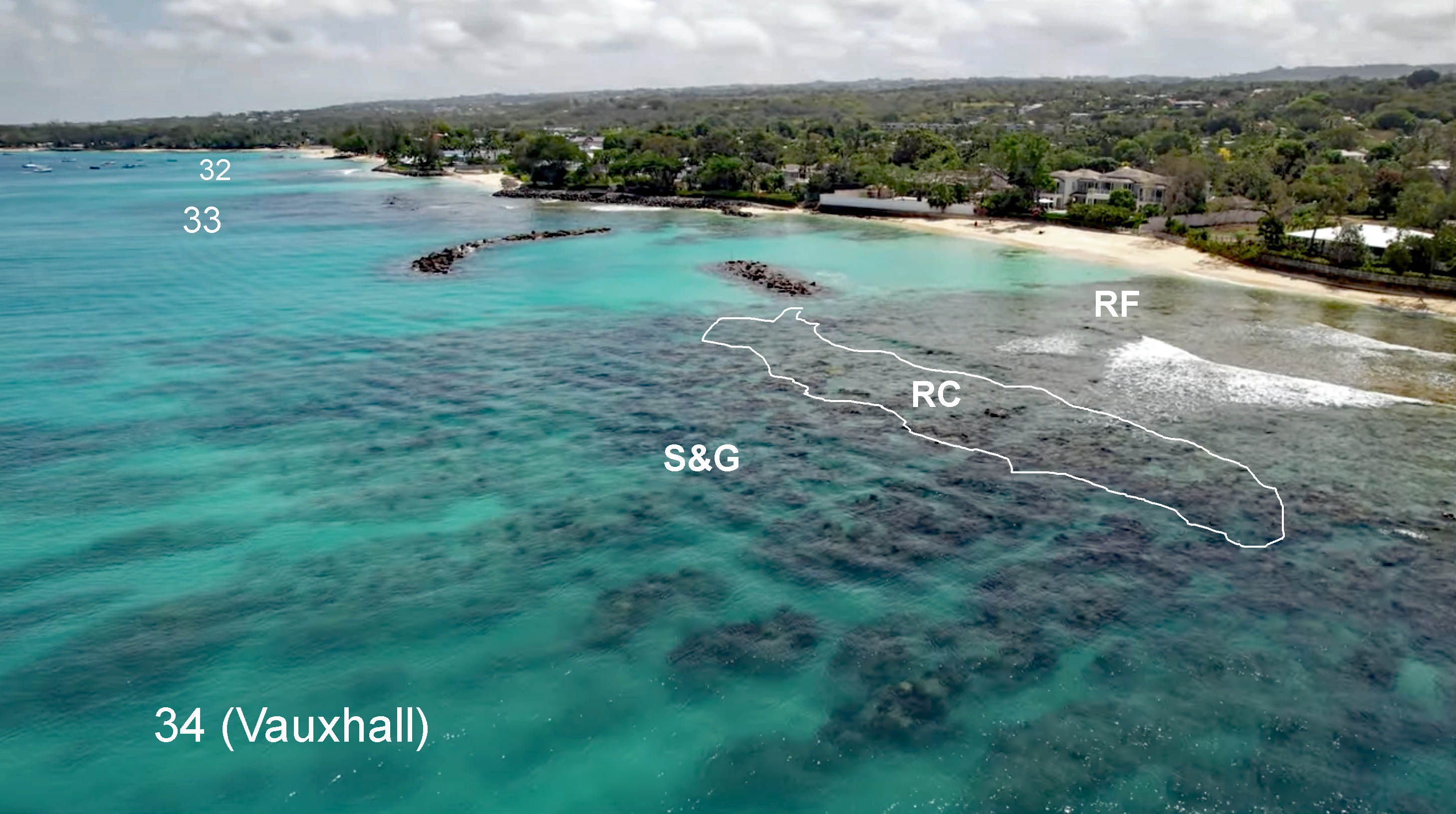
Drone Image showing MPA Reef 34 (Vauxhall) in foreground; CERMES zones; and MPA Reefs 33 and 32 to the north. Image is a screen capture from drone video on YouTube by the Wandering Bajans, May 7, 2022. RF=Reef Flat, RC=Reef Crest, S&G = Spur and Groove.
Fringing Reefs on the west coast of Barbados are the focus of this website, and particularly those in the Folkestone MPA (Marine Protected Area).
These reefs can viewed by snorkelling. As indicated by the 2020 Report Card – which cites data from a survey in 2017 – and a subsequent Report Card for 2022, overall the fringing reefs are not in good health (compared to pristine fringing reefs). However there is still much life to be seen on them, and some are better than others.
One can find small patch reefs, or sections within fringing reefs that are much better than average.
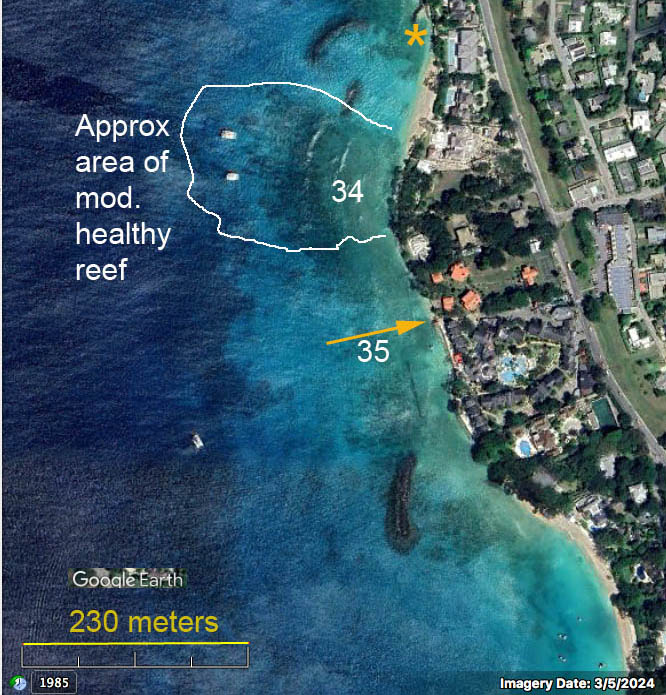
Area of Moderately Healthy Reef within Vauxhall Reef. View .What Differentiates Vauxhall Reef
One such area is a large piece (about 2 ha) of the Vauxhall Reef (Reef #34 in the MPA) near Holetown, which I somewhat happenstanced upon in 2015 and have visited many times since. This reef was not amongst the 47 fringing reefs monitored every 5 years since 1997, and thus was not rated for reef health in the Coral Reef Report Cards for 2017 and 2022.
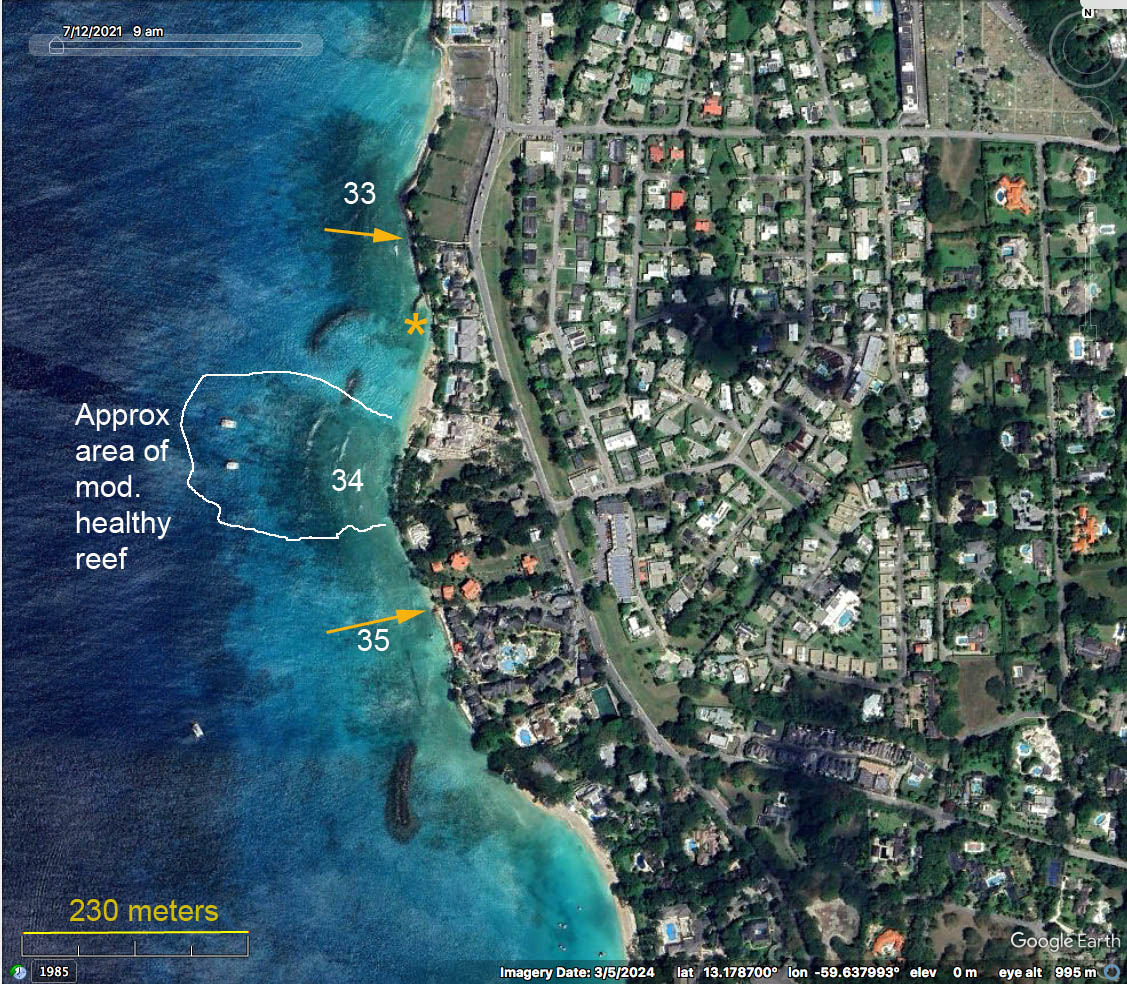
However many visual examinations of that reef and of other fringing reefs in the MPA I have made and recorded in photos and videos make a pretty convincing case that it is the most healthy piece of fringing reef in the MPA.
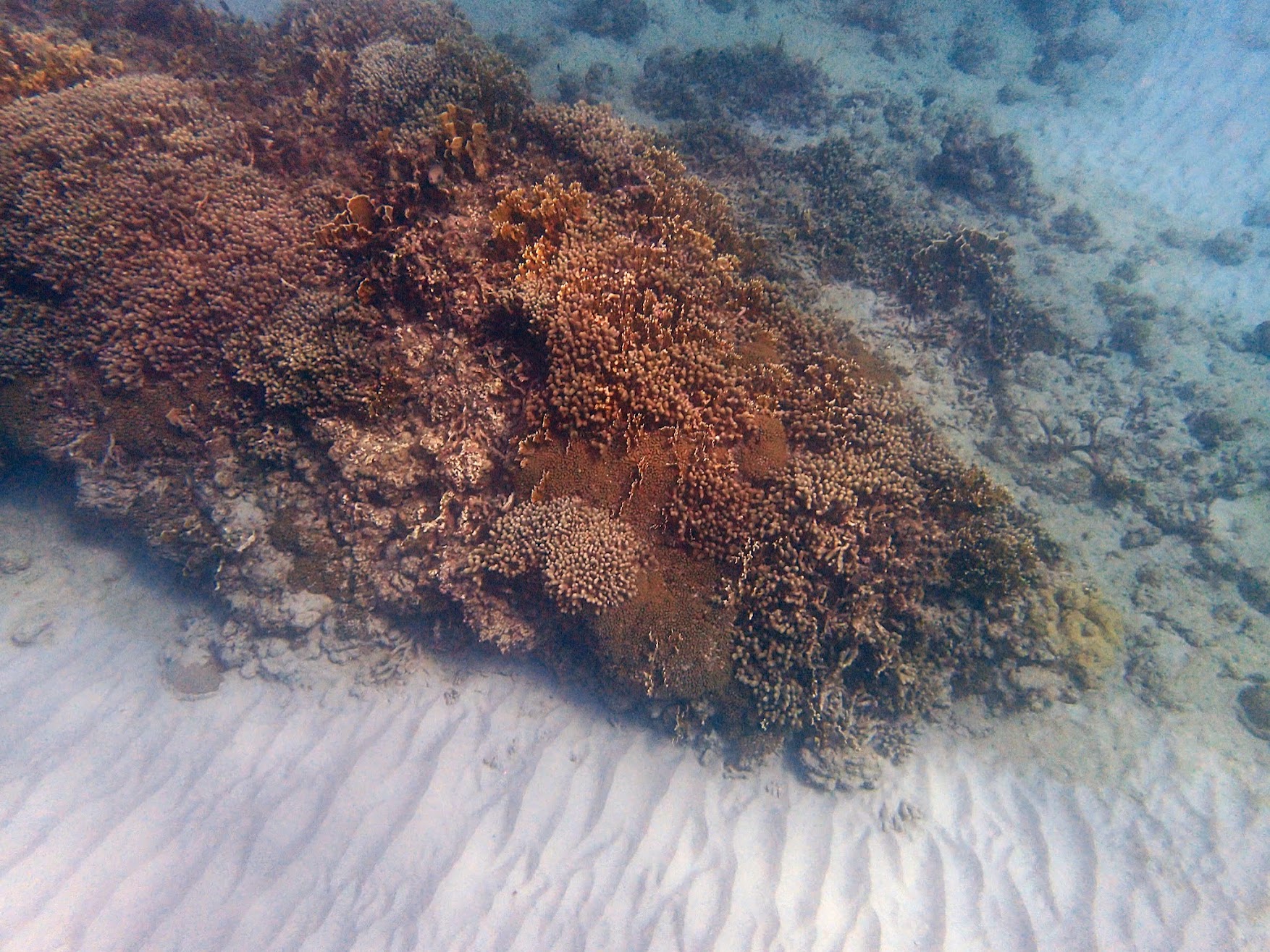
Outer Spur on Vauxhall Reef (2015 photo)
That’s also well known to the catamaran-, glass bottom boat-, and other boat-based snorkelling tour operations that visit the area; they tie up to fixed moorings near a wreck just seaward of the fringing reef, throw some feed into the water over the wreck elliciting a swarm of fish, and then lead their snorkelling group over the outer spurs. It’s “the best reef you will see in Barbados” an older, long time tour boat operator told a group I was with in 2025.*
*More support for that assertion comes from the recent (March 2026) CERMES report (cited above) in which the combined MPA Reefs 34 and 35 identified in that report as the Vauxhall Reef, ranked 2nd for Visual Health Index among 43 Fringing Reefs on the West Coast (Vauxhall VHI 3.61; range for all reefs 1-3.75) – and highest among the 6 Fringing Reefs of the MPA.
The Vauxhall Fringing Reef features prominently in the observations of Fringing Reefs in Barbados reported on this website. Those observations were made during the early winter months of 2015 to 2020; 2023, 2024 and 2025. I was not able to visit Barbados in 2026, but I expect to do so again in 2027 and beyond, for a while anyway (I’m over 80).
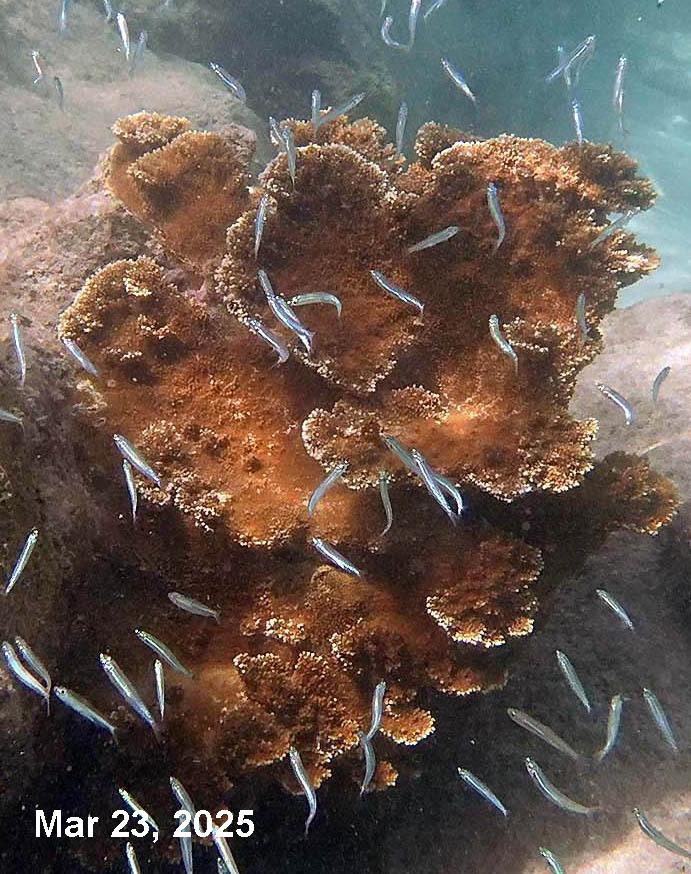
A survivor.
Unfortunately, Barbados is not immune from larger scale factors affecting reef health in the Caribbean. Over the years 2015 to 2020, the Vauxhall Reef remained in very good health overall, but post-2022 has exhibited significant declines due to
– arrival of the exotic SCTLD (Stony Coral Tissue Loss Disease) in late 2022, and its rapid spread in 2023 affecting many brain corals, pillar coral
– extreme warming in the fall of 2023, which killed off most of the Acroporoid corals and Stinging Corals and many brain corals
– extreme physical disturbance of the spurs associated with the passage of Hurricane Beryl on June 30/July 1 of 2024.
The impacts of these factors are recorded in videos and photos and descriptions on this website.
Now I look for “survivors” of such impacts, and have found them, likewise recorded in the pages of this website. Perhaps some of these survivors will repopulate the reefs in future, helped in some cases by first multiplying them in land-based “Living Coral Biobanks“.
While in Barbados, I volunteer with CORALL, a coral conservation group. Through that association I have visited sites I would not have visited otherwise, and my interactions with this group has contributed substantially to my perspectives of the Barbados fringing reefs. I am very grateful to the people of Barbados for their care of the waters and life around them.
– david p
Also View:
– Coral Reefs and their Management
By Barbados Coastal Zone Management Unit, document posted on www.barbados.atlantissubmarines.com. From that document:
BEACH PROTECTION
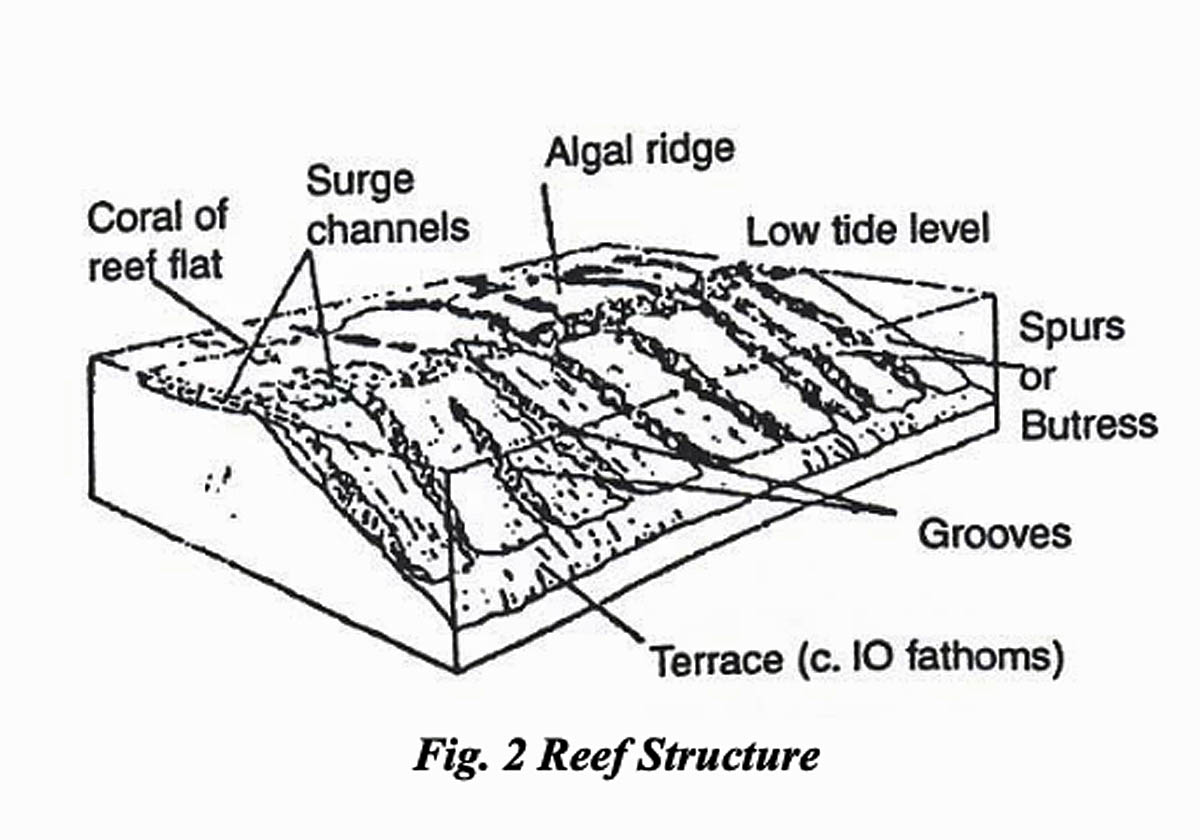 “Fig 2: Reef Structure” (CZMU) Most reefs have a spur and groove system which extends along the reef flat and some distance down the reef slope. This system is often extensively wide and long, depending on the reef slope. The spur and groove system appears to be formed by erosion reinforced by the prolific seaward growth of corals on the groove. The overall result of this spur and grove system is self-reinforcing. Incoming waves cause extensive surges along the groove resulting in the re-suspension of sediment and the continual movement of reef rubble prevents effective coral growth. Less turbulent waters experienced in the spur region allow coral growth which reduces turbulence further. In effect the spur and groove system of the reef structure acts primarily as a dissipator of the continual wave energy operating on the coastal shoreline. By dissipating wave energy before it reaches the shore the beach is protected from extensive wave action. |
View my Observations on Fringing Reefs via the Top-level pages ObsFR-I, and ObsFR-II