
NAVIGATION
This page is a sub-page of About, a top-level page on
the website Barbados Fringing Reefs and Seagrass Beds
Natural History Perspectives of a Visiter
Go to About for a list of other subpages in this section of the website.
(dp: Writer, Webmaster)
I first went to Barbados (from Canada) for a 3 week period in Feb of 1966 with Mel Goldsten, my McGill University phycology (algae) prof, to assist William Randolph Taylor in his collection of seaweed specimens; in the summer of ’66, I attended a 6-week course in Tropical Marine Biology at the Bellairs Research Institute in Holetown. That all led to my PhD thesis research over the period 1967-1970 on seagrass beds in Barbados and Carriacou (Grenada). From ’67 on, I was accompanied, supervised and assisted by my spouse Nina.
We spent shorter stints (a few weeks up to 9 months) in Barbados subsequently, some of those family holidays, some to conduct research. Since 2015, we have returned for periods of 2-3 months in the Jan-Apr interval, except in 2021,2022, 2026, some of it (2015, 2016 and 2019) to repeat surveys of seagrass beds I had conducted in 1969.

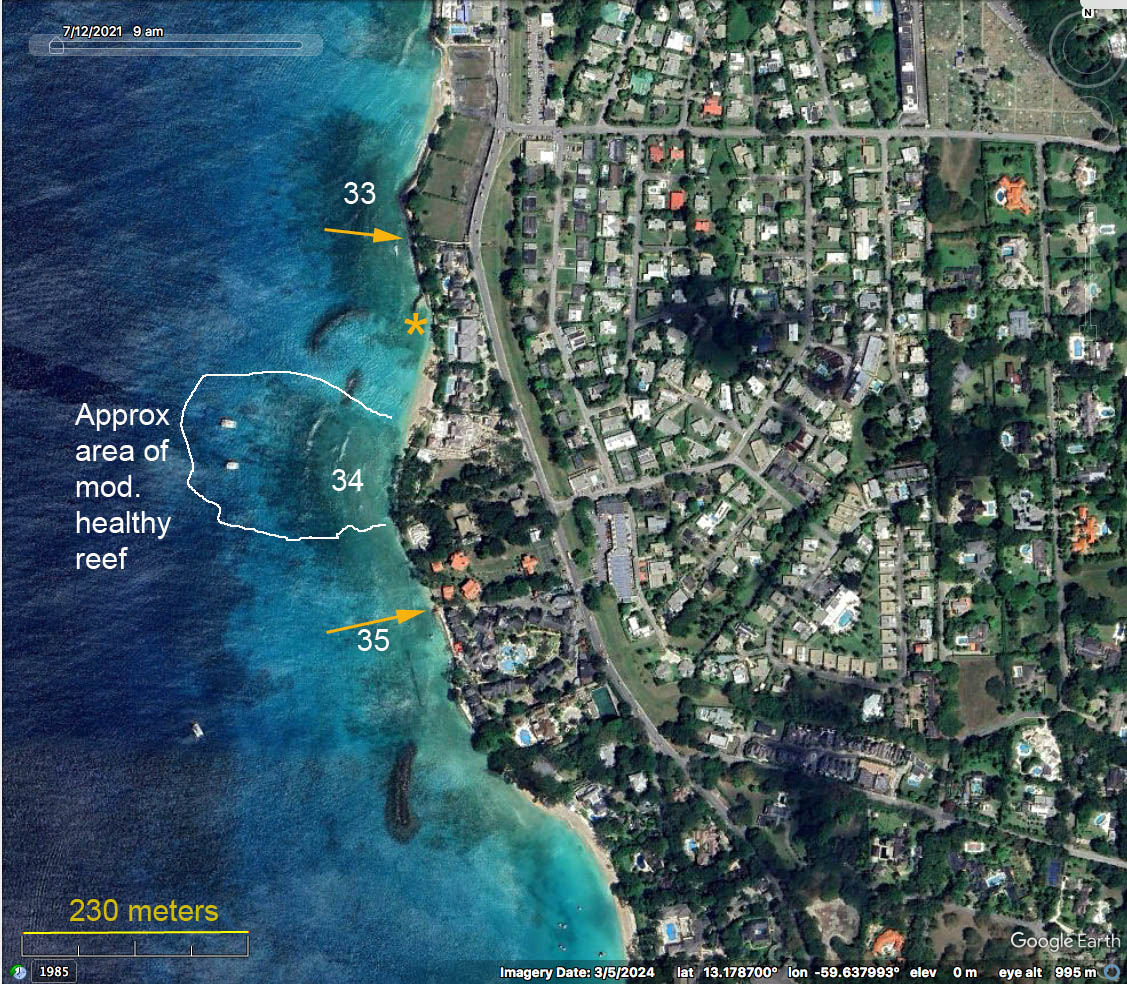
Nearshore/Fringing Reefs of the Barbados Folkestone MPV, from Google Earth.
I spend as much time as I can with my head in the water, in recent years mostly in the area of the Barbados Marine Protected Area on the west coast. I try to make at least one visit to Bath (on the east coast of Barbados) where I conducted a lot of my PhD research on seagrass beds.
I volunteer with CORALL when I am in Barbados.
This blog/website is a place for me to organize some of my recent, mostly informal observations as I attempt to update myself on the state of Barbados coral reefs and seagrass beds in the field and in the literature.
There has been a lot of high quality science forthcoming related to the Reefs of Barbados since my early days in Barbados, mostly from UWI at Cave Hill, as well as advances in management at the local government level, and in citizen science activities related to the Reefs of Barbados.
Perhaps this blog/website will evolve into something more; or not. It helps me to organize my observations and thoughts; to the extent it can be of interest to others, I am happy.
Currently, most of the “Observations” on reefs are of reefs and reef organisms in the Marine Protected Area off of Holetown on the west coast, with a focus on the Vauxhall Reef observed 2015-2025. I was not able to visit Barbados in 2026, but I expect to return and to continue such observations in 2027.
I have now posted a large set of qualitative and quantitative observations that I conducted on seagrass beds at Bath and St Lawrence in Barbados in 1969, repeated in 1994, and 2015, with some less formal observations in years 2005, 2011 and 2017 to 2025. See ObsSG for more details. This is an ongoing exercise, far from complete.
Some of these descriptions provide a much greater level of detail and certainly more photographs than are or would be provided in related scientific publications. I do that in part because there has been so much degradation of fringing reefs of Barbados, with accelerated loss in the last few years after some recovery earlier on, and there has been outright loss of seagrass beds as documented in these pages.
Coral/Coral Reef restoration efforts have been ongoing for some time in Barbados; to my knowledge there have not yet been any efforts to restore seagrass beds in Barbados, but there are some promising developments in that area.
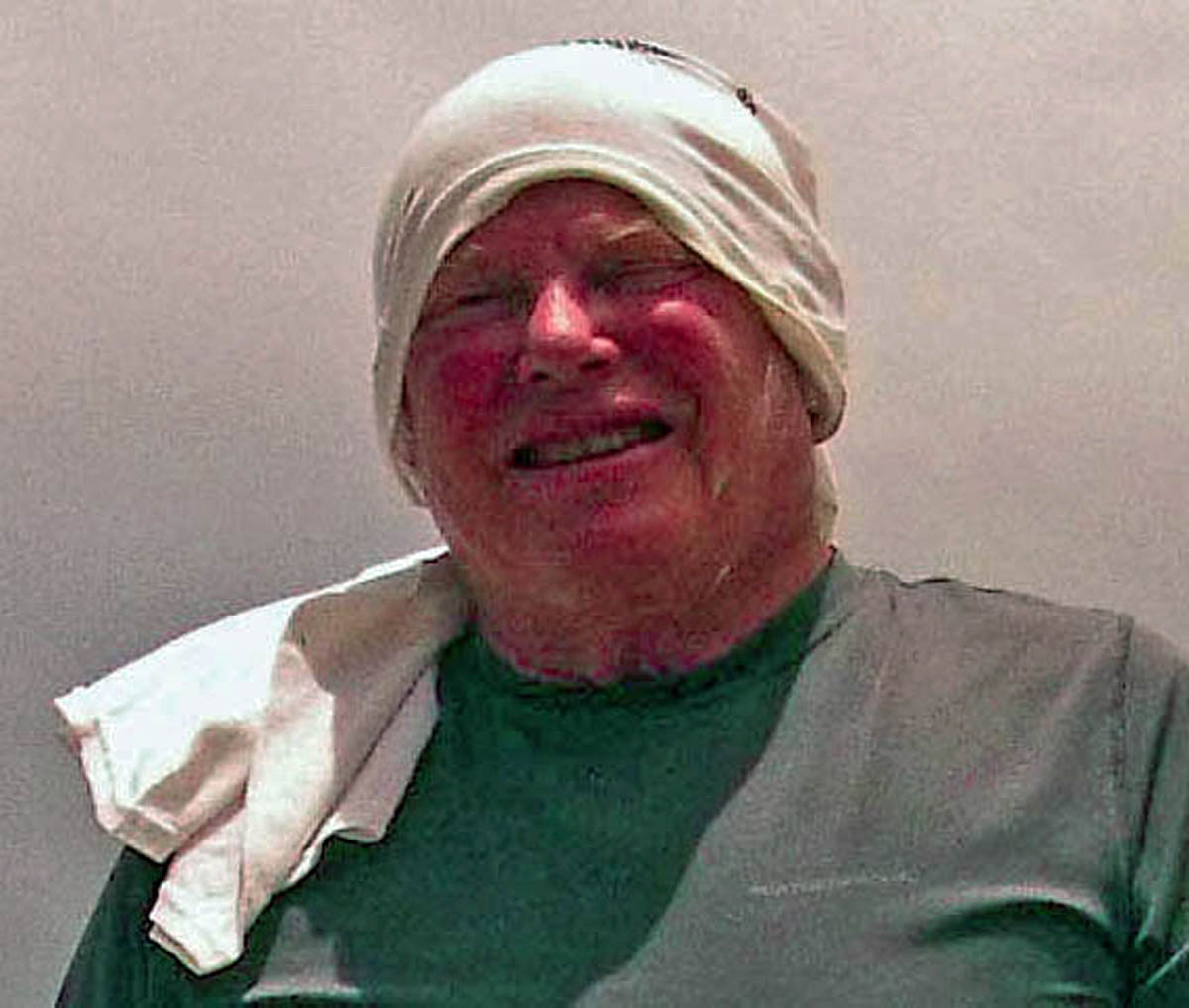
Early days of 2015, ‘totally protected from the sun, ‘forgot about my face. How could I have forgotten the first time I did that 49 years previously!!?
Thus I think there is some value in documenting my recent observations (2015 onwards) on the Vauxhall Fringing Reef* as an example of a healthy fringing reef in Barbados in recent times; and my observations on seagrass beds (1967 – 2025, with many breaks) provide some detailed examples of the state of healthy seagrass beds in Barbados – most notably those at Bath on the windward coast – in years gone by.
*I use that description (Vauxhall Reef) somewhat loosely; the “healthy” part is limited to about 2 ha within MPA Reefs 34 & 35 which are commonly identified together as the “Vauxhall Reef”.
I would like to think that at some time in the future, the people of Barbados and visitors to this wonderful place will be able to enjoy reefs and seagrass beds in much the same state – or in an even better state – as were present in the 1960s.
For more about me, see versicolor.ca.
– David P, Feb 1, 2019; updated Mar 14 , 2026

A young boy’s depiction of the “Bellairs Reef” in 1978. My son, Graham, made this coloured-pencil drawing as a six year-old. We had spent a couple of months at the Bellairs Research Institute in the summer and he made the drawing after our return home in the fall, As I remember, he surprised us with it, it wasn’t prompted. We had Idaz Greenberg’s Guide to Coral and Fishes of Florida, the Bahamas and the Caribbean (1977) which he would have referred to. I think only the barracuda he might not have actually seen on the reef; the other fishes (e.g. glassy sweepers in crevices, blue tangs) and invertebrates (e.g. Diadema, gorgonians) were all common at the time, and he accurately depicts the abundance of coralline algae on the reef framework at right. Original is 34.5 x 19.2 cm.
Click on image for larger version