
NAVIGATION
This page is a sub-page of ObsSG, a top-level page on
the website Barbados Fringing Reefs and Seagrass Beds
(www.versicolor.ca/barbados).
Go to ObsSG for a list of other subpages in this section
of the website.
ON THIS PAGE
– Seagrasses are flowering plants
– The Species in Barbados
– Occurrence and State of Seagrass Beds in Barbados
– Occurrence of seagrasses in more diffuse aggregations
– More about seagrasses in the Caribbean (links)
DRAFTING…
Seagrasses are flowering plants
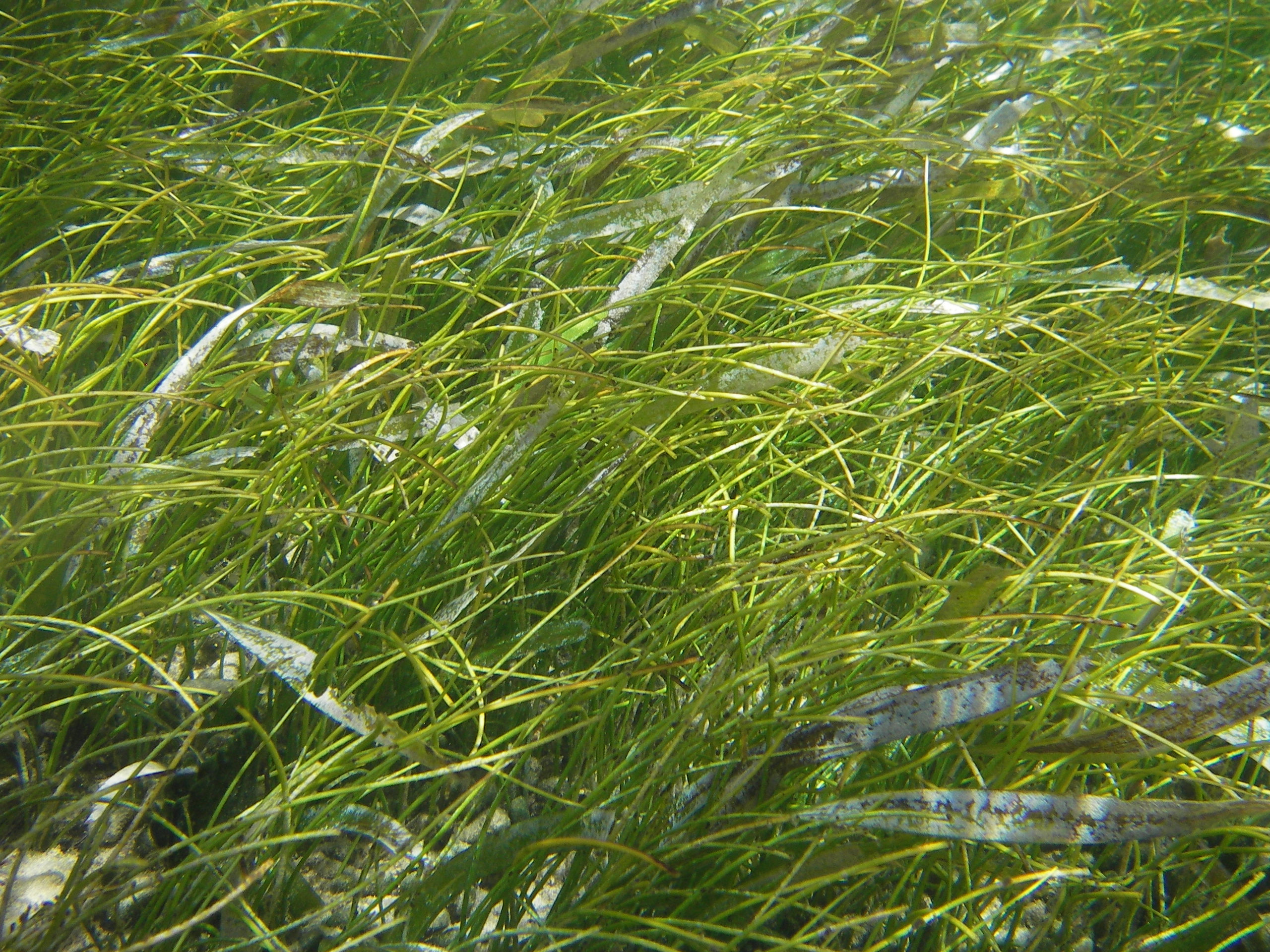
Mixed stand of Syringodoim filiforme (tubular leaves, more abundant) and Thalassia testudinum (flat leaves, less abundant) at Bath Barbados in 2005.
“Seagrasses” are flowering plants (angiosperms) occurring in saltwater; they belong to the same major group of angiosperms, the monocotyledons, to which true grasses (graminae) belong. They are “higher plants” with vascular (conductive) tissues, leaves roots and flowers, to be distinguished from “seaweeds” which are algae and are lower plants without vascular tissues and without flowers. There are approx. 70 species worldwide.
The Species in Barbados
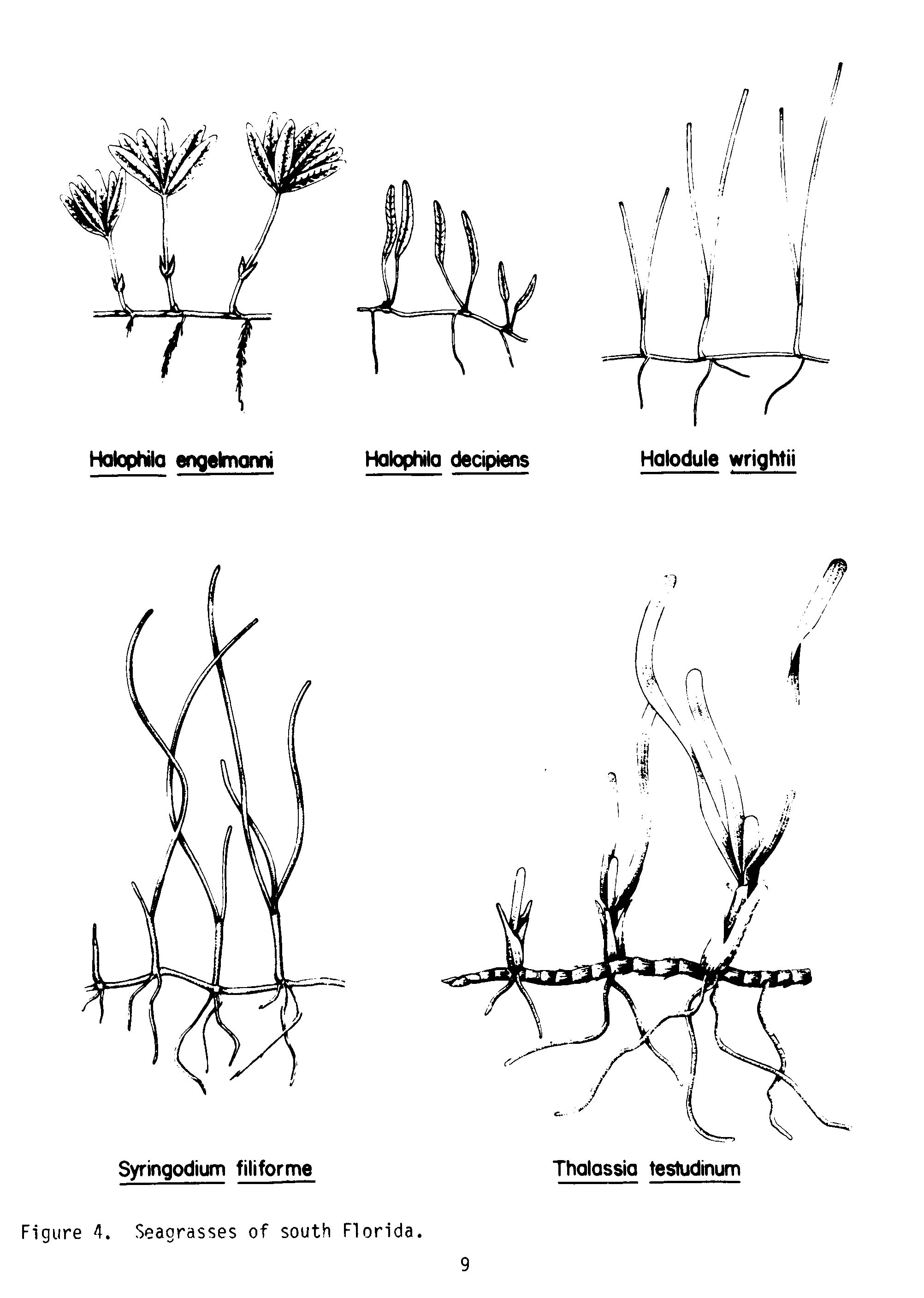
Sketches of seagrass species occurring in south Florida from Zieman (1982); 4 of these occur in Barbados
Of the 6 species of seagrass commonly found in the Caribbean region, four are found in Barbados:
(i) Thalassia testudinum (Turtle Grass)
(ii) Syringodium filiforme (Manatee Grass)
(iii) Halodule wrightii (Shoal Grass)
(iv) Halophila decipiens (Paddle Grass)
Of those species, T. testudinum, S. filiforme and H. wrightii are common; H. decipiens uncommon.
Halophila stipulacea, a seagrass originating in the Indo-Pacific region and occurring in the Caribbean as an invasive species has not yet been recorded in Barbados. The first known occurrence of H. stipulacea in the tropical Atlantic was a report for Grenada in 2002; Grenada lies approx. 215 km to the SW of Barbados. Scheibling et al. (2018) and Patriquin et al. (2024) report on the occurrence of Halophila stipulacea around the island of Carriacou (Grenada) in 2016.
Distinct aggregations of seagrasses are referred to as “seagrass beds”. They may be composed of any one of species (i) to (iii) above or of mixtures of those species.
Often these beds are elevated above the surroundings because of the sediment-trapping qualities of seagrasses, and appear as dark patches in aerial views.
Typically these seagrasses occur at depths of less than 5 m, but in Barbados they may be found down to circa 10 m.
Occurrence and State of Seagrass Beds in Barbados
From A NATIONAL BIODIVERSITY STRATEGY & ACTION PLAN FOR BARBADOS (2002) , some line breaks and punctuation/bolding inserted:
“Seagrass areas, commonly known as seagrass beds or meadows, are distributed along the coast in shallow water where sunlight penetration is adequate to facilitate photosynthesis.
Delcan (1994b), reported seagrass beds
– along the west coast at Shermans, Six Men’s Bay, Speightstown and Brighton;
– along the southwest coast at Bridgetown, Hastings, Rockley, Worthing, St.Lawrence, Dover, Maxwell, Welches, Oistins, Enterprise and Atlantic Shores of Barbados;
– and along the east coast at Bath and Conset Bay.
“There is evidence that the quality of the local coastal marine water is deteriorating due to increased sedimentation, eutrophication and sewage pathogens, localised increases in temperature, decreases in salinity, and perhaps increases in toxins (Delcan, 1994a).
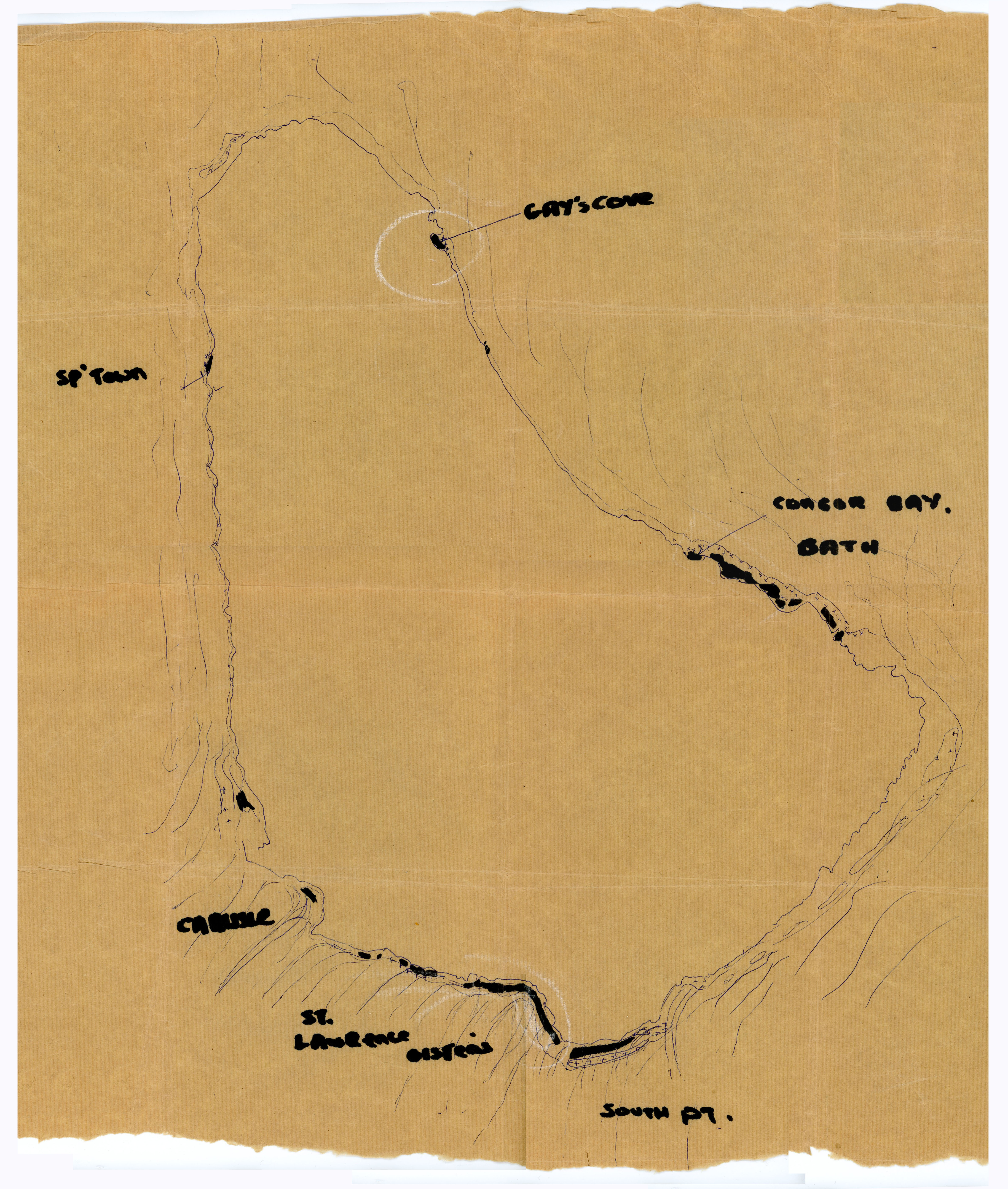
Tracing from aerial photographs showing putative turtlegrass (T. testudinum) beds.
At right is a tracing from aerial photographs I produced in 1967 showing all of the dark patches/putative turtle grass (Thalassia testudinum) beds. I checked them out by direct observation, T. testudinum was confirmed at all sites excepts Gay’s Cove.
I went to Gay’s Cove; there was a coarse rubble beach with a fairly steep descent into deeper water and I was greeted on that slope by a very large barracuda – my first such encounter. I left without further investigation. (Later on I got used to the presence of large, apparently curious, barracuda lurking in the seagrass bed at Bath as I worked, their jaws opening and closing – and showing their teeth – to breathe, not to threaten.)
Seagrass beds are much less abundant around Barbados than they are around most other Caribbean islands, as Barbados lacks the large protected bays, estuarine areas, and barrier reef lagoons where they are typically abundant.
Unfortunately, the already limited area of seagrass beds in Barbados has declined significantly from the 1960s.
Comment Brathwaite et al, 2008, pp 48-9 in Barbados: A Coral Paradise (Miller Publishing), paragraphing inserted:
Seagrass beds have faired little better than mangroves on the island. Areas where the habitat was once prolific such as Worthing Lagoon in the south and Bath in the east have either steadily or abruptly lost their grassy marine meadows over the course of the last 40 years.
These fish nurseries and natural sediment sinks have all but been lost from the southern coastline, with only a few pockets of growth remaining in the St. Lawrence area. Here the demise has been witnessed since the 1960’s when the lagoon once hosted a mature seagrass meadow comprising dense mats of turtle grass and associated macroalgal species, sea eggs and conch.
By the 1990’S the area of the meadow had declined considerably and the early 2000’s witnessed a drastic decline and virtual disappearance of any seagrass in this area. This was a result of a combination of deteriorating water quality and changing sediment transport patterns within this dynamic area, together with a bumper recruitment of the white sea egg which grazed the grass blades en masse an~their underground rhizomes as sand erosion exposed them.
It is ironic that the sea egg, much prized as a local delicacy,decimated the last remaining beds within the lagoon, leaving bare sand in their wake. Recent studies of the lagoon however are revealing signs of recovery of seagrass and corals within the area.
Thus, barring the occurrence of severe natural or man-made disturbances in the near future, there is hope that Worthing Lagoon may one day be covered in a lush seagrass meadow again.
At Bath, the loss of seagrasses is less severe, as this area is much less prone to human induced impacts than the heavily developed south coast. However, changes in water quality due to increased levels of development, land use changes and increased volumes of sediment carried to the nearshore in storm water run-off have taken their toll on the habitat.
Regrettably, the Bath seagrass beds, the largest sweep of seagrass beds in Barbados followed a demise much like that which occurred at St. Lawrence circa 20 to 25 years earlier. See Bath 2024 & 2025.
It appears (2024, 2025) there remain only patches of Turtle Grass (Thalassia testudinum) beds anywhere in Barbados, but I have not made a formal survey to back that up.
Occurrence of seagrasses in more diffuse aggregations
The descriptions above refer generally, I believe, to “seagrass beds” rather than to seagrass species per se which can include, beside occurrences in distinct “beds”, sparsely distributed plants that don’t form distinct beds and don’t show up as “dark patches” visible from shore, from the air or from a boat (as do “seagrass beds”).
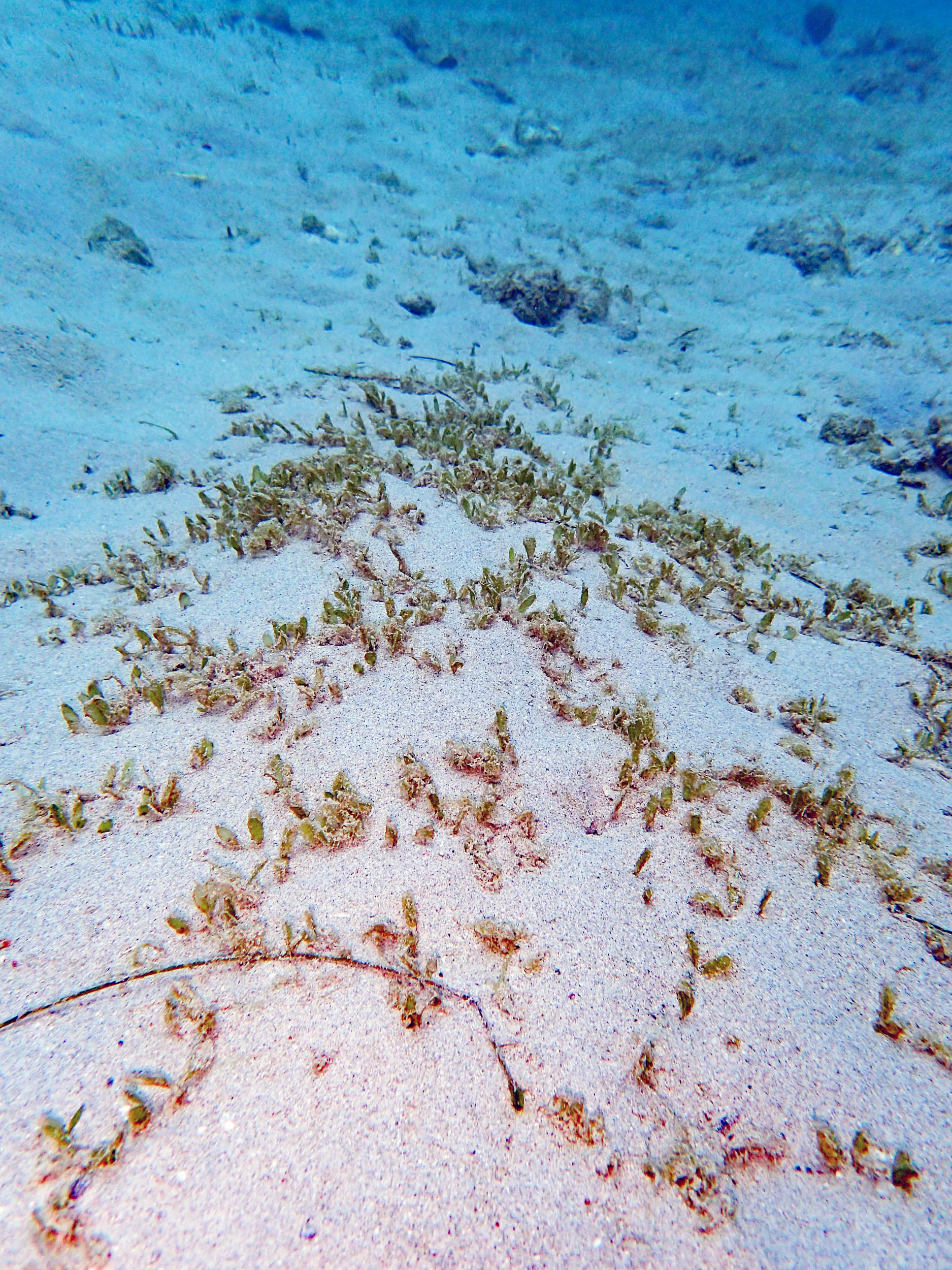
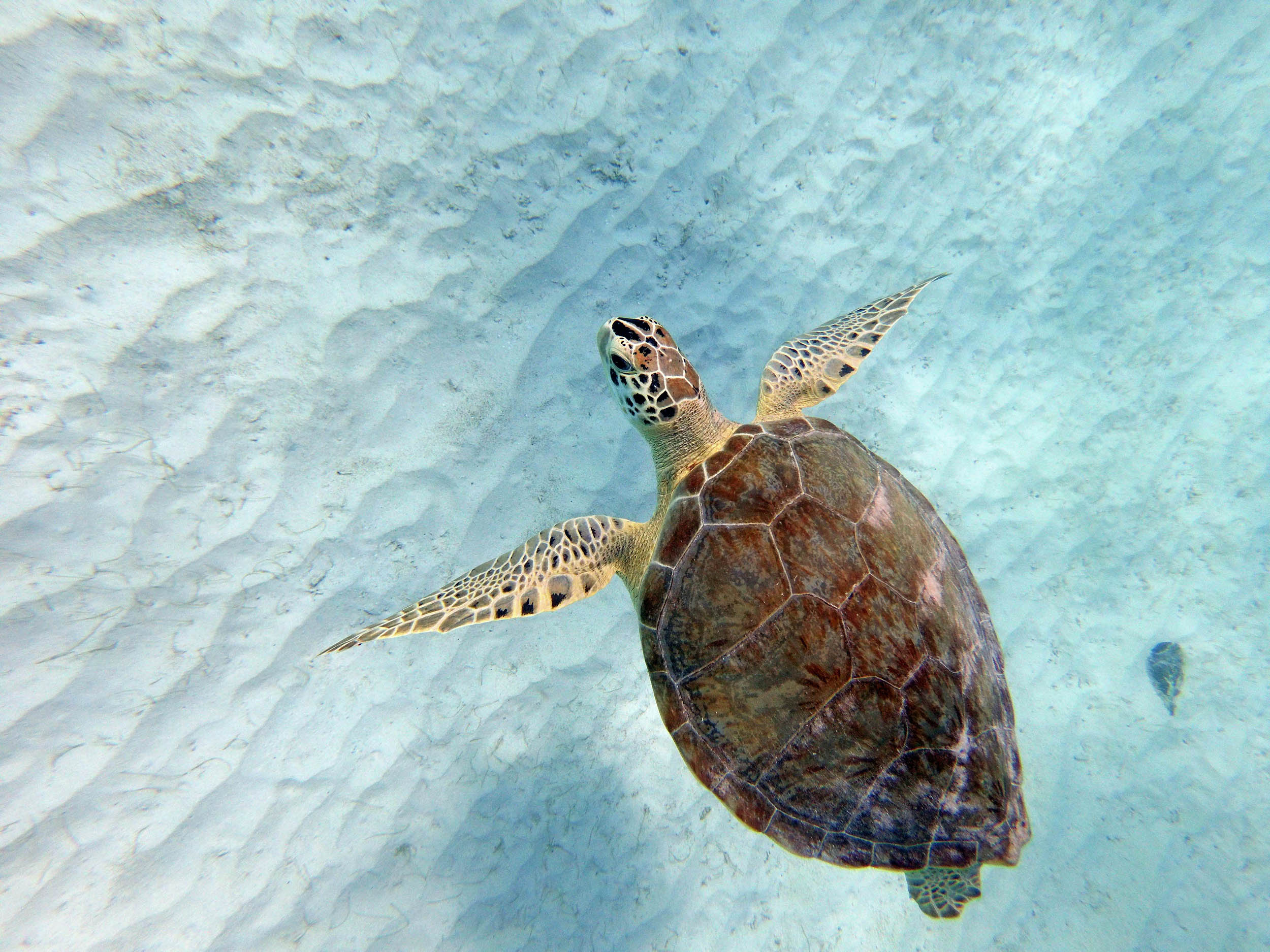
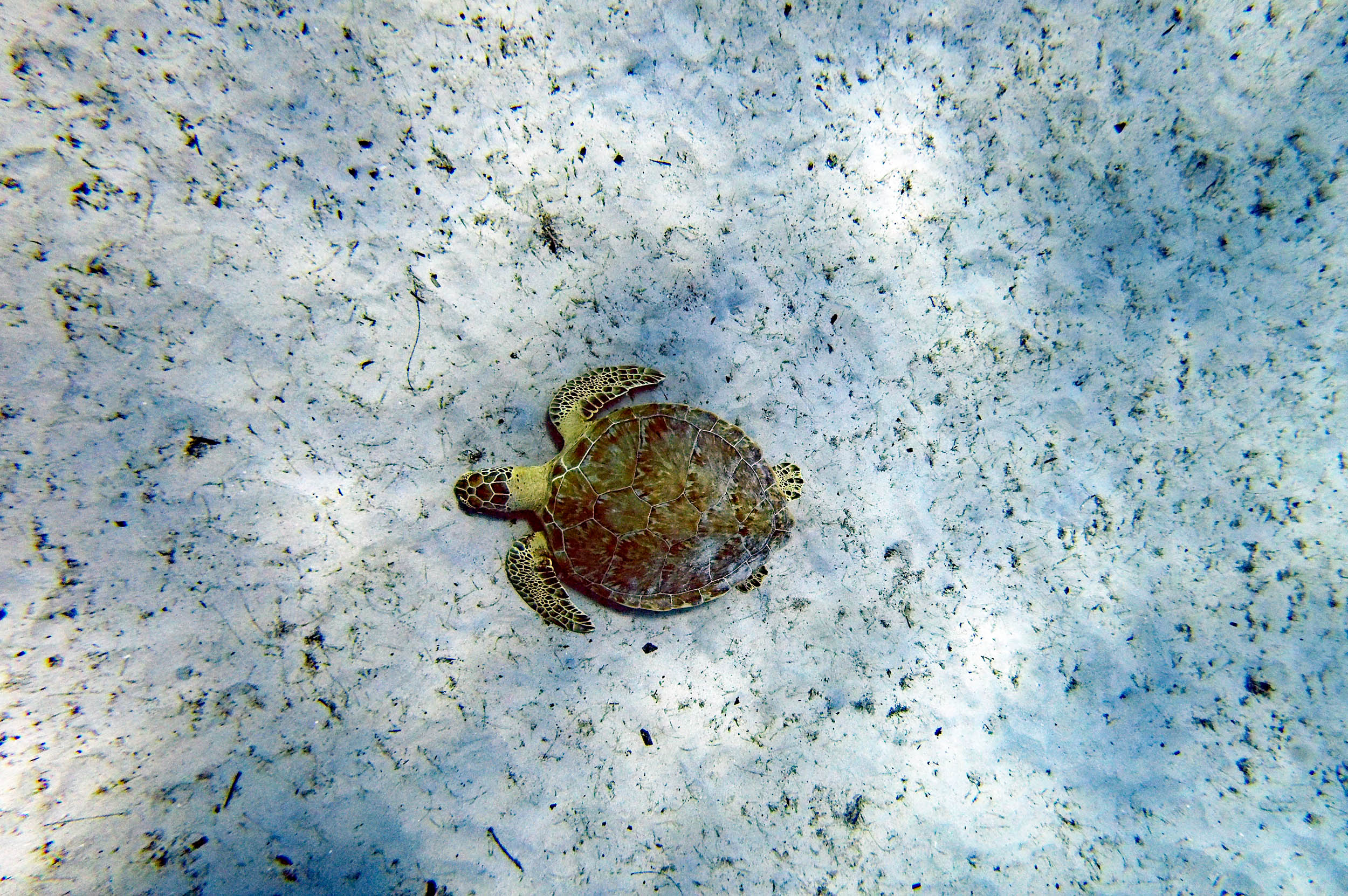
Some examples are shown below. Except for the first, which is a patch of Halophila decipiens, the photos are of sparsely distributed Halodule wrightii. Interestingly, both areas where I observed them in recent years – Carlisle Bay on the SW coast, and SurfSide in the MPA on the west coast – are frequented by green turtle, a seagrass-grazing species. As well, in Carlise Bay, I observed a Red Cushion Star, a species once common in seagrass beds of the Caribbean but that is much less common these days. So despite the low density of seagrass in these areas, they still seem to host some of the biodiversity characteristic of the more dense aggregations in readily recognizable”seagrass beds”.
The Halodule wrightii at SurfSide which I observed in 2024 and in earlier years, appeared to have been completely eliminated when I visited the area in Feb and Mar of 2025. I suspect the causative agent was massive physical disturbance by swells generated by Hurricane Beryl, those impacting Barbados on June 30/July 1, 2024. Coincidentally or not, green turtles which had been common at Surfside in earlier years, were completely absent in Feb and Mar of 2025.
|
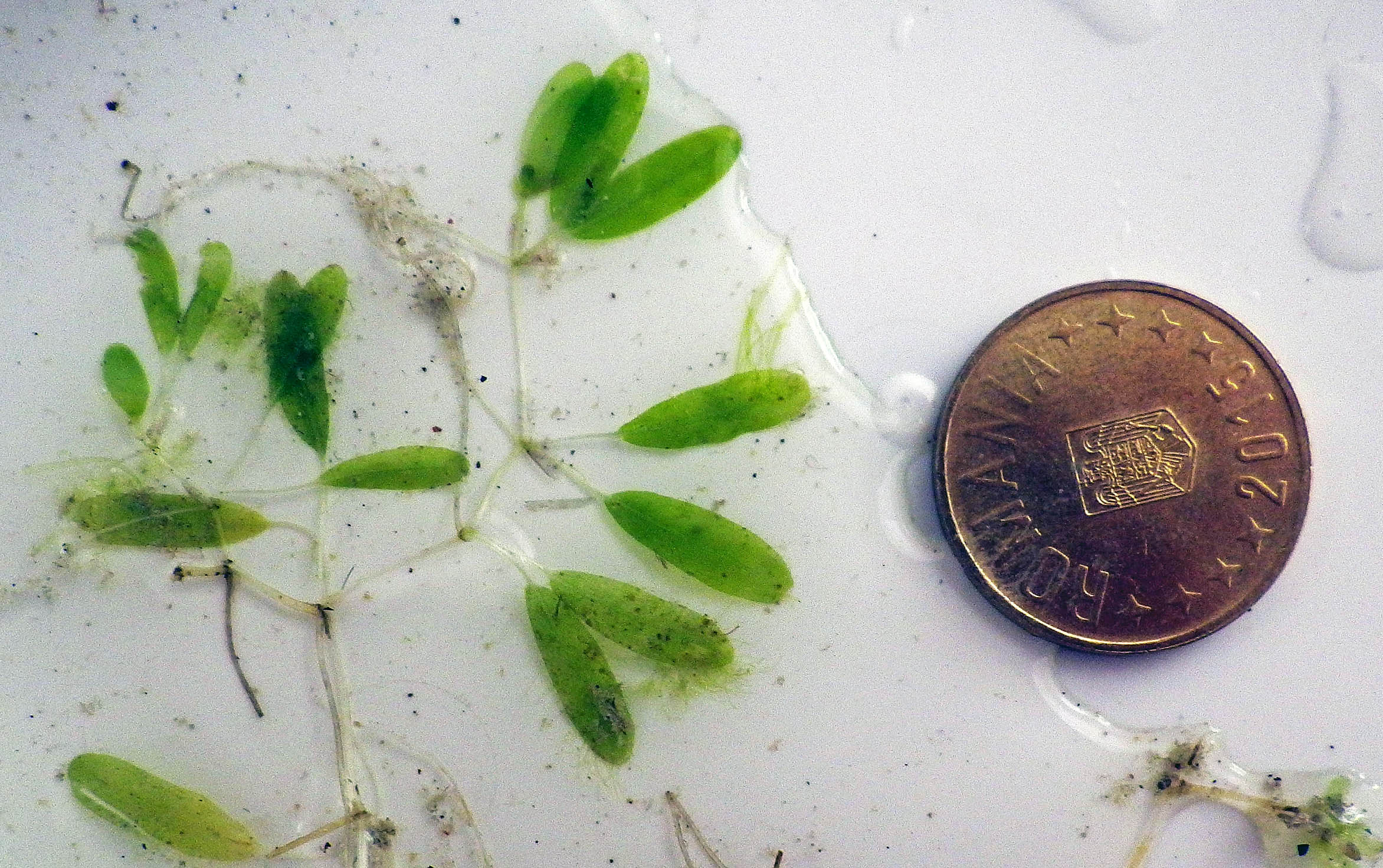
2016 – #068 Halophila decipiens on sandy bottom, circa 5 m depth, Vauxhall Reef area in the Folkestone MPA, Mar 22, 2016. It was not seen in subsequent years (2017, 2018, 2019, 2020, 2023, 2024, 20250 |
2016 -#580 Halophila decipiens specimen. Coin is 23 mm width. View iNaturalist record. |
|
2023 #236 Red Cushion Seastar (Oreaster reticulatus) on sandy bottom with sparse Halodule wrightii (s0me with green algal ephiphytes) at Carlisle Bay, April 6, 2023 |
2024 – #375 Green Turtle on sandy bottom with sparse Halodule wrightii at Carlisle Bay, circa 7 m depth, Mar 21, 2024 |

|
2024 – #786 Trunkfish on sandy bottom with sparse Halodule wrightii (s0me with green algal ephiphytes) at Carlisle Bay, Mar 21, 2024 |

More about seagrasses in the Caribbean (links)
– Caribbean seagrasses provide services worth $255B annually, including vast carbon storage, study shows
Michigan News, University of Michigan, June 21, 2023 “Discussions of valuable but threatened ocean ecosystems often focus on coral reefs or coastal mangrove forests. Seagrass meadows get a lot less attention, even though they provide wide-ranging services to society and store lots of climate-warming carbon.But the findings of a new University of Michigan-led study show that seagrass ecosystems deserve to be at the forefront of the global conservation agenda, according to the authors. It’s the first study to put a dollar value on the many services—from storm protection to fish habitat to carbon storage—provided by seagrasses across the Caribbean, and the numbers are impressive.”
– Caribbean-Wide, Long-Term Study of Seagrass Beds Reveals Local Variations, Shifts in Community Structure and Occasional Collapse
by Brigitta I. van Tussenbroek et al., 2014 in Plos One. “The CARICOMP monitoring network gathered standardized data from 52 seagrass sampling stations at 22 sites (mostly Thalassia testudinum-dominated beds in reef systems) across the Wider Caribbean twice a year over the period 1993 to 2007 (and in some cases up to 2012). Wide variations in community total biomass (285 to >2000 g dry m−2) and annual foliar productivity of the dominant seagrass T. testudinum (<200 and >2000 g dry m−2) were found among sites. Solar-cycle related intra-annual variations in T. testudinum leaf productivity were detected at latitudes > 16°N. Hurricanes had little to no long-term effects on these well-developed seagrass communities, except for 1 station, where the vegetation was lost by burial below ∼1 m sand. At two sites (5 stations), the seagrass beds collapsed due to excessive grazing by turtles or sea-urchins (the latter in combination with human impact and storms)…”