
| NAVIGATION This page is a sub-page Historical Imagery, that in turn a subpage of ObsBath, a top-level page on the website Barbados Fringing Reefs and Seagrass Beds (www.versicolor.ca/barbados). Go to ObsBath for a list of other subpages in this section of the website. 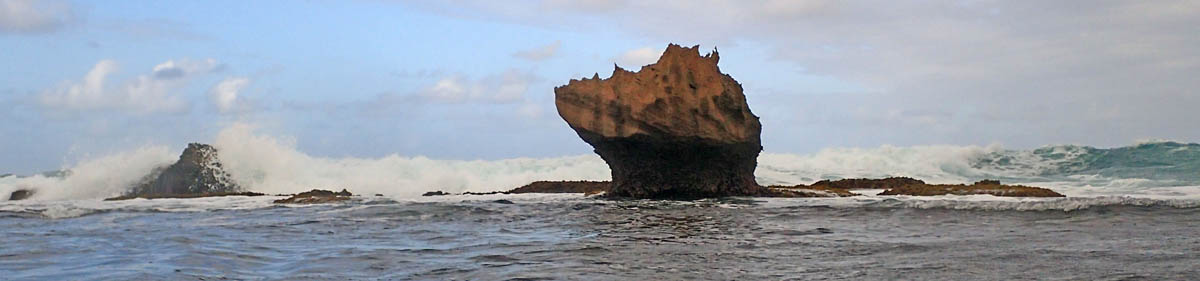 “Huge boulders of Pleistocene limestone, the work of long dead corals, take a battering in the breaker zone”. |
Subpages of Historical Imagery – Bath 1968-70 – Bath 1994 (This Page) – Bath 2005 – Bath 2011-i – Bath 2011-ii – Bath 2015-i – Bath 2015-ii – Bath 2015-iii – Bath 2017 – Bath 2024/5 |
Pics scanned from slides taken in spring months of 1994 in conjunction with formal survey.
Click on images for larger versions.
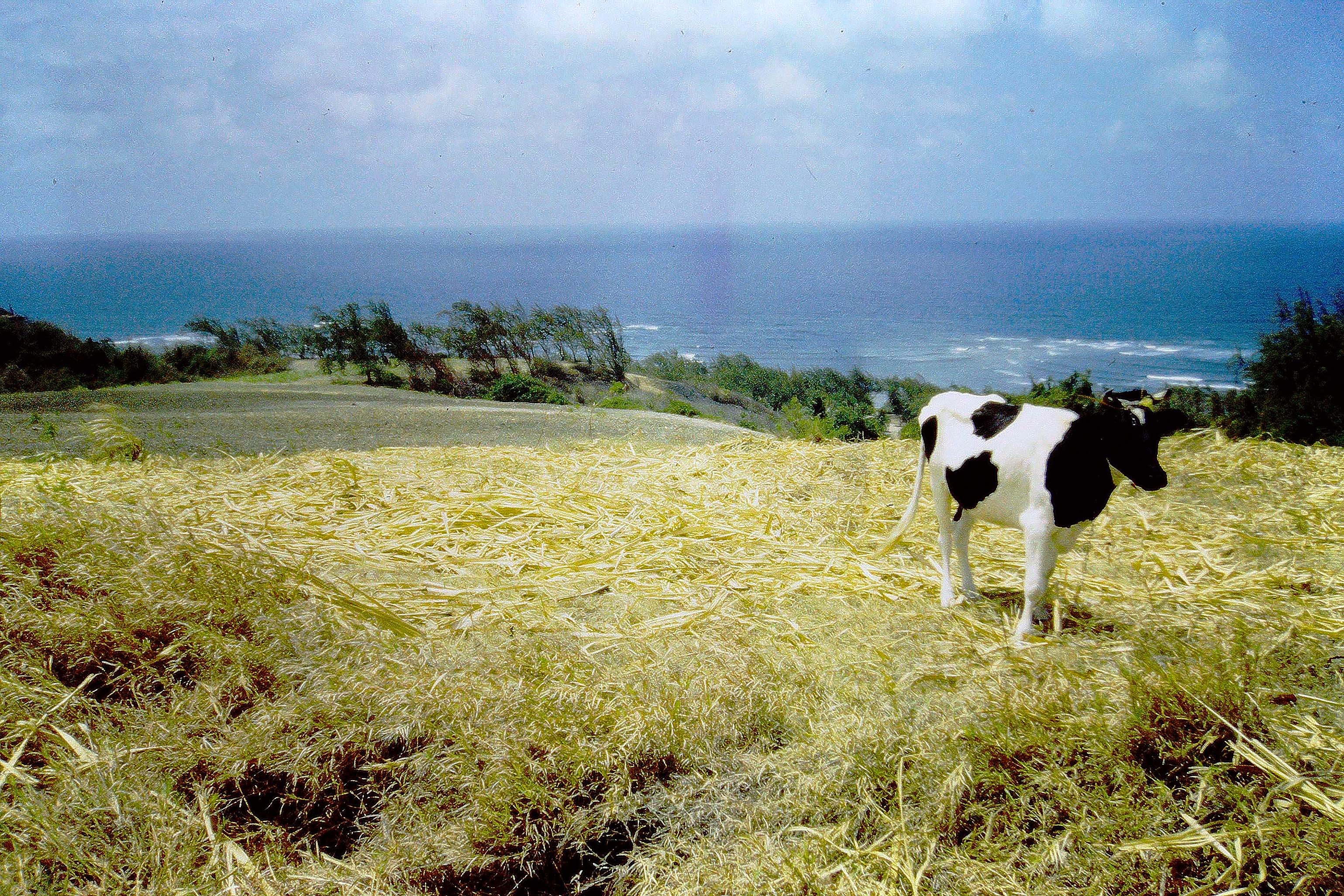 Pic 1. Holstein cow, waves break on rocks of “The Platform”. feeding on cane trash in field overlooking Bath. Just above the cow. Seagrass beds were concentrated in the area in the lee of The Platform. |
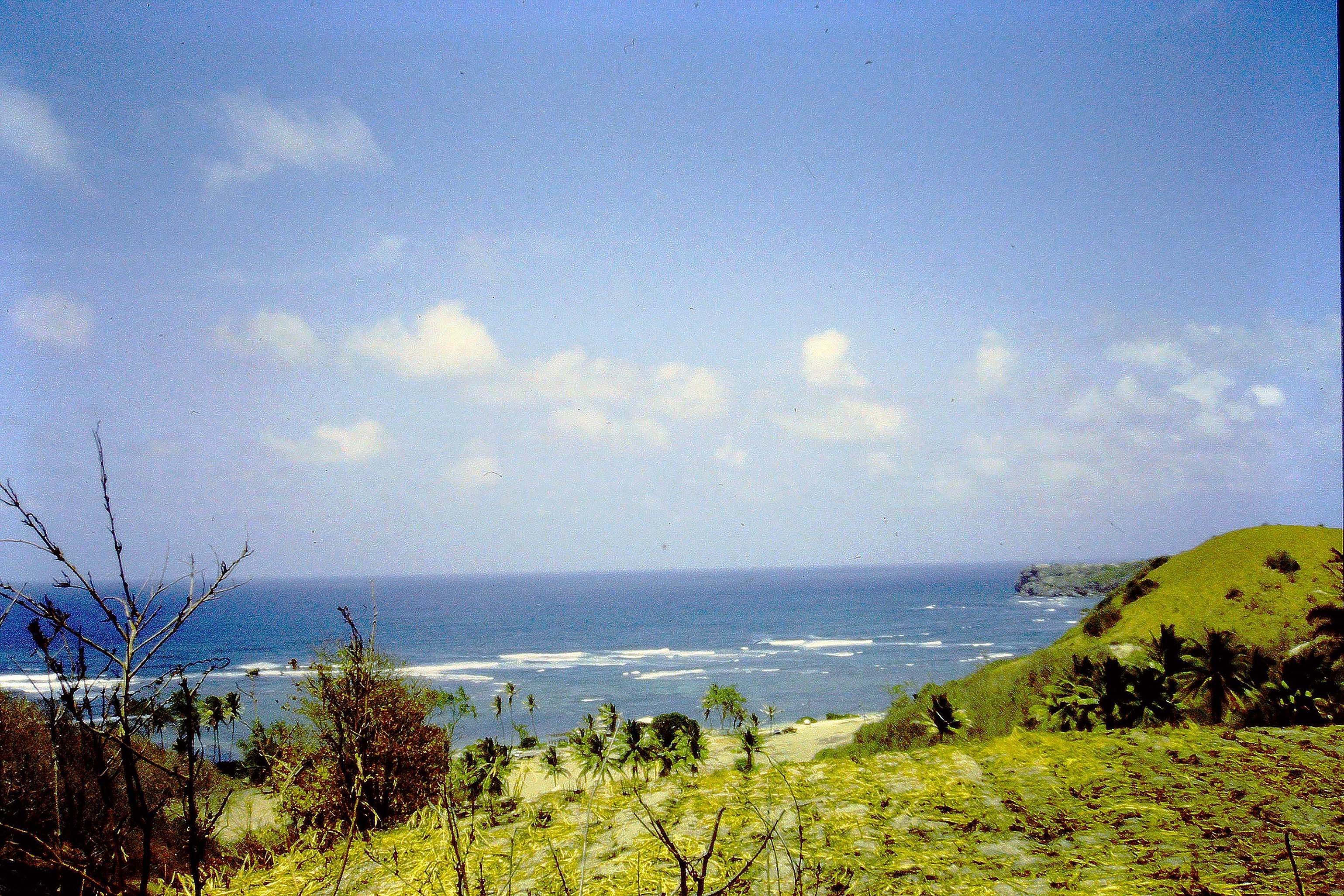 Pic 2. View looking further south; headland is Conset Point, Conset Bay obscured. |
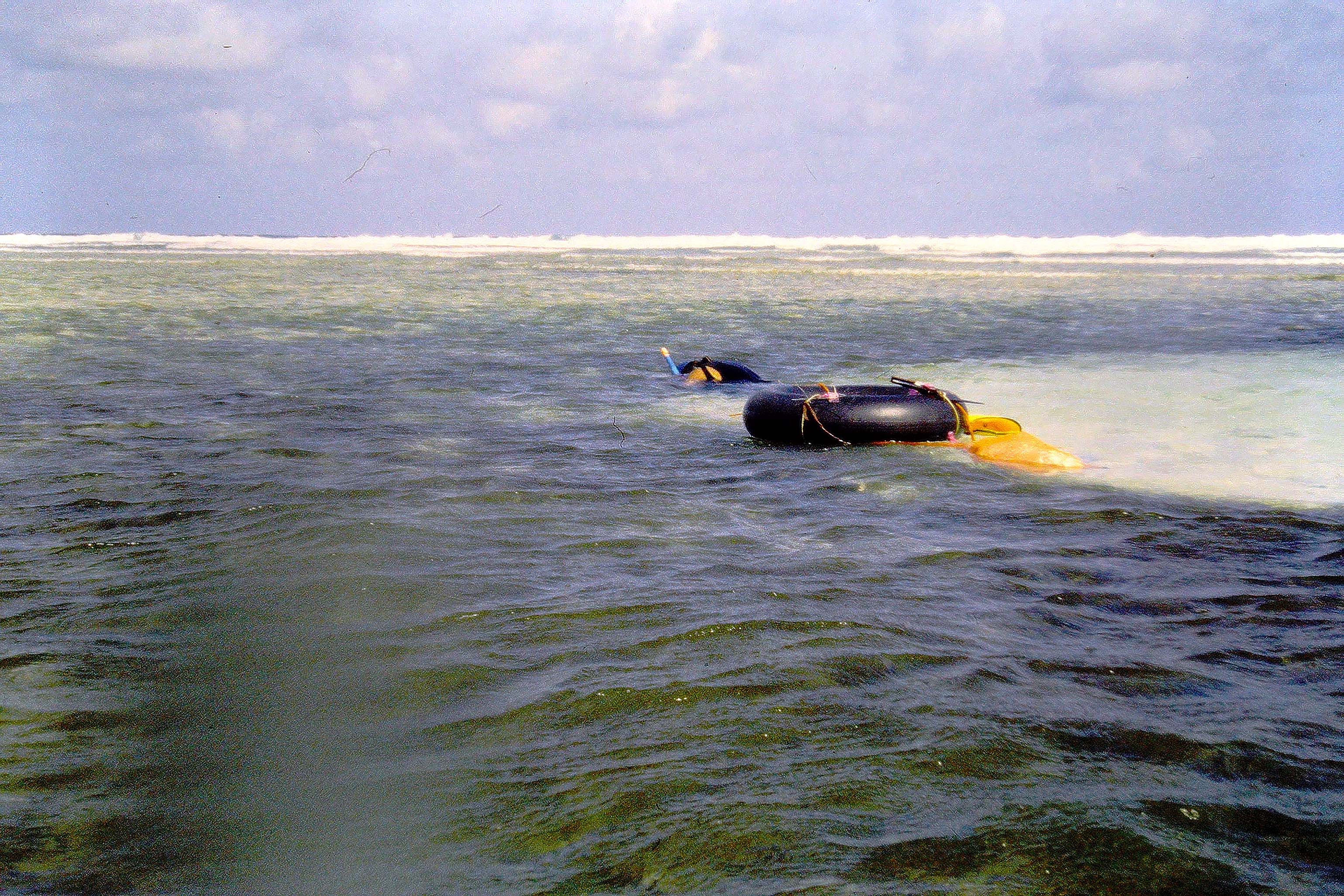 Pic 3. Setting out around Low Tide – lagoon water clarity was generally good 2 hours before to 1 hr after Low Tide, turbid at other times. |
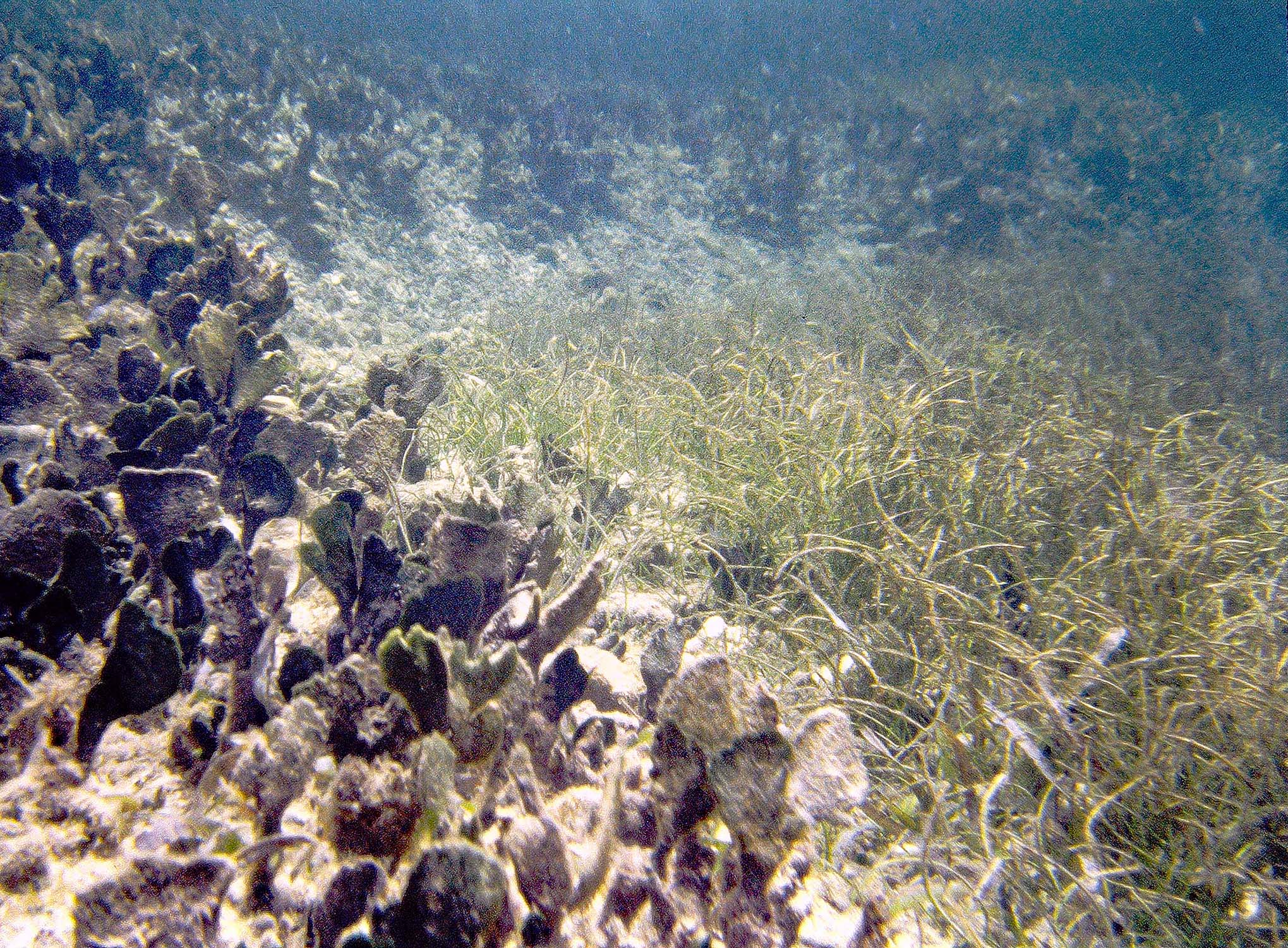
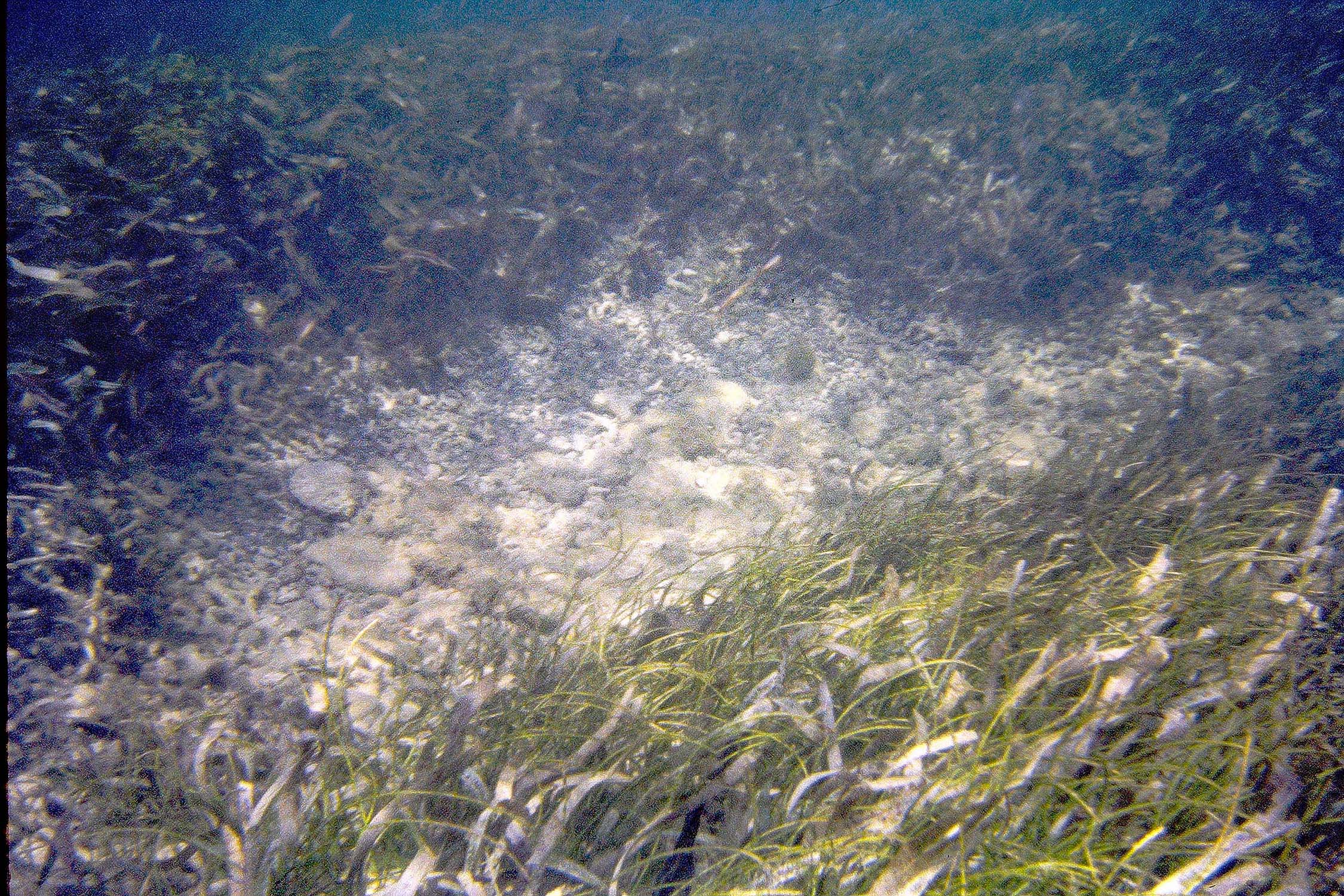
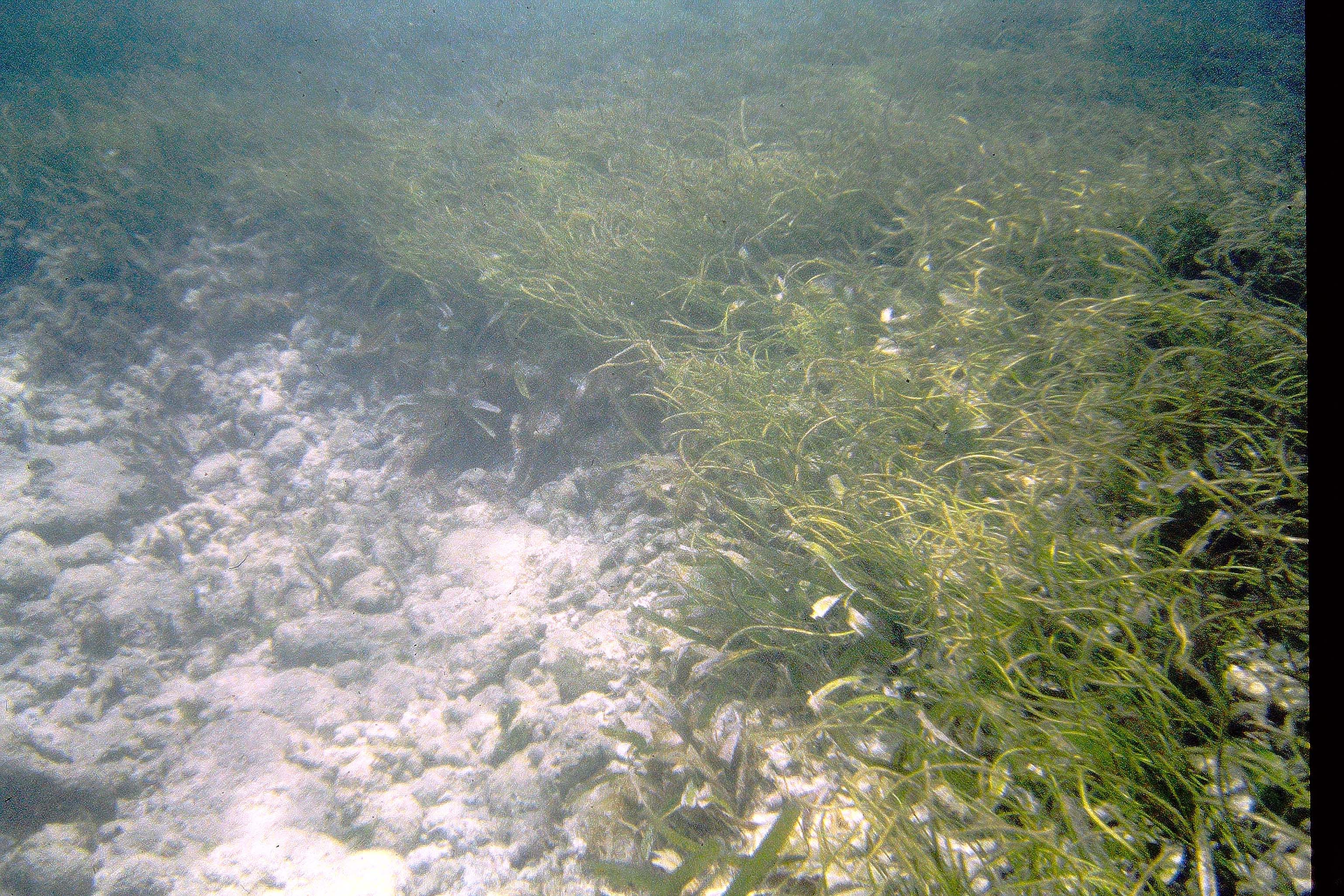 Pic 4. Erosional Scarp in mixed Thalassia-Syringodium stand (patch, area) on Cobble Framework or Cobble-Sand substrate, Note coarse rubble, including old rhodoliths on scarp face. |
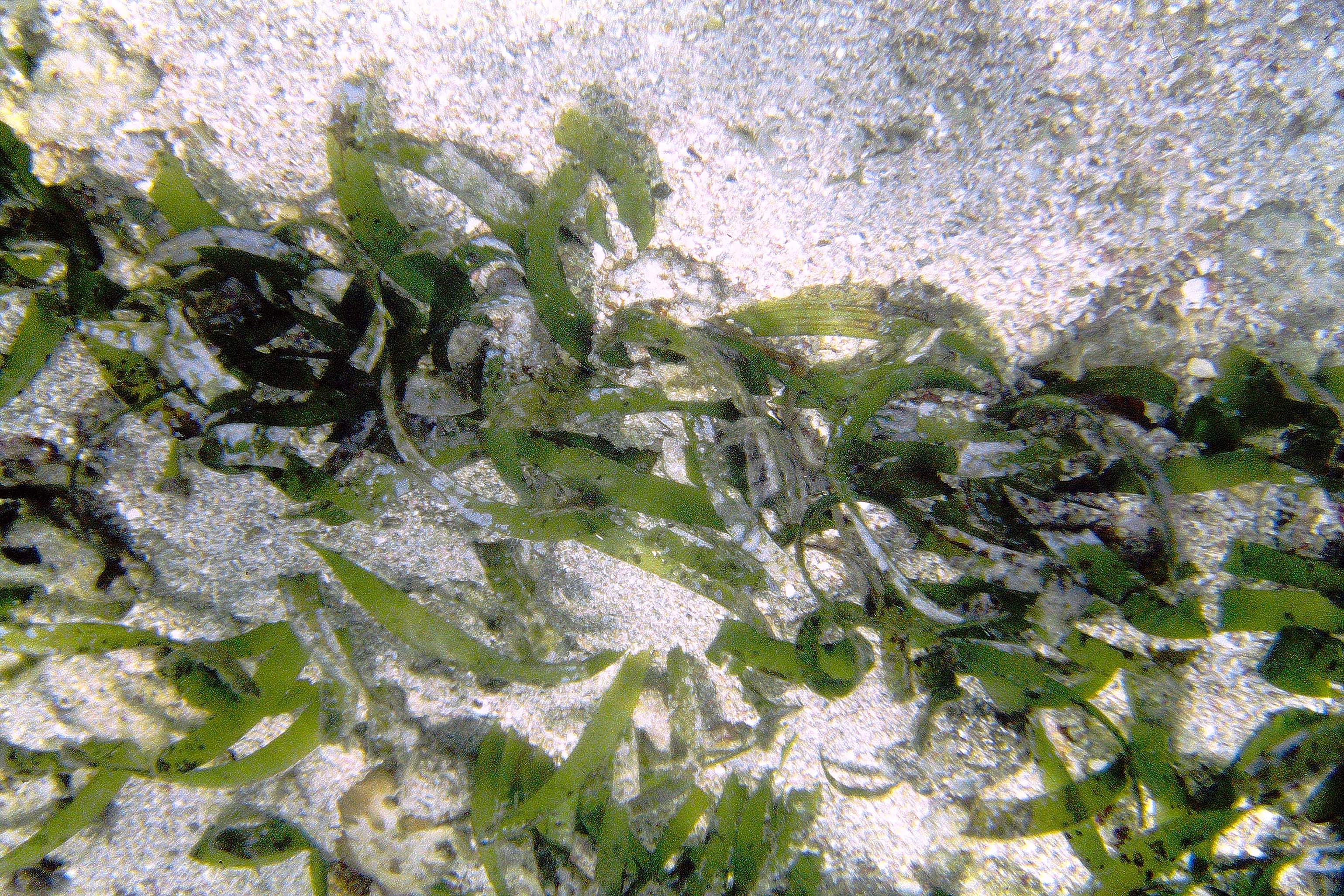
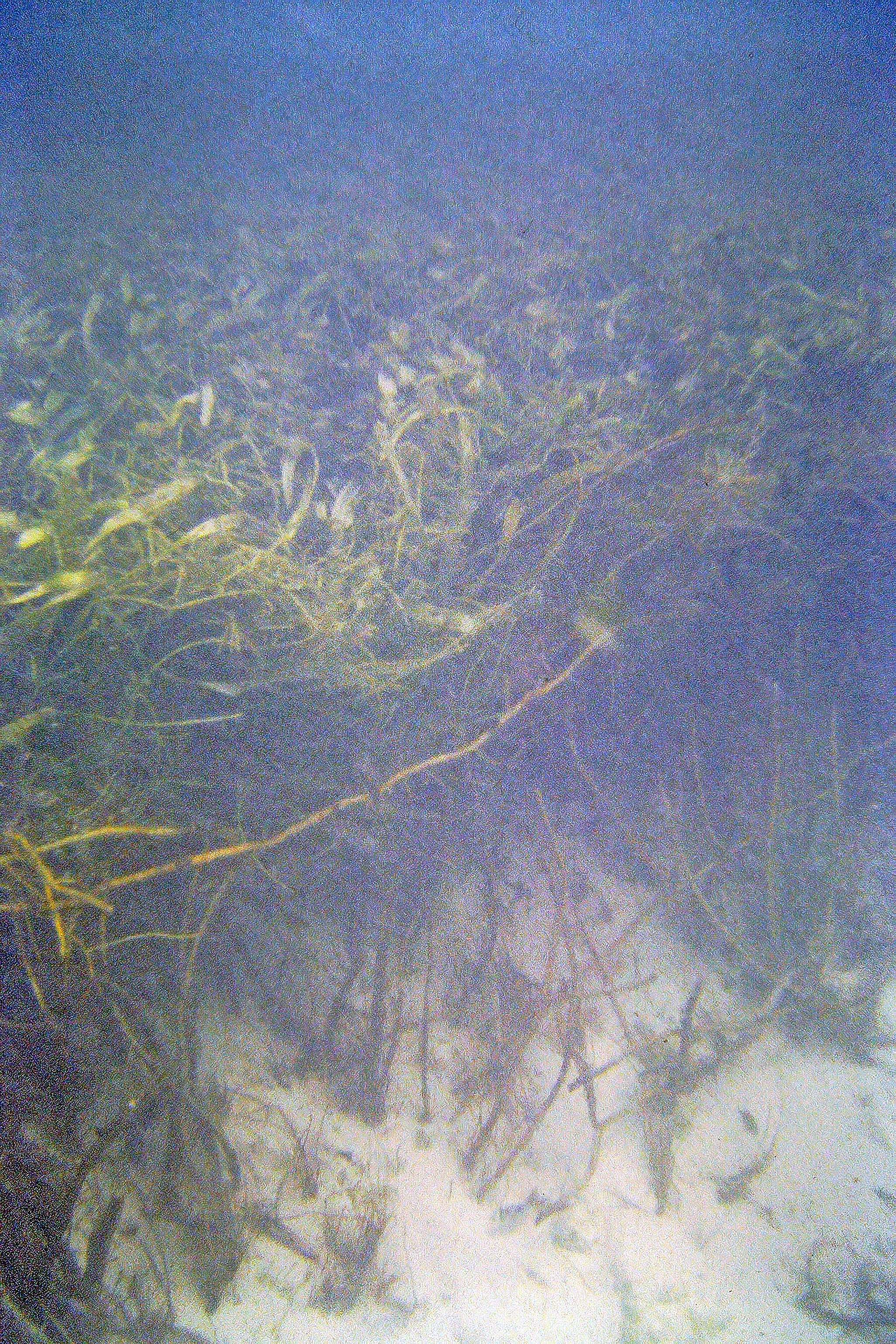 Pic 5. Erosional Scarp in mixed Thalassia-Syringodium stand (patch, area), on Predominantly Sand substrate. |
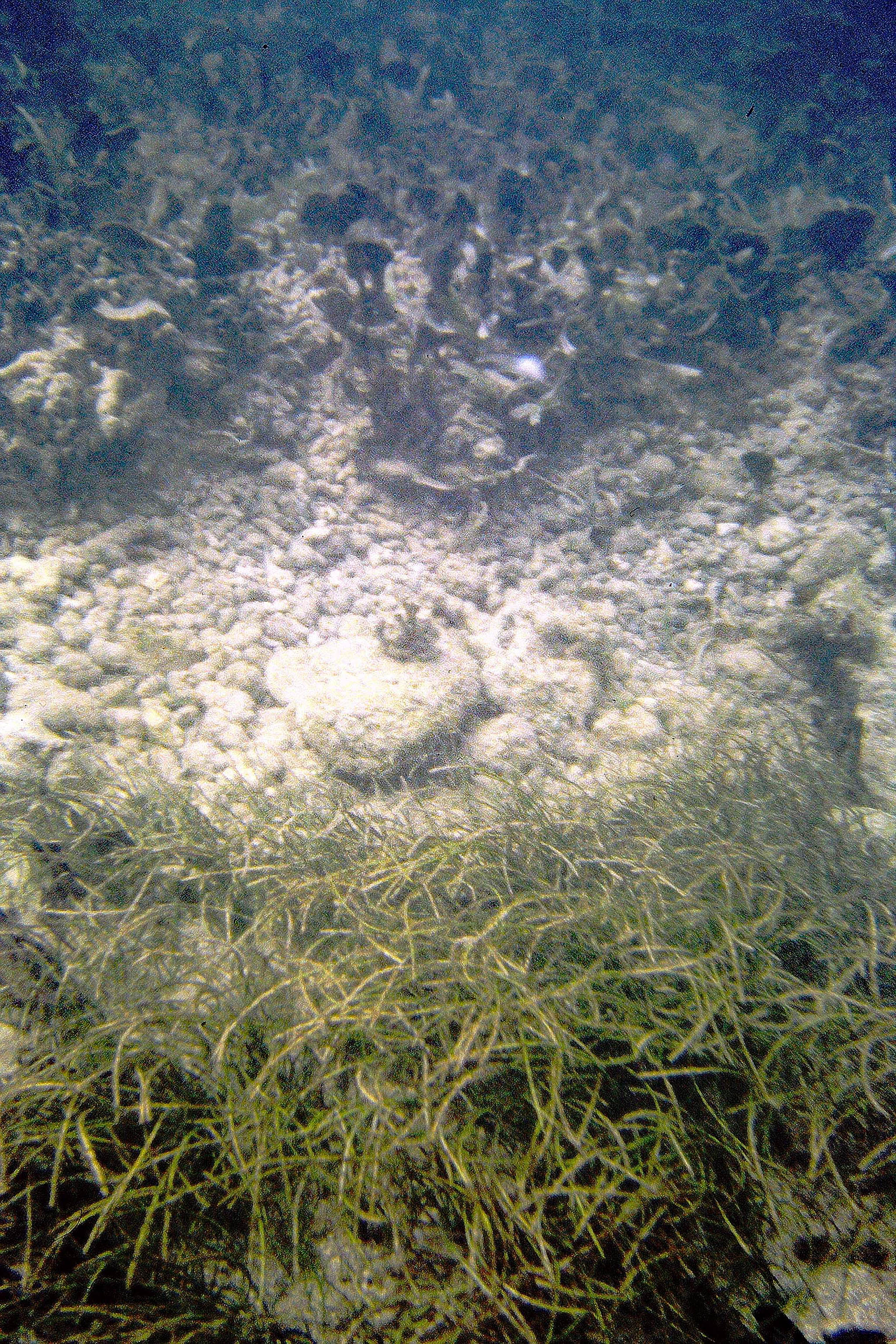 Pic 6. Syringodium growing into blowout in area of seagrass/Avrainvillea spp. on Cobble Framework substrate. |
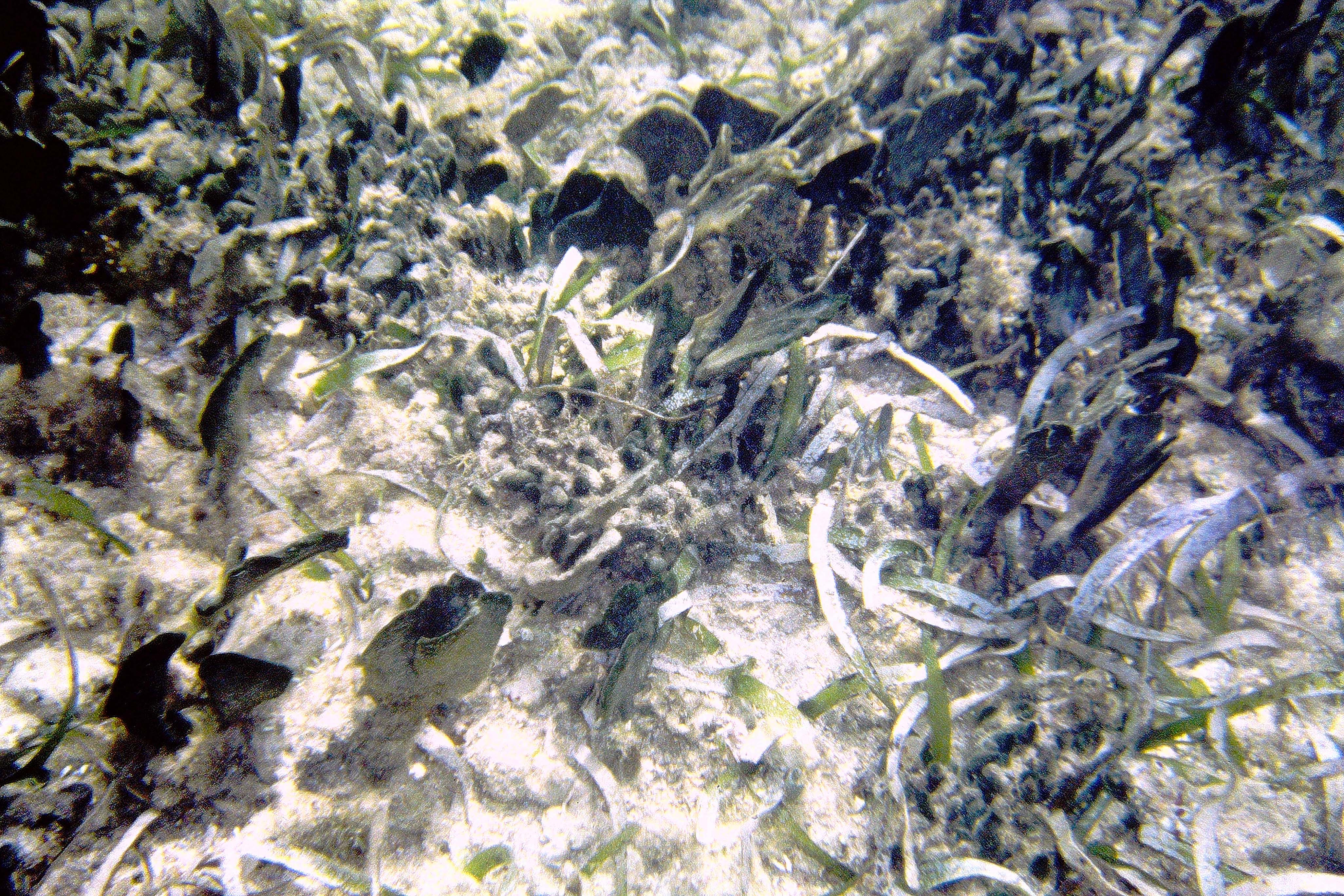
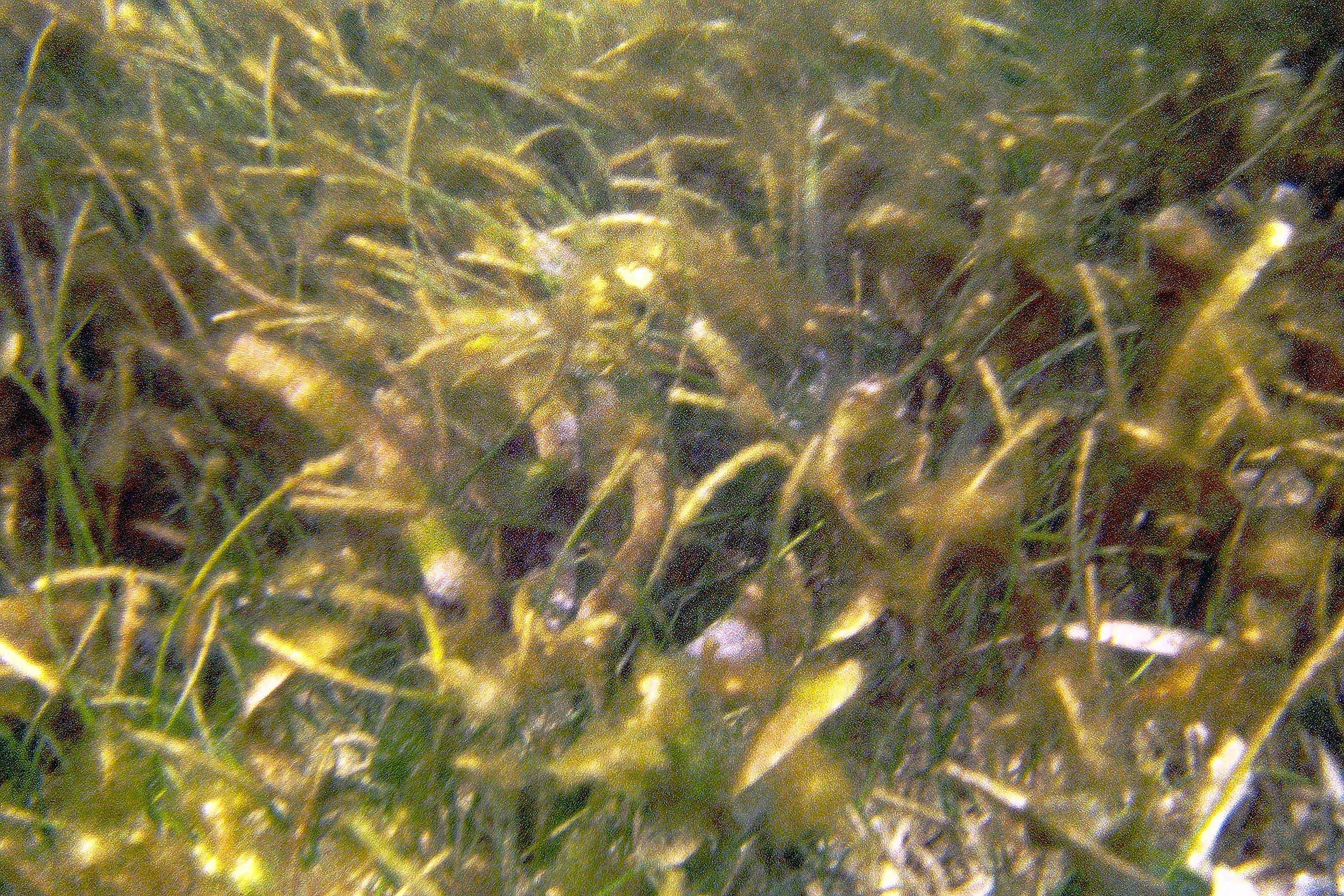 Pic 7. Patch of mixed Thalassia-Syringodium with excessive growth of flashy algal epiphytes; it was a fairly restricted area, ‘wondered at the time if it was related to intrusions of nutrient rich groundwater; profiles of chloride in interstitial water (1969) indicated such intrusions in some stands. |
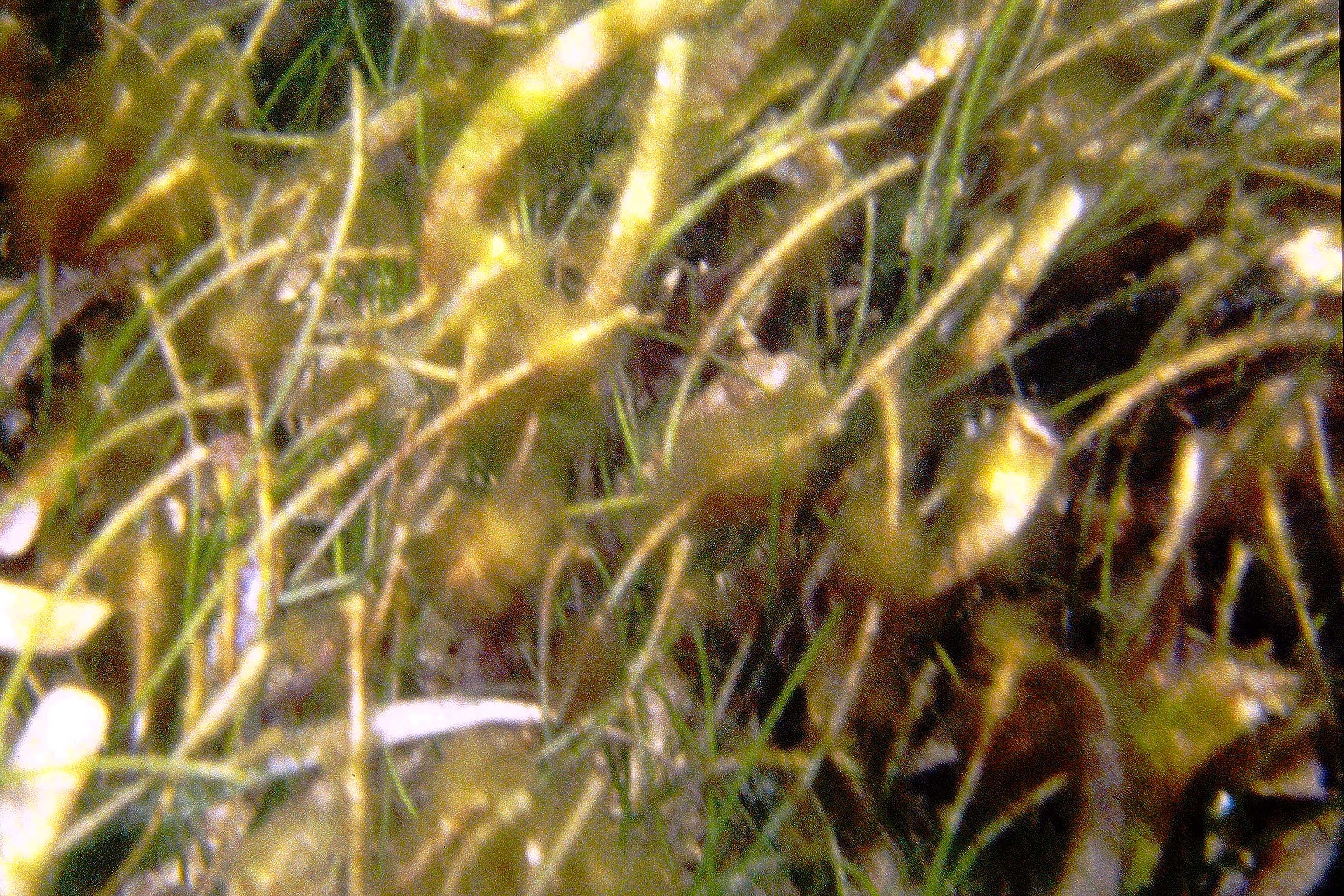 Pic 8. Another pic in a patch of mixed Thalassia-Syringodium with excessive growth of flashy algal epiphytes |
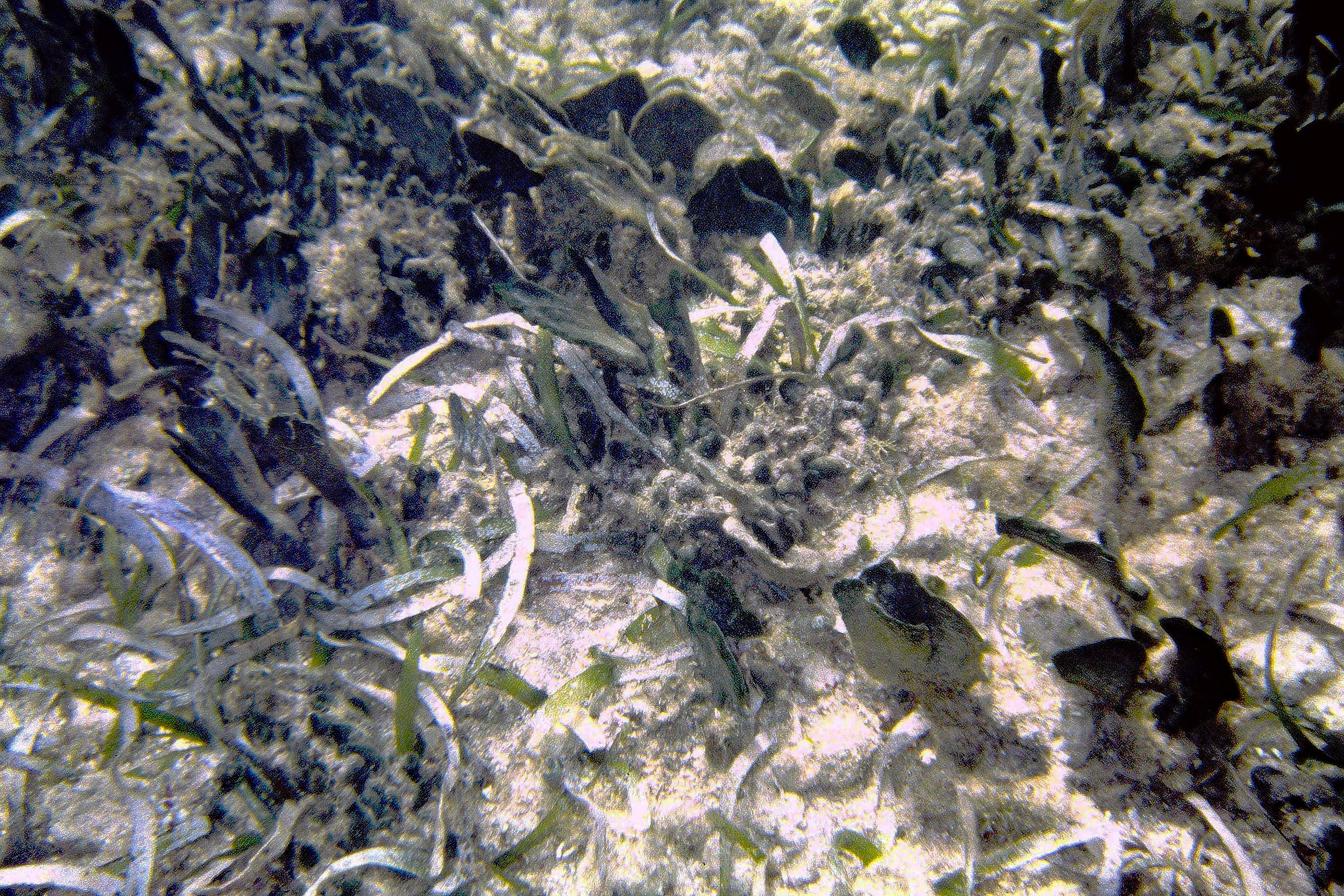
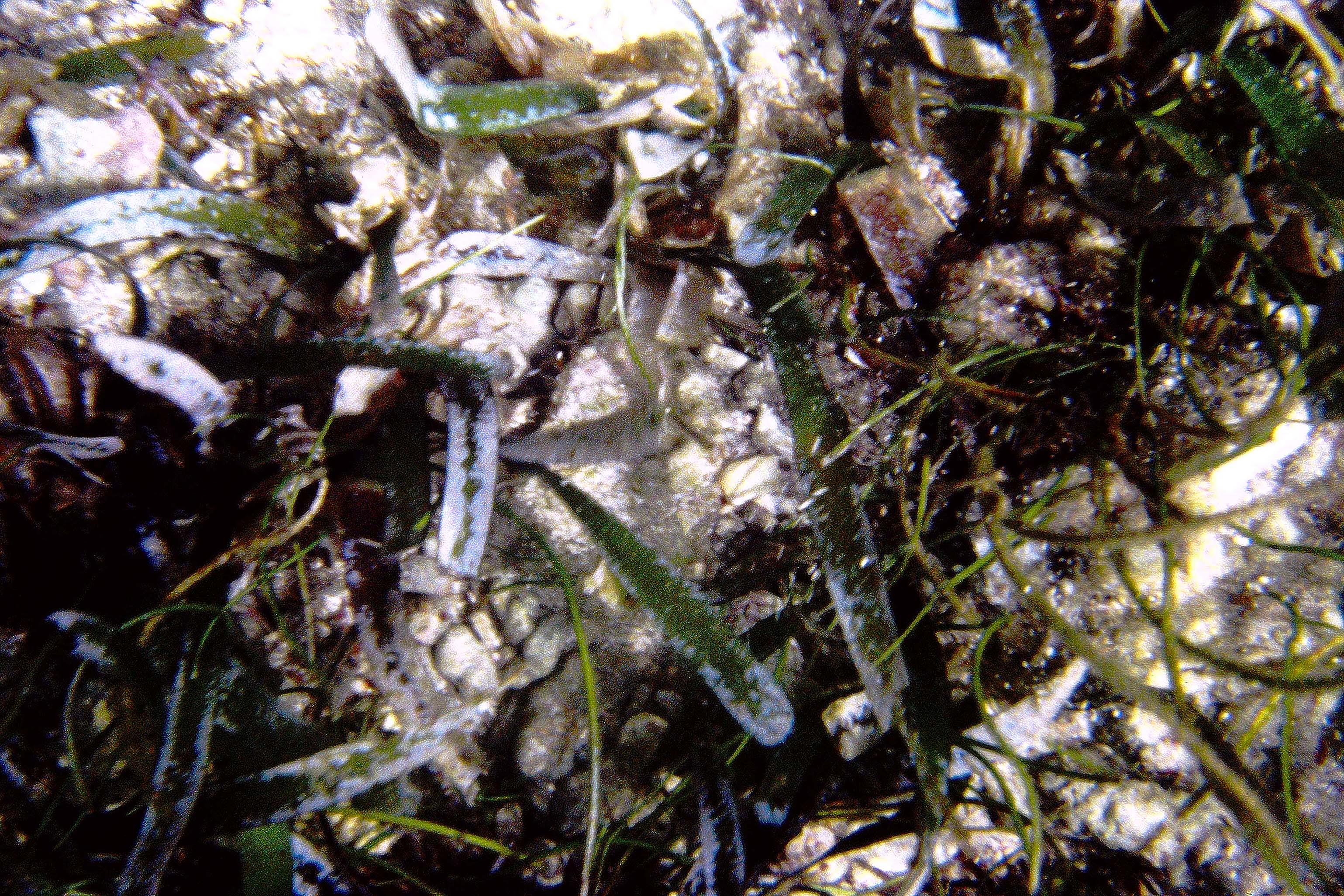 Pic 9. Image illustrates the more typical level of epiphytes on T.testudinum leaves. Whitish material is melobesoid epiphytes which are significant producers of find carbonate sediment |
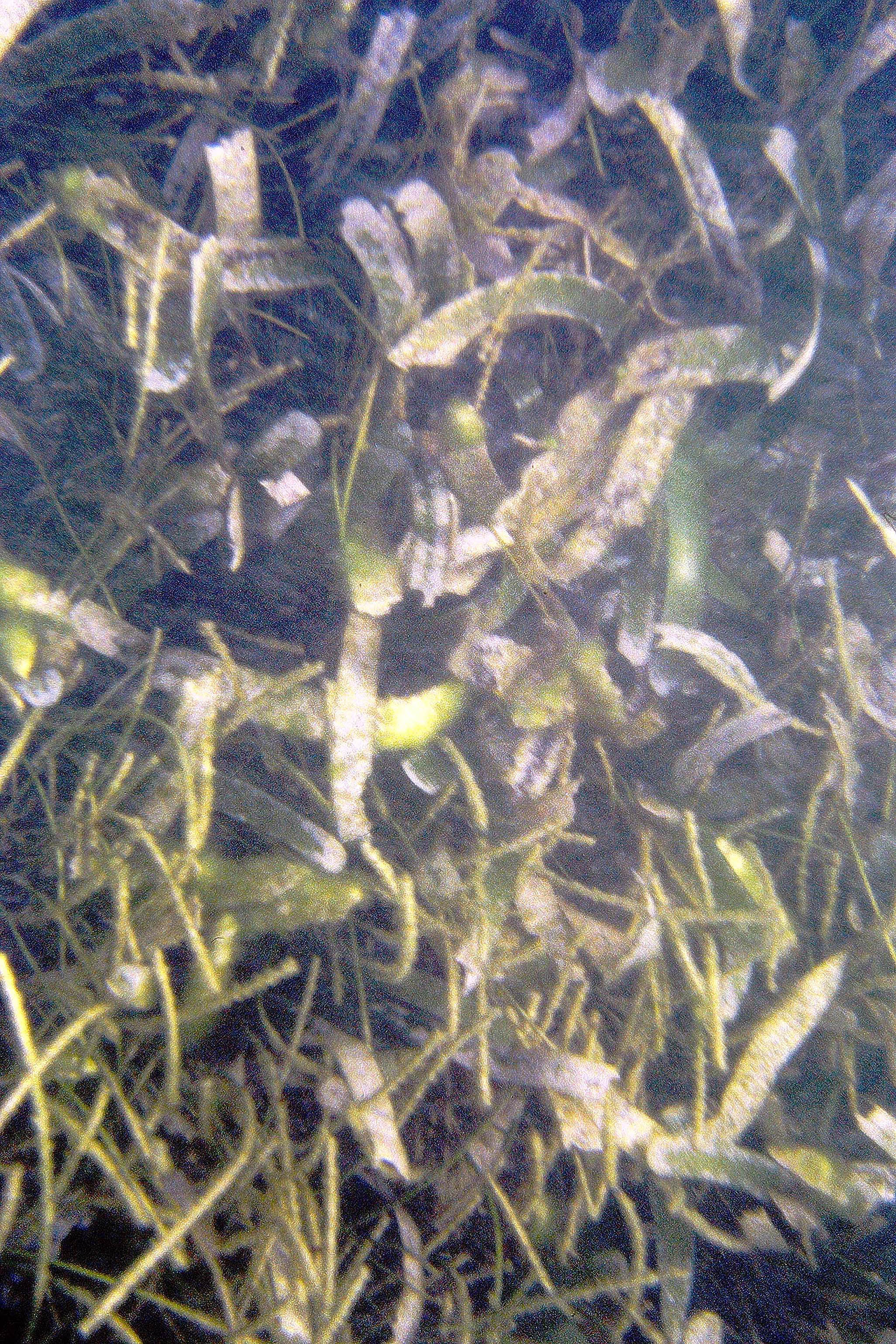 Fig 10. Another pic illustrating the more typical level of epiphytes on T.testudinum leaves |
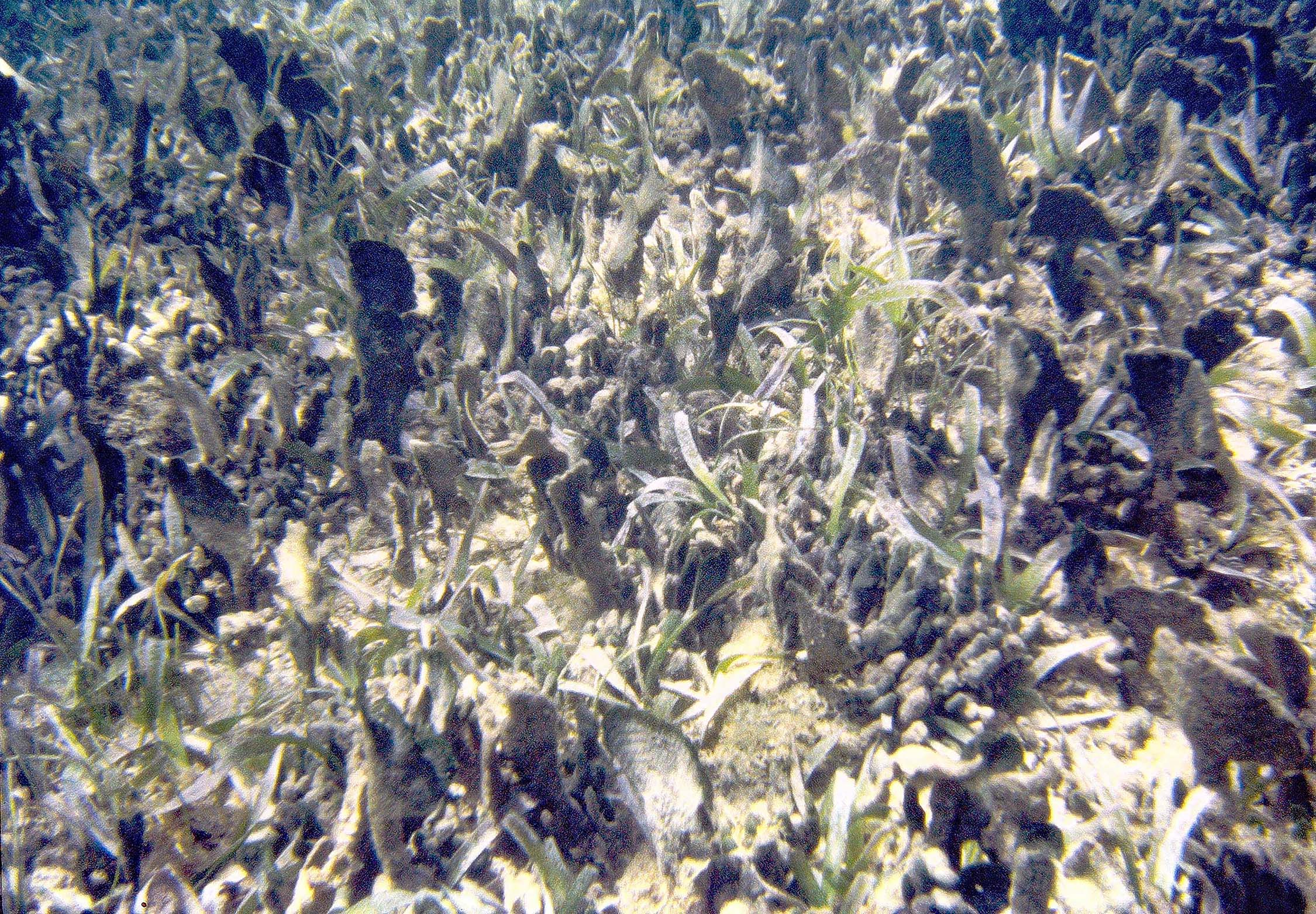
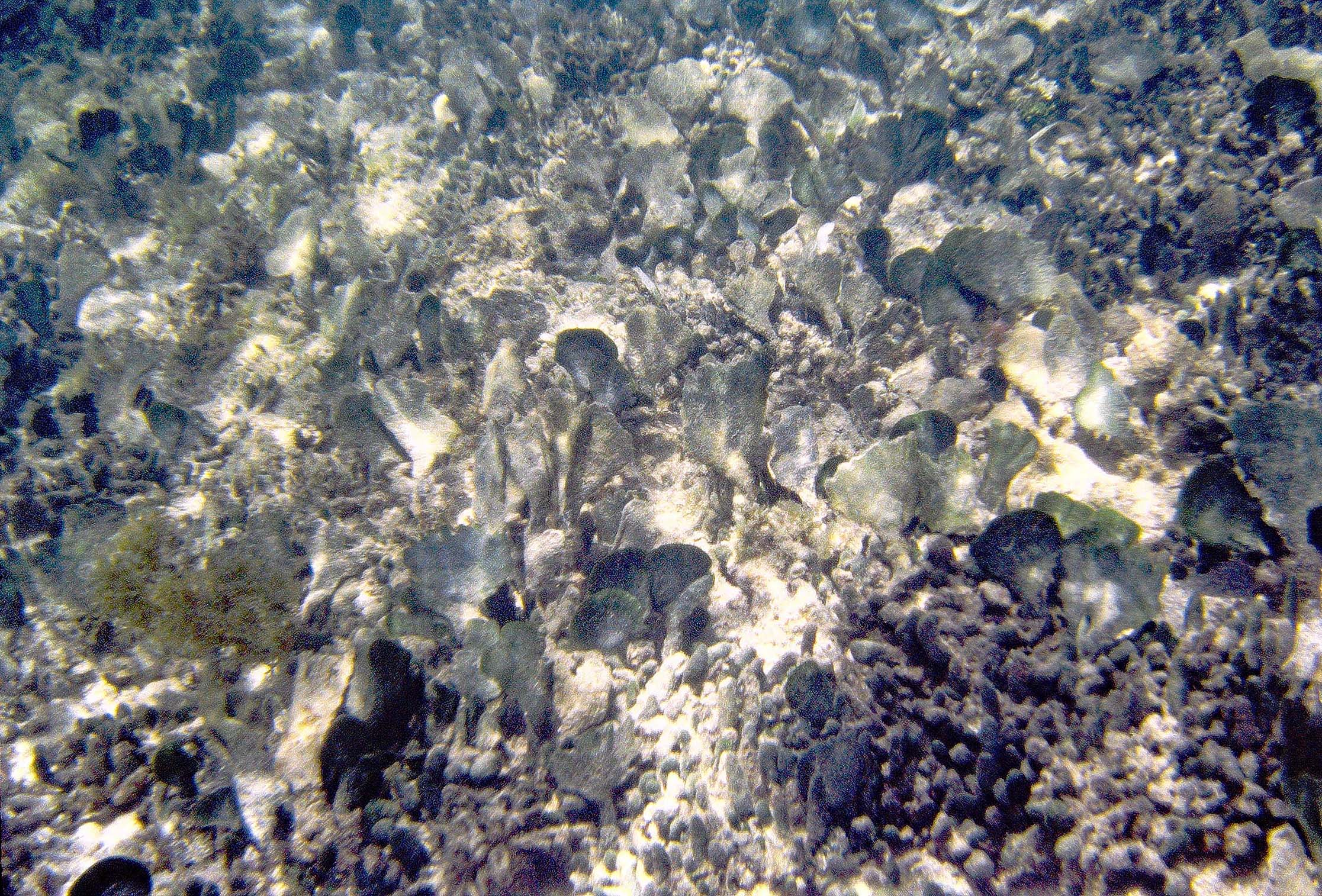
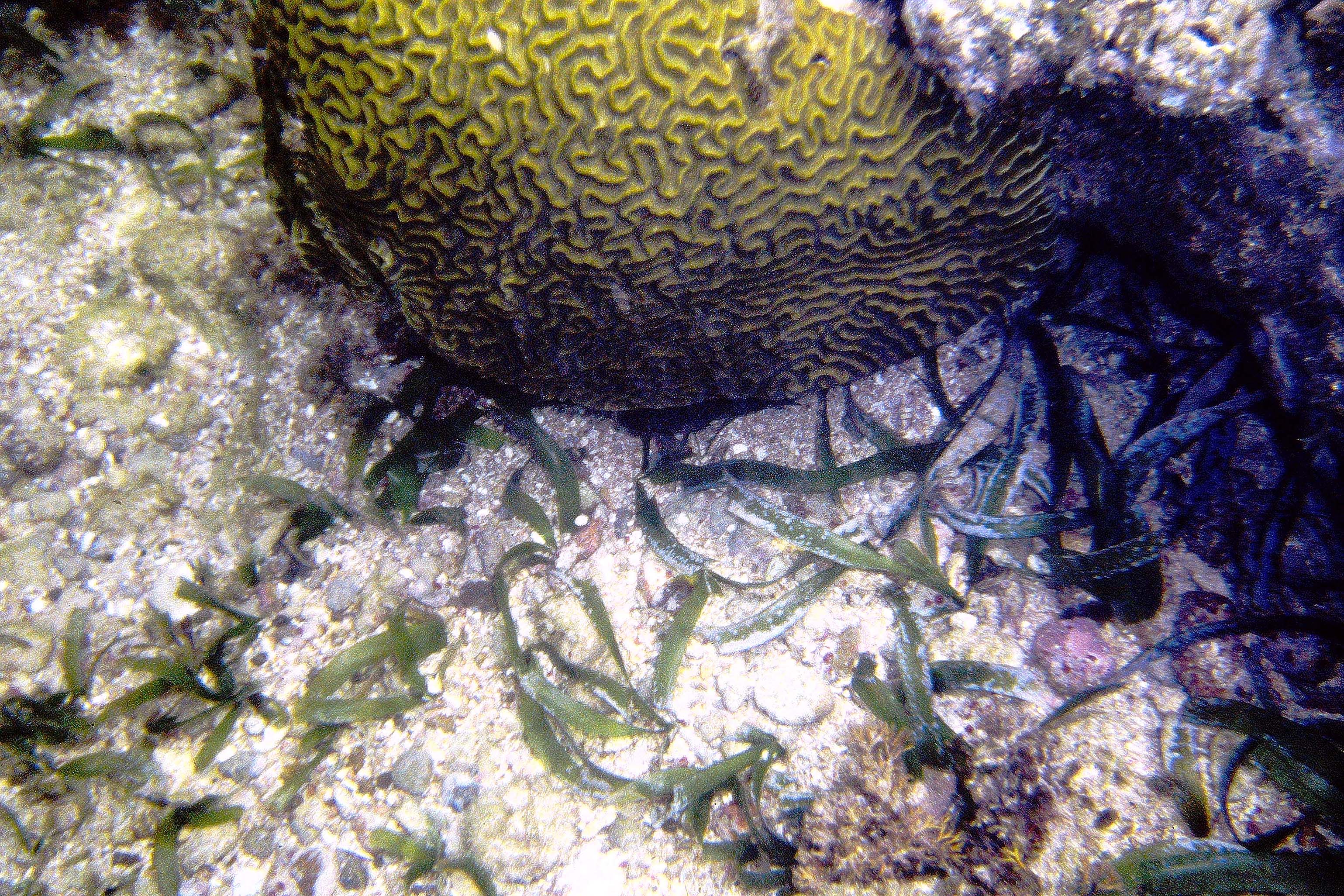
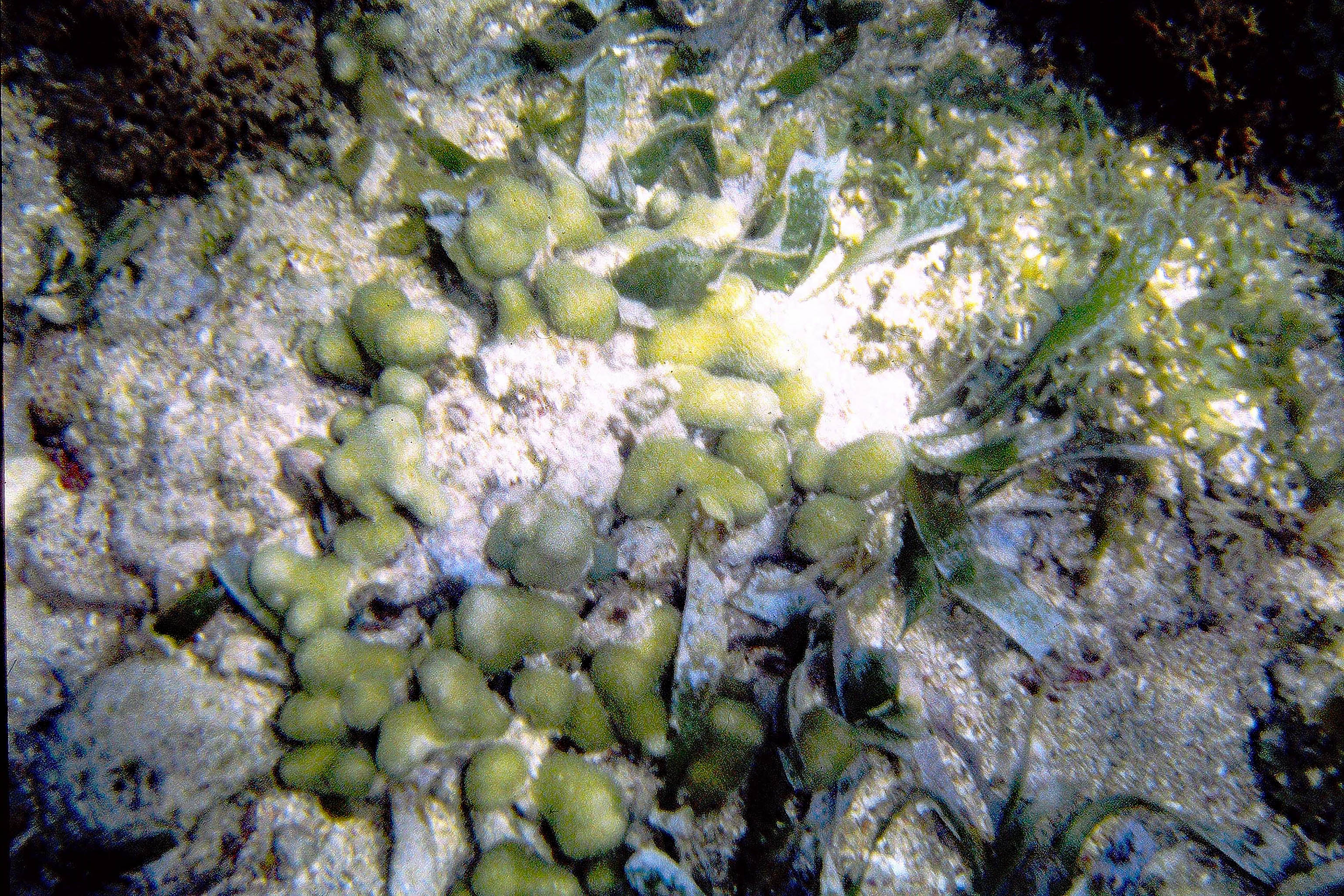 Fig. 11. Sparse Thalassia on Cobble Framework substrate; fine specimen of Porites furcata |
 Wolverine CAMERA |
 saddaasd |
 asaaS |
 saasa |
 asasSa |
 Wolverine CAMERA |
 Wolverine CAMERA |
 Wolverine CAMERA |
 Wolverine CAMERA |
 Wolverine CAMERA |
Carbonate mud production by epibionts on Thalassia; an estimate based on leaf growth rate data
DG Patriquin, 1972 in Journal of Sedimentary Petrology
Leaf epifauna of the seagrass Thalassia testudinum
J. B. Lewis & C. E. Hollingworth, 1982 in Marine Biology
Seagrass meadows are important sources of reef island-building sediment
HK East et al., 2023. In Nature Communications Earth & Environment.