
NAVIGATION
This page is a sub-page of ObsSG, a top-level page on
the website Barbados Fringing Reefs and Seagrass Beds
(www.versicolor.ca/barbados).
Go to ObsSG for a list of other subpages in this section
of the website.
DRAFTING
Extracts from Appendix B, a general description of seagrass beds in Barbados and Carriacou (Grenada) as observed 1967-1970 in The origin of nitrogen and phosphorus for growth of the marine angiosperm Thalassia testudinum Konig.Patriquin, D.G. 1971. PhD Thesis, Marine Sciences Centre, McGill University, 193 pp. View a PDF of Appendix B only.
The text in the archived thesis, derived from a microfiche version, is of poor quality and while copyable, the text so copied has so many errors that it is essentially not usable. Below I have copied and edited the text for selected extracts pertaining to substrate types from Appendix B, so the text below can be readily copied. I have added some of the figures, none of the tables. Consult the PDF of Appendix B to view the tables or figures referenced but not given below.
Methods
Sediment samples were taken from all stations but only selected samples were analyzed. The proportions of coarse materials (>5.2 mm) in substrates that had been subjectively classified as Predominantly Sand, Cobble-Sand, and Porites Rubble flats were estimated by digging up a measured volume of substrate, sieving the samples though a 5.2 mm mesh sieve and determining the volume of water displaced by the coarse material. This was done for several positions in each of the above substrates. The proportion of coarse material in substrates which had been subjectively classified as Cobble Framework or Cobble-Cobble-Sand was estimated from visual observations at erosional scarps… Particle size analyses were made on 50 to 100 g splits of the sediment samples…
Substrate Classification
On the basis of the proportion of course material and the substrates, the seagrass substrates at Barbados and Carriacou were classified into four types. A 5th substrate type was distinguished from the others because of its unique vertical position. The under 5.2 mm fraction have almost all sediments examined at Barbados and Carriacou contain less than 10% silt and clay.
In the following descriptions, sandy sediment refers to sediment of particle size diameters less than 5.2 mm, while cobble sized refers to material coarser than 5.2mm.
The substrate types are characterized as follows:
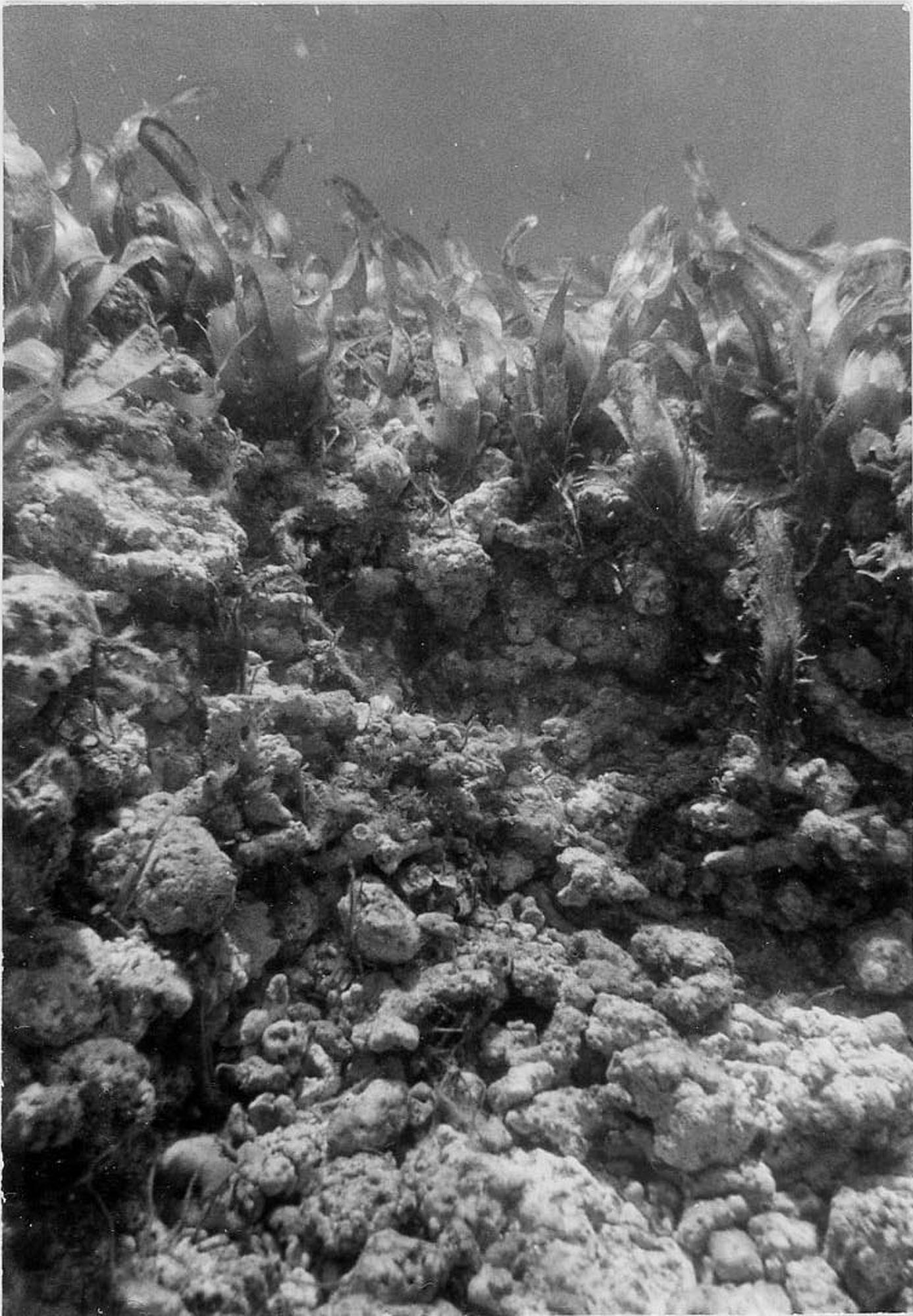
Photograph of an erosional scarp in cobble framework substrate at Bath. Greater than 70% of the substrate volume is occupied by rhodiles (chiefly Archaeolithothamnion surrounding coral nucleus)
derived from the coral-coralline algal bottom to the seaward. From 1975 ‘Blowout Migration Paper’, Fig 4.
Cobble Framework (CF) substrates
These are substrates in which cobble sized material forms a structural framework and sandy sediment fills in the spaces. The cobble sized material occupies approximately 70% and greater of this settlement volume. Exposures at erosional scarps indicate that the Thalassia root layer is usually restricted to the upper 15 to 20 cm of these substrates. These substrates are very strongly bound together, and are sampled only with considerable difficulty.
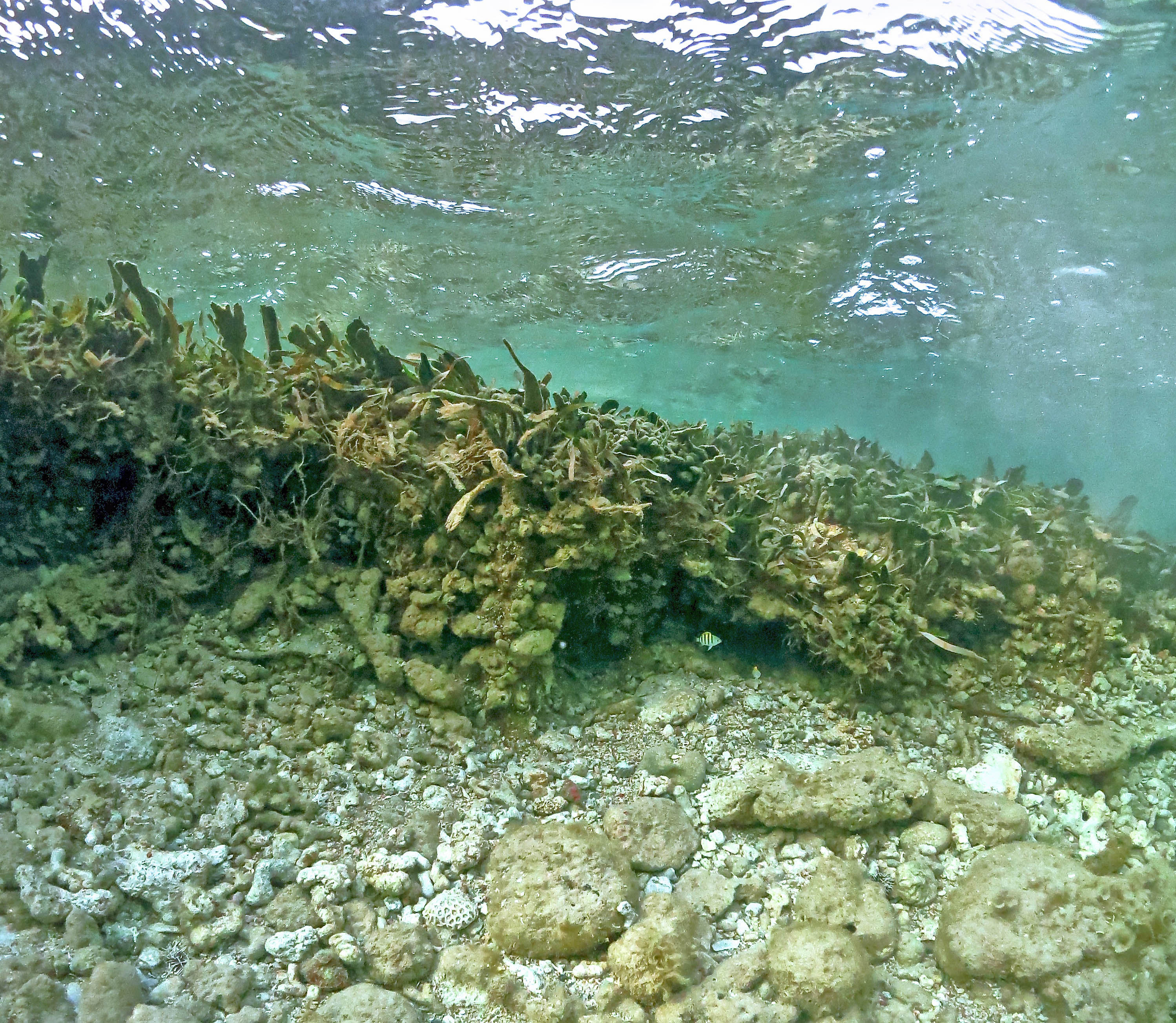
Leading edge of rapidly eroding T. testudnum and Avrainvillia-colonized CF substrate Feb 28, 2015. Photo by R. Scheibling
Predominantly Sand (PS) substrates
These are substrate in which cobble-sized material occupies less than about 5% of the substrate volume. At Barbados, the PS substrate overlies a coral rock basement or a layer of densely packed cobble sized coral rubble referred to here as the “rubble layer”. The transition between the PS substrate and the rubble layer is generally abrupt, and the Thalassia rhizomes do not penetrate the rubble layer. The root layer in PS substrates at Barbados generally extends from the bottom of the PS substrate layer, at about 10 cm to 1m below the sediment surface, to within 30 to 2 cm of the substrate surface. Where the root layer is spread out, erect shoots of Thalassia may be very long and largely unbranched (Plate IId). At most areas in Carriacou, the PS substrate is of undetermined thickness but over 1m, and the Thalassia root layer occurs within the top 75 centimeters of the PS substrate layer, and commonly within the top 20 cm.
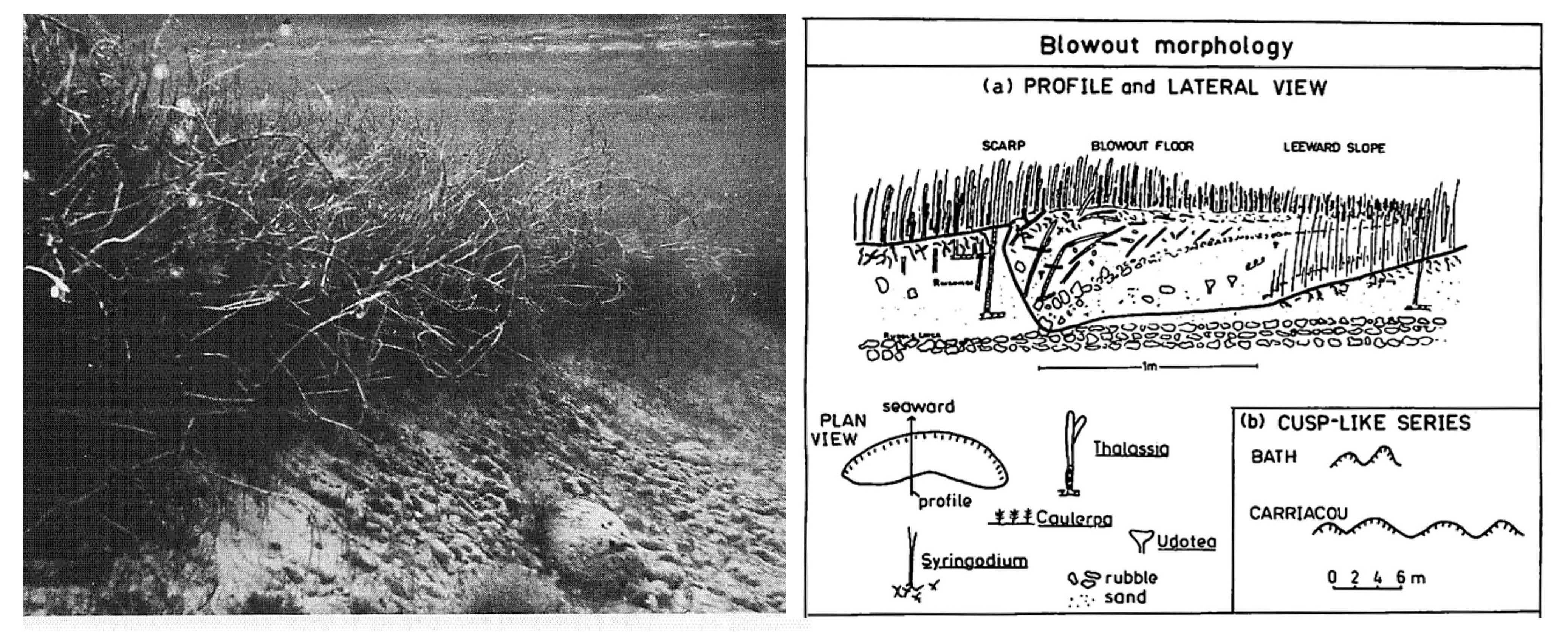
Left: Scarp/blowout in PS substrate at Bath. Right: Idealized cross section and lateral view of a crescent-shaped blowout in PS substrate at Bath; inset B gives examples of organization of blowouts in cusp-like series.* “The underground stems or rhizomes of the seagrasses (Thalassia and Syringodium) are usually restricted to and branch extensively within the upper 20 cm of the sedirment and scarps are typically undercut (Fig. at Left above)… and the scarp is not undercut. Pebbles and cobbles are prominent on the scarp face, the sandy matrix apparently being more rapidly eroded away. Sand from the blowout floor has modes 1 to 2 phi coarser than sand from grass stabilized sediment… A “rubble layer” continuous with lag deposit of pebbles and cobbles at the base of the scarp can be traced seaward of the scarp below the seagrass-stabilized sediment, and leeward of the scarp below loose sand of the blowout floor and recently stabilized sand at its edge (Fig. at Right above). The transition between the sand and rubble layers is abrupt. The rubble layer is very well packed, and extremely difficult to penetrate, even with a shovel. *From “Migration” of blowouts in seagrass beds at Barbados and Carriacou, West Indies, and its ecological and geological implications. DG Patriquin, 1975 Aquatic Botany Volume 1, Pages 163-189.View PDF
Cobble-Sand (CS) substrates
In these substrates, coble size material occupies approximately 5 to 45% of the substrate volume. At Barbados, CS substrates overlie a coral rock basement or rubble layer, as described for the PS substrates.
Cobble-Cobble-Sand CCS substrates
This substrate type is intermediate between the CF and CS substrate types, with cobble sized material occupying approximately 50 to 70% of the substrate volume. This substrate type was encountered at only one position, in Oistens Bay. Here, a layer of sand overlies the CCS substrate, and a rubble layer occurs below the CCS substrate layer. Thalassia rhizomes are restricted to the CCS substrate layer.
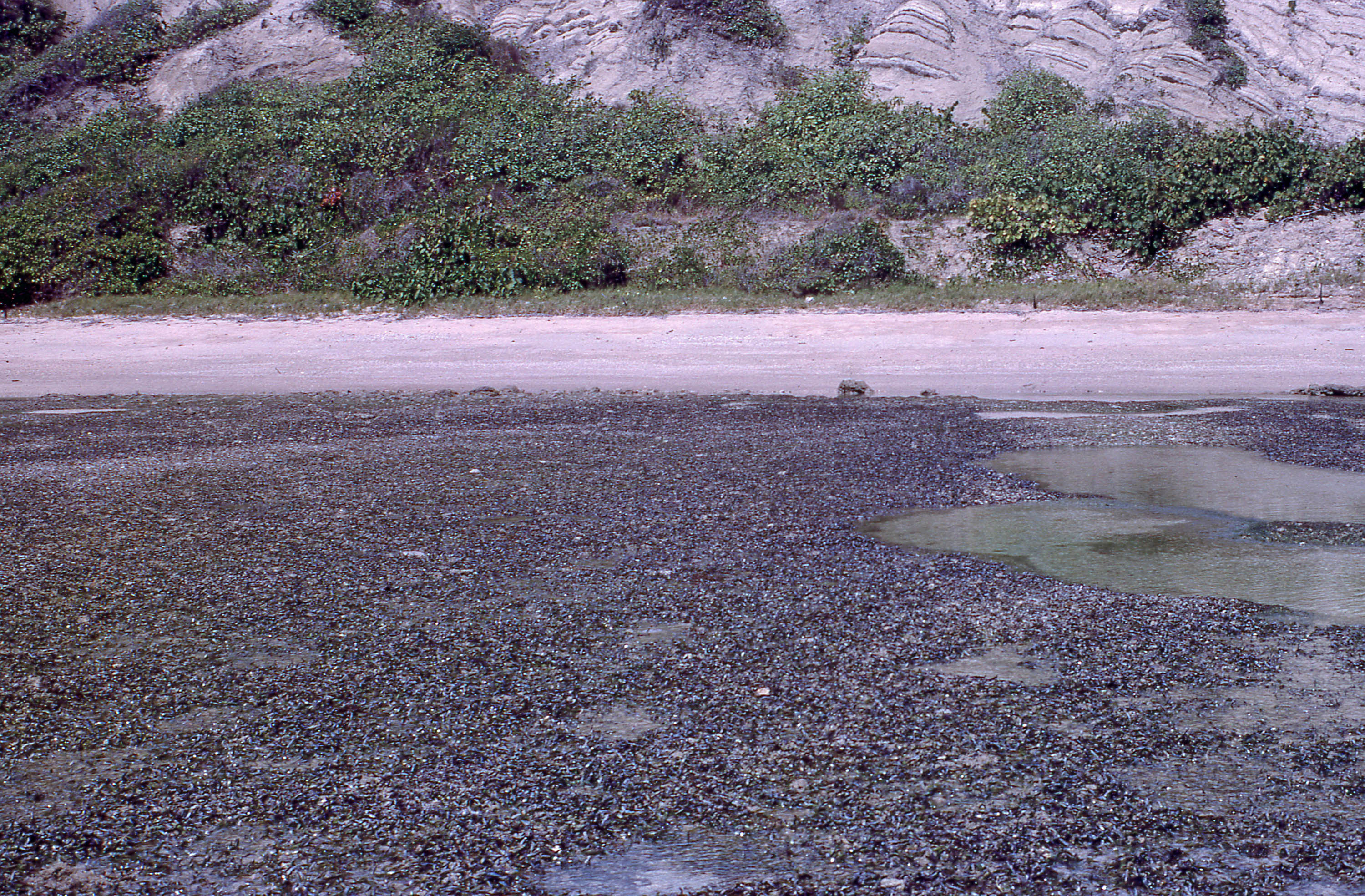
Porites Rubble Flats exposed at Low Tide at Bath, 1969. Tertiary Oceanic deposits in background
Porites rubble flats (PF)
This substrate type occurs at Bath. In several nearshore areas at Bath, converging waves have caused piling up of skeletons of the coral Porites furcata to approximately 10 centimeters below mean low water. These areas are exposed at low water of spring tides. The skeletons of Porites furcata are regularly branched cylindrical structures about 1 cm in diameter. The skeletons form a structural framework, and sandy sediment fills in the spaces. And after estimated 50% of the substrate volume is occupied by Porites skeletons. Thalassia rhizomes are restricted to the upper 15 centimeters of these substrates.
The Bath Thalassia bed
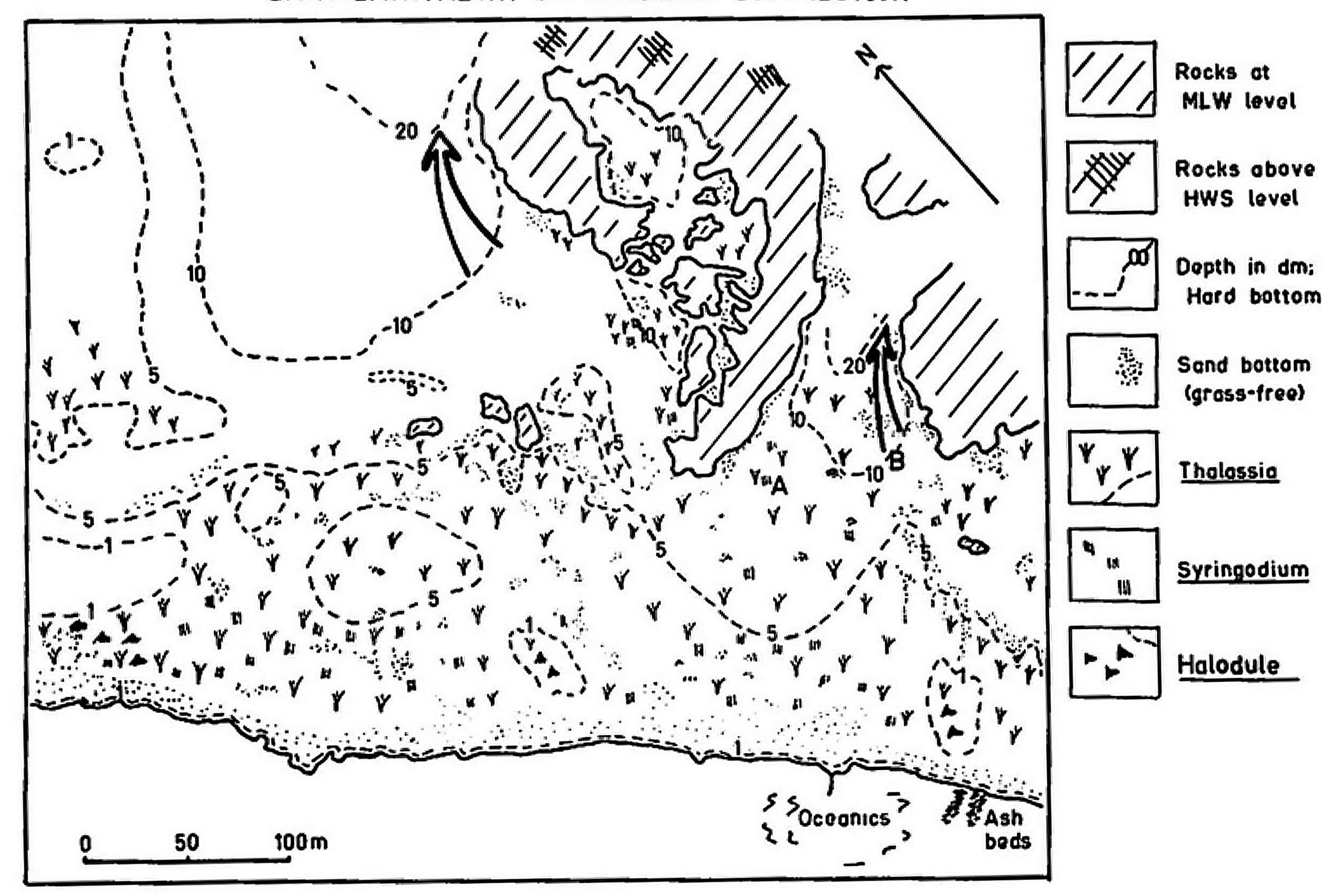
Fig 16. Generalized Bathymetry, and distribution of seagrasses
Click on image for larger version
The generalized bathymetry and distribution of seagrasses are shown in Figure 16. The Thalassia bed lies partially in the lee of large rocks, the “Breakers Zone Rocks” which rise close to and above mean low water. Shallow areas bound around the northwest and southeast regions of the bed. Because of the spaces between shallow areas seaward of the Thalassia bed, the shallowness of the Thalassia bed, and the generally high level of wave action of the East Coast of Barbados, conditions in the Thalassia bed are generally turbulent and the water turbid from stirred up bottom settlement, except for a few hours at low water. Currents over Thalassia bed are generally weaker and irregular, but there is an overall flow of water towards the northwest and currents are strong in channels cutting through the shallow areas at the northwest and southeast boundaries of the bed. Seaward of the Thalassia bed is a coral-coralline algal bottom with only transient sand cover.
Substrate Types
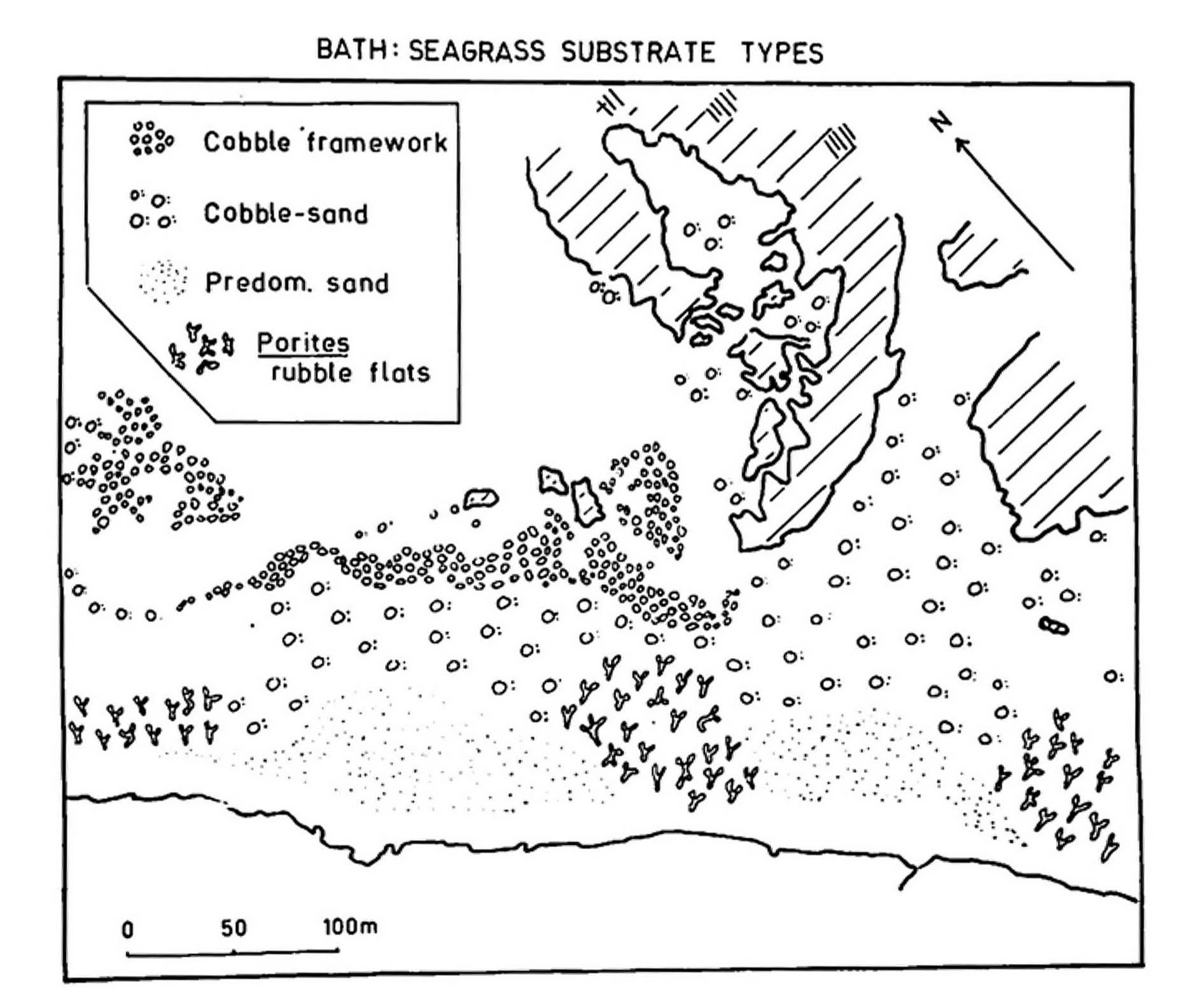
Fig 17. Distribution of substrate types in seagrass beds at Bath
The distribution of substrate types in the Thalassia bed is shown in Fig, 17. A CF substrate occurs at the seaward face of the Thalassia bed where wave action has caused piling up of coarse debris originating from the coral-coralline algal bottom. This material is piled up to about 25 cm below mean low water. The coarse debris consists largely of algal balls 5 to 15 cm in diameter which are formed by growth of encrusting coralline algae around loose coral fragments; these algal balls are observed rolling about in pockets in the coral-coralline algal bottom. Plate IIc is a photograph of an erosional scarp in the CF substrate area. Skeletons of Porites furcata are piled up at several nearshore areas (Fig 17) as described above. The upper limit of accumulation of the Porites skeletons is probably determined by factors limiting the growth of Thalassia, i.e., tidal level. In the shallowest areas of these flats, growths of Diplanthera occur, and associated with the Diplanthera is an accumulation of sandy sediment to about the MLW level. PS substrates occur in inshore areas between the Porites rubble flats. CF substrates occur over most of the Thalassia bed area.
Sentiment size and constituent characteristics
Grain size characteristics and the proportion of acid insoluble material of samples from the different substrates are given in Table XVI. There is some variation in the relative amounts of coarse, medium, and fine sand, but all samples are characterized by small amounts of silt and clay. Samples from grass-free areas differ from samples from the Thalassia-stabilized sediments in having much smaller proportions of grains smaller than 0.5mm; this illustrates the effect of Thalassia in modifying sorting of sediments by waves. The good sorting of coarse grain size of sample 11 (Table XVI) from the coral-coralline algal bottom is indicative of the strong wave action in that area.
Sediments at Bath are derived from several sources, and this is reflected in the constituent composition. Skeletal carbonates constitute the predominant class of sediment constituents making up about 75 to 92% (equivalent to the acid soluble fraction) of the sediments. These are derived largely from molluscs, corals, Halimeda (green alga), and red algae growing in the Thalassia beds and on the hard coral-coralline algal bottom. Minor amounts of debris derived from echinoderms, alcyonaroians, crustacea and ostracods were recognized an examination of the settlements. A few composite grains, probably derived from the Pleistocene coral cap or rocks of the breaker zone, were also observed. The predominant minerals of the acid insoluble fractions of these samples are quartz, feldspar and hornblende, in that order. These may have been derived in part from outcroppings of volcanic ash beds in this area (Fig 16). Radiolarian tests, derived from Tertiary Oceanic deposits on shore (Fig 16) were also observed in the acid insoluble fraction. Soil erosion, which is severe in this part of the island, probably contributed silt and clay size material to the best sediments.
Substrate stability
Sediments are stabilized by growth of Thalassia, as pointed out by Ginsberg and Lowenstam (1958) both through the binding effect of rhizomes, and through the slowing down of water motions at the sediment surface associated with the presence of leaves. In addition, growths of sessile organisms of all sorts (see ‘Epifauna and flora’ below) help stabilize the sediment surface, and in a Thalassia stand with a well developed epifauna and flora, there is very little disturbance to the sediment surface even under conditions of strong wave action. However, once rhizomes are exposed, then erosion, directed horizontally from place of exposure, may take place fairly rapidly and under conditions of only moderate wave action. Grass-free, depressed areas or ‘blowouts’ similar to those described by Hoskin (1963) occur throughout the PS and CS substrate areas at Bath. Hoskin (1963) noted that the steep seaward edges of these depressed areas expose a well developed root system of Thalassia (see Plate IID, this thesis) and he believed the blowouts are produced by wave erosion during storms. This may be so, but it is also apparent that once formed, erosion at the seaward face erosional scarp of the blowout may continue for some time. Measurements of erosion at two such areas at Bath were carried out over a one year period; the seaward faces of the grass-free areas were eroded 1.2 and 1.6 meters during this period and rates of erosion did not very much from month to month. At the same time as erosion took place at the seaward face of the grass-free areas, Syringodium advanced into the leeward regions, re-stabilizing the sediments. Irregularly oriented erosional scarps and depressed grass-free areas also occur in the CF and PF substrate areas; erosion in these areas is probably slower. The Bath Thalassia bed thus appears to be subject to continuous erosion- dash succession processes, erosion occurring in some areas, and growth of serum Syringodium and subsequent development of Thalassia and associated epifauna and flora in other areas. Emery at al. (1957) remarked that graded bedding would be expected in shallow lagoon areas subject to continuous erosion and deposition of sediments by tidal currents. It is probable that the occurrence of a rubble layer below the CS and PS substrates at Bath is a result of recurrent erosion dash succession processes.
The St.Lawrence Thalassia bed
General hydrogaphy
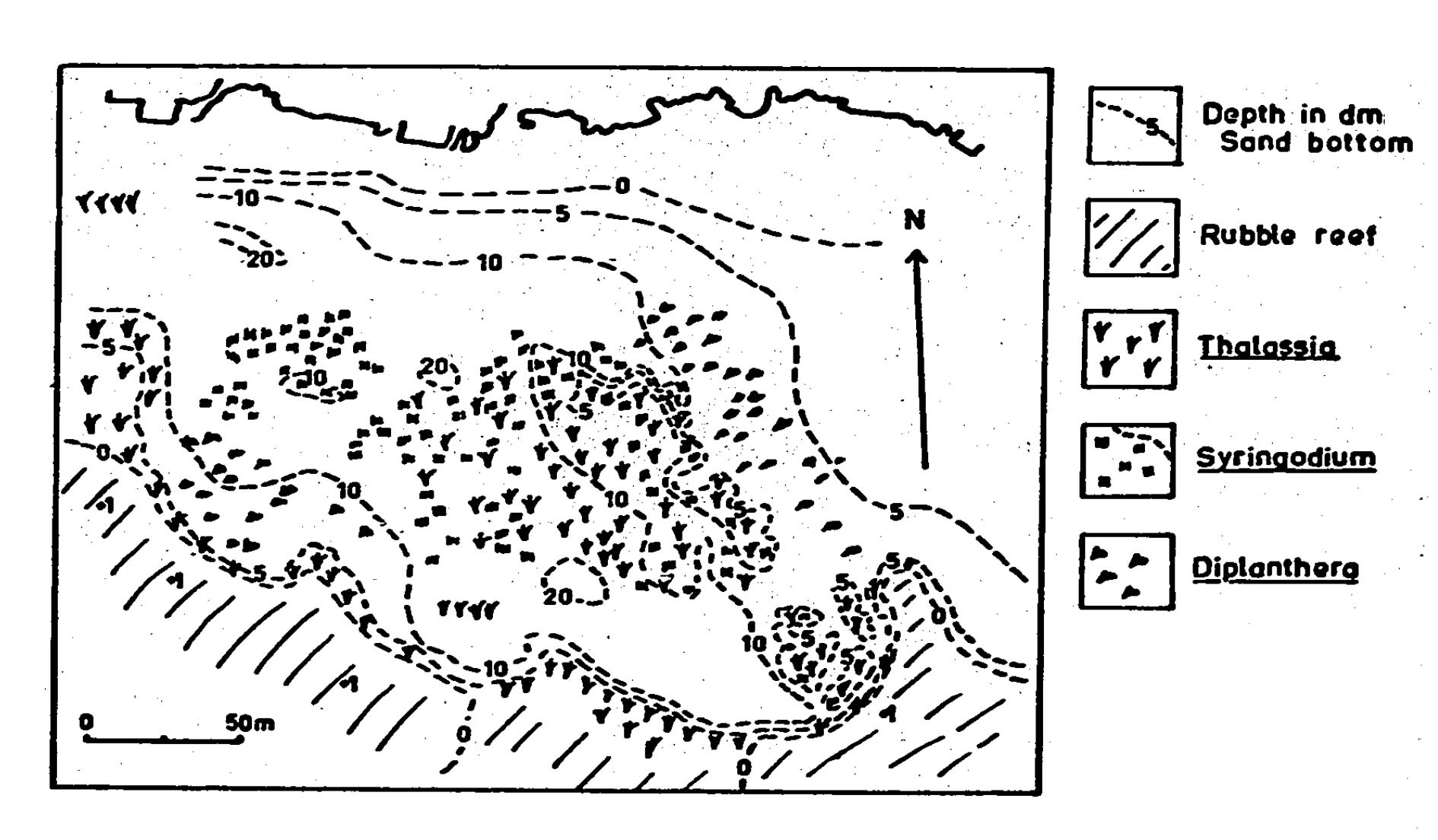
Fig 18. Generalized bathymmetry and distribution of seagrasses at St. Lawrence.
The general bathymetry and distribution of seagrasses at St. Lawrence is shown in Fig. 18. A rubble reef borders the shore at distances of 70 to 170 meters from shore. Sand covers the bottom in the lee of the reef, and the seagrasses Thalassia, Syringodium and Diplanthera are all common in the leeward area. The ‘Thalassia bed’ refers to the largest central seagrass bed in Fig. 18. Wave action over the leeward area is generally gentle, but at high tide is usually sufficient to cause stirring up of the sediment service. A continual current flows westward over the leeward area, presumably resulting from the easterly component in wave approach on this coast; velocities of 4.7 and 10.7 cm per second were observed at low and high tide on a day of moderate sea conditions.
Substrate Types
Thalassia grows in a CF substrate at the inner borders of the rubble reef. The cobble framework is made-up of flattened and rounded coral debris. PS substrates occur over the entire leeward area. A rubble layer occurs at a depth of 10 cm to 1m or more below the substrate surface.
Sediment size and constituent characteristics
Grain size characteristics of sediment samples from St. Lawrence are given in Table XVI. All samples are characterized by a predominance of fine sand sized mixed sediment and less than 5% silt and clay. South coast settlements contained very little (less than 2%) non-carbonate material. The carbonate fraction of St. Lawrence sediments are similar and constituent composition to that described for Bath.
Substrate stability
Noticeable changes in substrate level in the grass-free sandy areas over periods of several weeks indicate significant motion of the settlement in these areas. Considerations based on settling velocity, threshold velocity and roughness velocity indicate the particles of about 0.18 mm in diameter require the least disturbance to be moved in comparison to both larger and smaller particles (Inman 1949). The St. Lawrence sediments are in general well sorted and have median diameters close to this value. Thus even though wave action is not particularly strong in this area, the sediments are easily moved. There was little change in substrate level noted within the Thalassia bed but at high tide there was usually noticeable disturbance of the sediment surface in most areas where the surface was not stabilized by blue-green algae or other organisms. Erosional scarps border much of the leeward margin of the bed, and large changes in the limits of the bed occurred subsequent to mapping of the Thalassia bed on July 1968, erosion occurring some areas and extension of Syringodium into grass-free areas elsewhere.
The Oisten Bay Thalassia beds
The Thalassia beds at Oisten Bay were sampled in the nutrient studies. There are no offshore reefs in Oisten Bay, and the area is subject to strong wave action. Thalassia is the only seagrass occurring in Oisten Bay. Stands A1 and B-2 are adjacent stands in a small patch of Thalassia close to shore at the western extremity of Oisten Bay. Stand A7 is in a small, nearshore patch of Thalassia at the southern extremity of Oisten Bay. The CCS substrate at the former position is described above under Substrate Classification. The substrate at the Oisten Bay S position is a PS substrate overlying a coral rock basement. At both areas the substrate surface is disturbed by wave action, and is devoid of attached epifauna and flora. The infaunal populations are similar to that described for St.Lawrence. Sediments (samples 19, 20, Table XV) consists predominantly of fine sand sized skeletal carbonates.
The Carriacou Thalassia beds
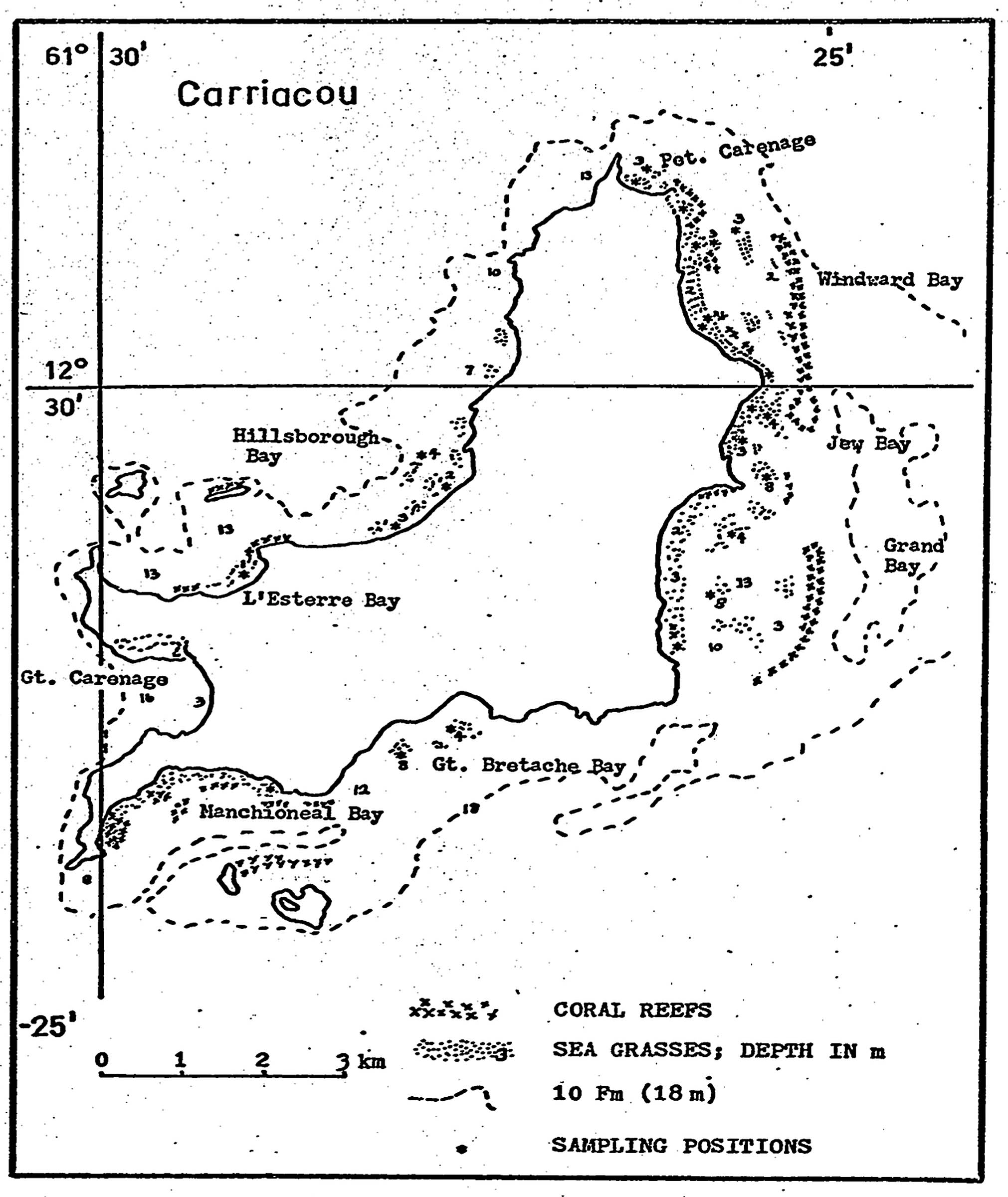
Fig. 19. Distribution of seagrasses at Carriacou
The distribution of seagrasses at Carriacou is shown in Figure 19. On the east, windward coast of Carriacou, a N-S oriented reef lies at distances of 750 to 850 meters offshore. The lagoonal areas behind the reef have a maximum depth of about 14 meters. An almost continuous Thalassia (Thalassia-Syringodium) bed fringes the shore from the northern part of Watering Bay to the southern edge of Grand Bay, extending seaward 200 and 300 meters. Thalassia beds are irregularly distributed through the remainder of the lagoonal area. Some of these areas are subject to strong tidal currents. The Thalassia beds on other coasts are less extensive than on the East Coast. Diplanthera is not common at Carriacou, occurring in a few shallow nearshore areas, and in some areas in Grand Bay at about 6 meters depth. Halophina baillonis occurs in the Thalassia-Syringodium stands in some of the deeper beds. Almost all beds at depths greater than 6 meters are mixed Thalassia-Syringodium beds; Moore (1963) also noted that deep beds are usually mixed Thalassia-Syringodium beds. Substrates are most commonly the PS type, with less than 1% cobble sized material. CS substrates occur in some patch reef-Thalassia complexes. CF substrates occur in L’Esterre Bay, an area generally subject to turbulent conditions, and CF substrate also occurs at a nearshore position in Hillsborough Bay. Sediment size characteristics (Table XVI) are similar to those for Barbados Thalassia sediments, with a predominance of sand sized material, and generally small amounts of silt and clay. Except in immediate nearshore areas where a large proportion of the sediments consist of non carbonate material (sample #23, Table XVI), the sediments consist predominantly of skeletal carbonates (sample #24, Table XVI). The epifauna and flora include many of the organisms observed at Barbados such as Porites furcata….
Infaunal organisms were in general surprisingly sparse, with only the two tube-dwelling polychate Onuphus erimata being commonly observed. In a few shallow water areas there was some evidence of overturning Thalassia sediments by Callianasa, but there was little evidence of biogenic overturning of the Thalassia settlements elsewhere.